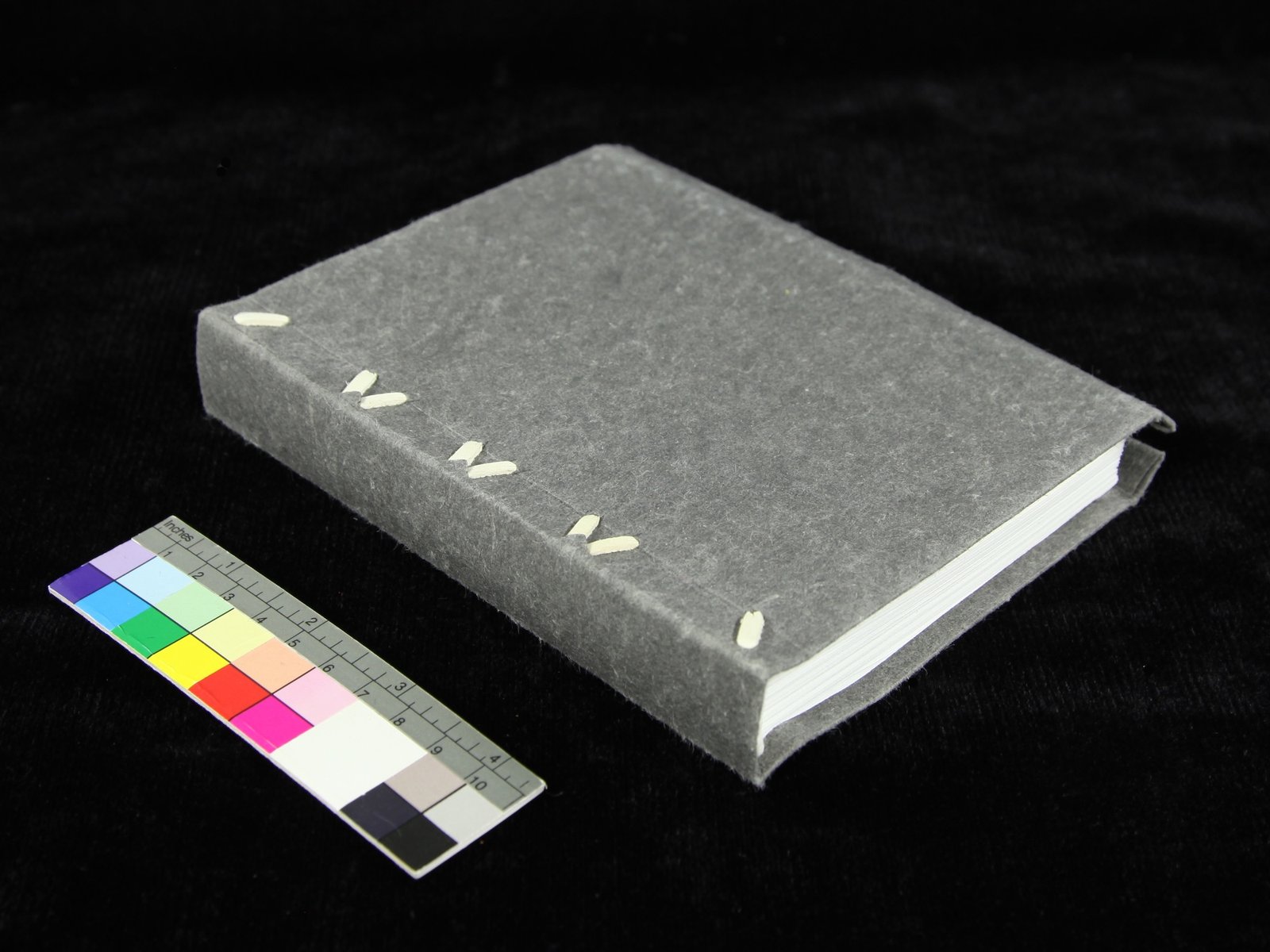
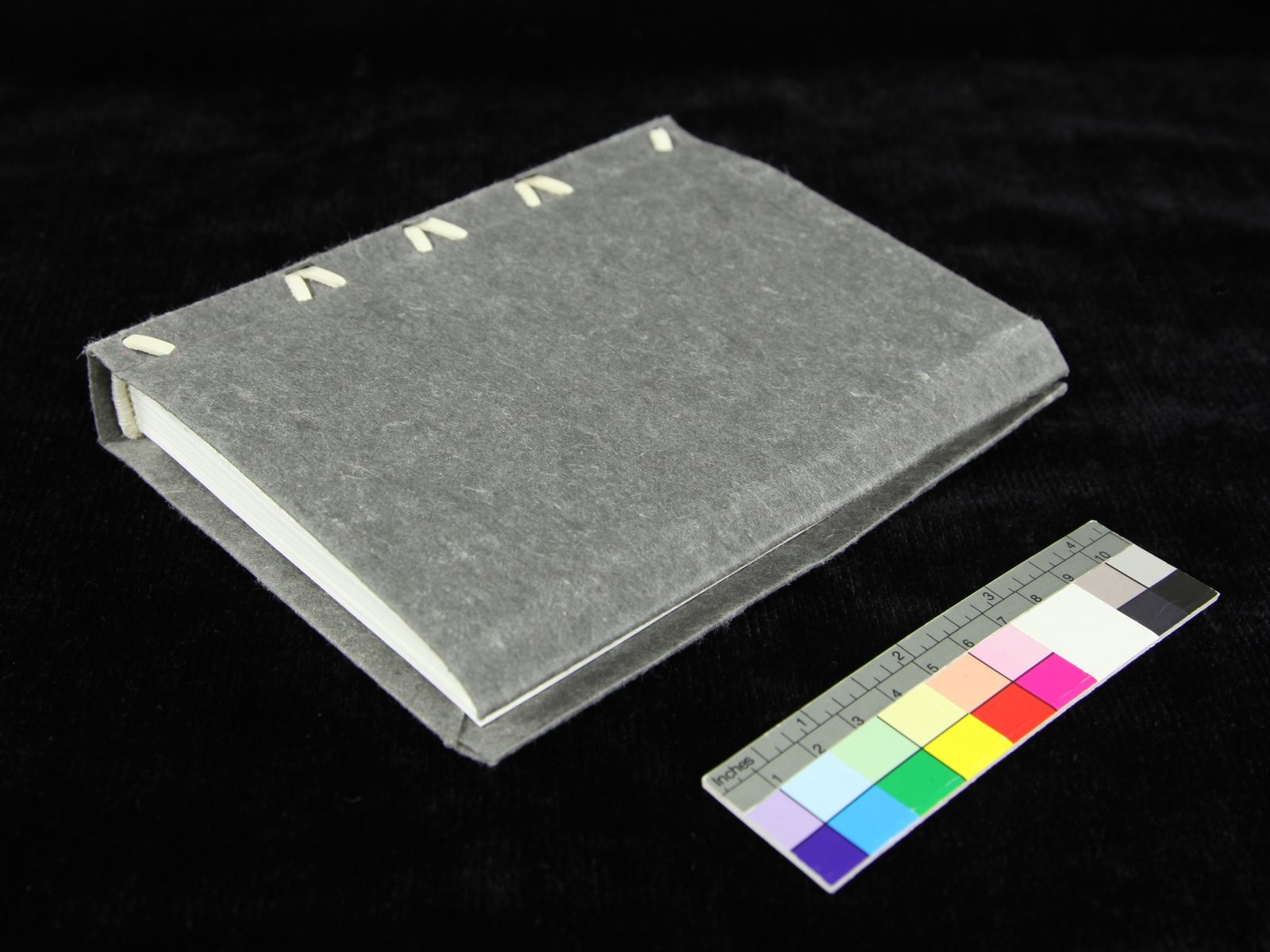
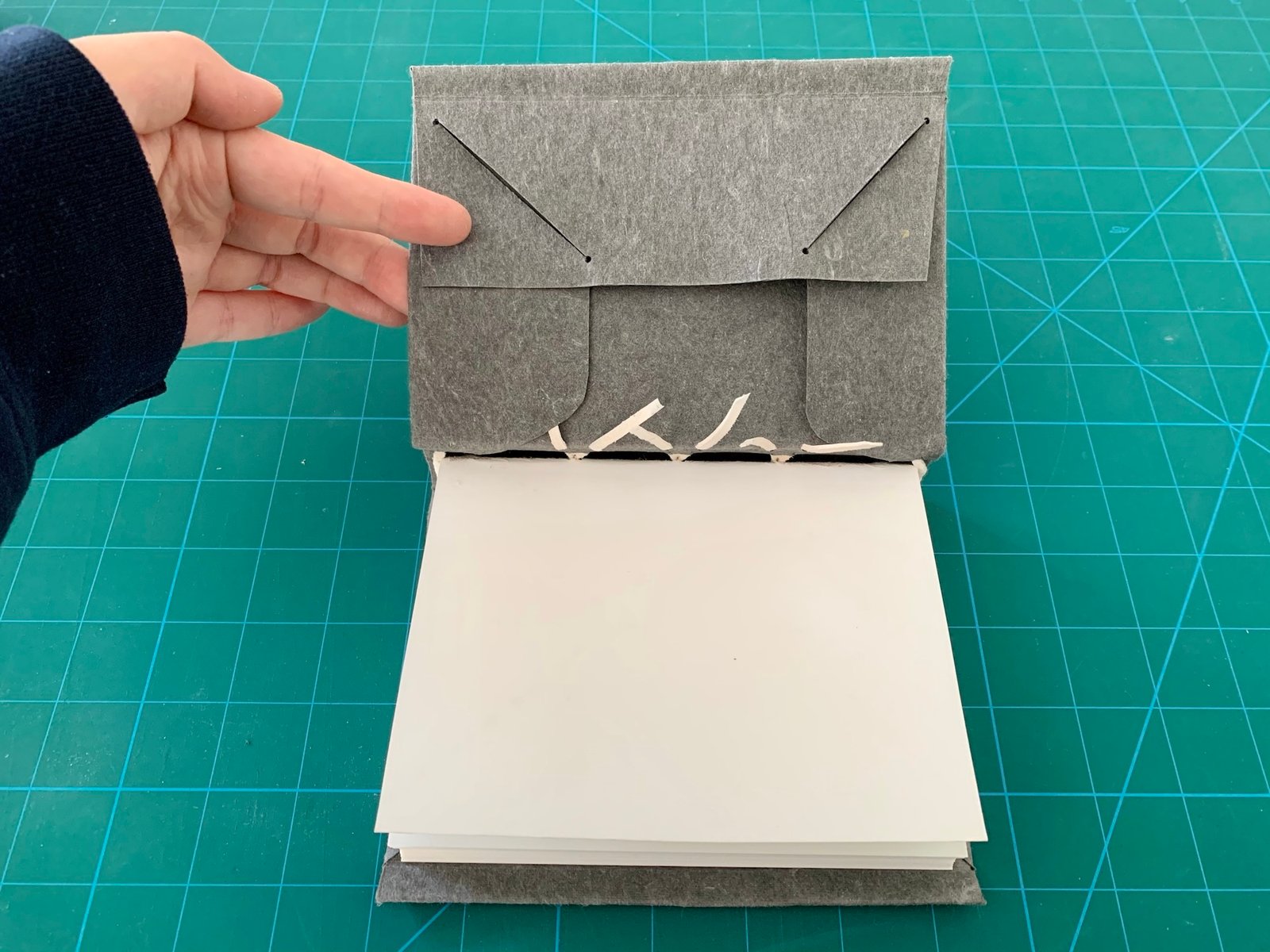
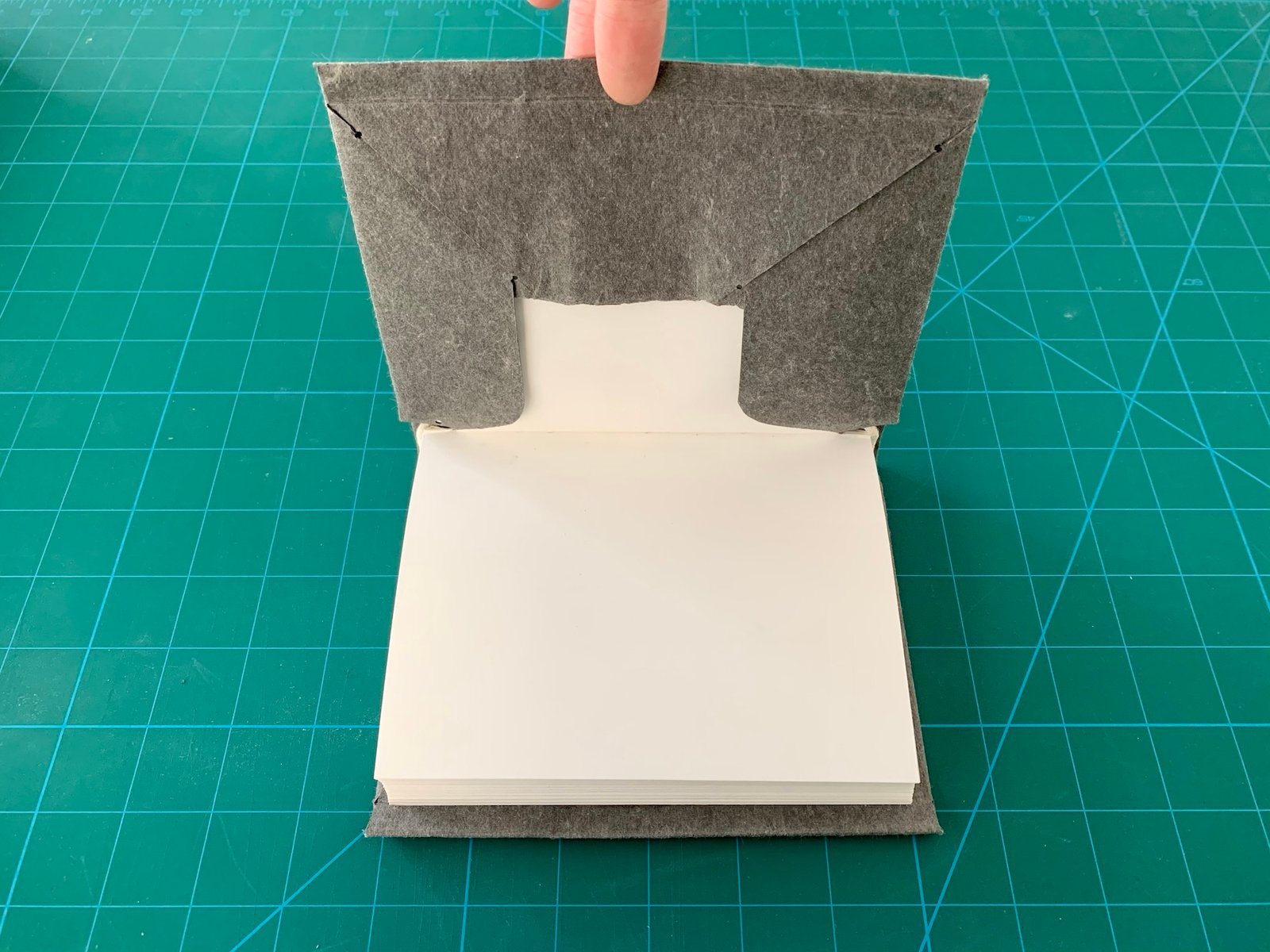
After binding the German paper case models, it felt natural to explore another paper binding from a similar time period—the laced limp paper case. This structure was widely used across Europe from the 16th to 18th centuries, though the earliest examples appear to have established in Italy as a more affordable alternative to limp parchment bindings (Pickwoad 2019). Structurally, it is nearly identical to limp parchment bindings.
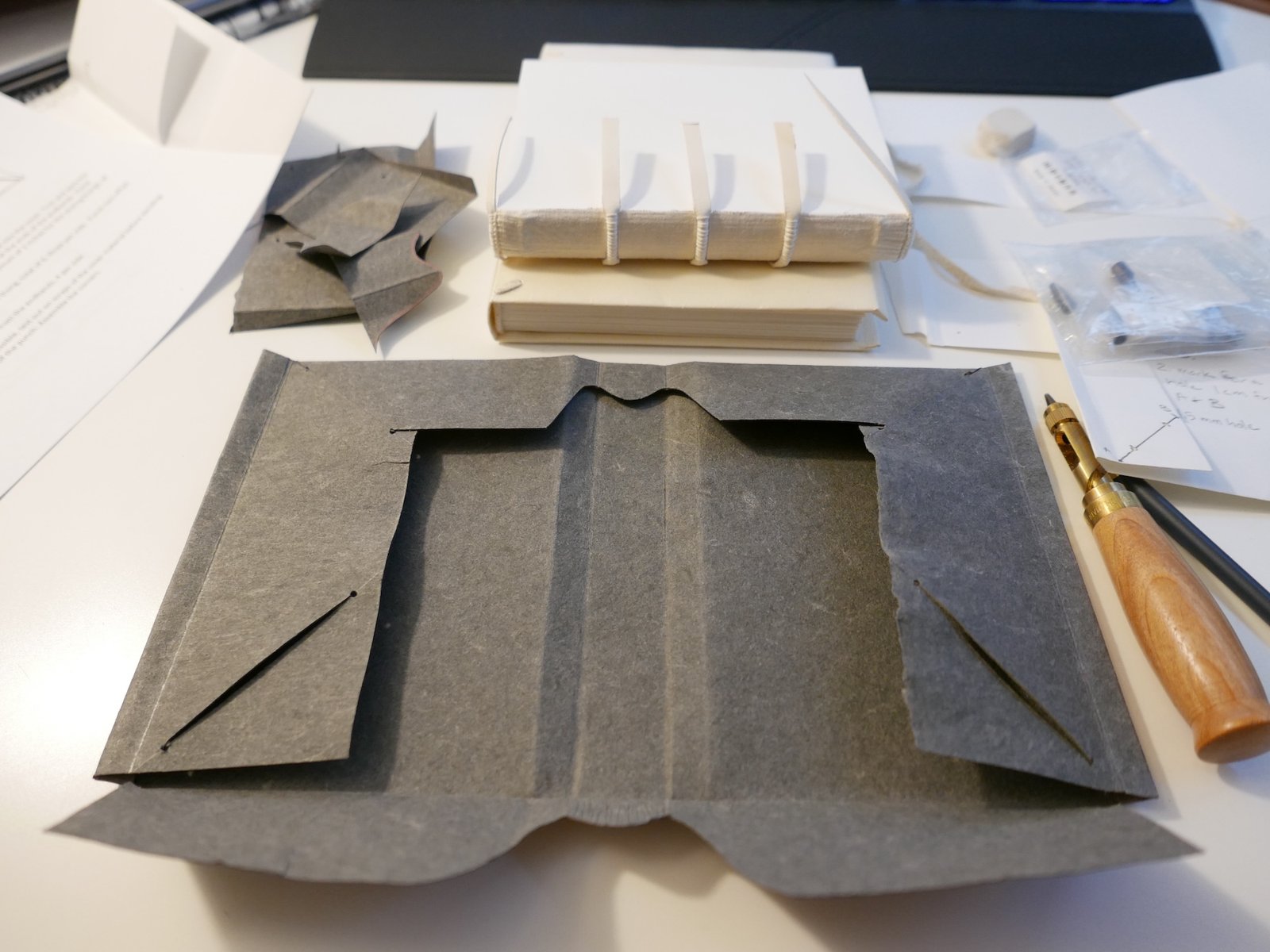
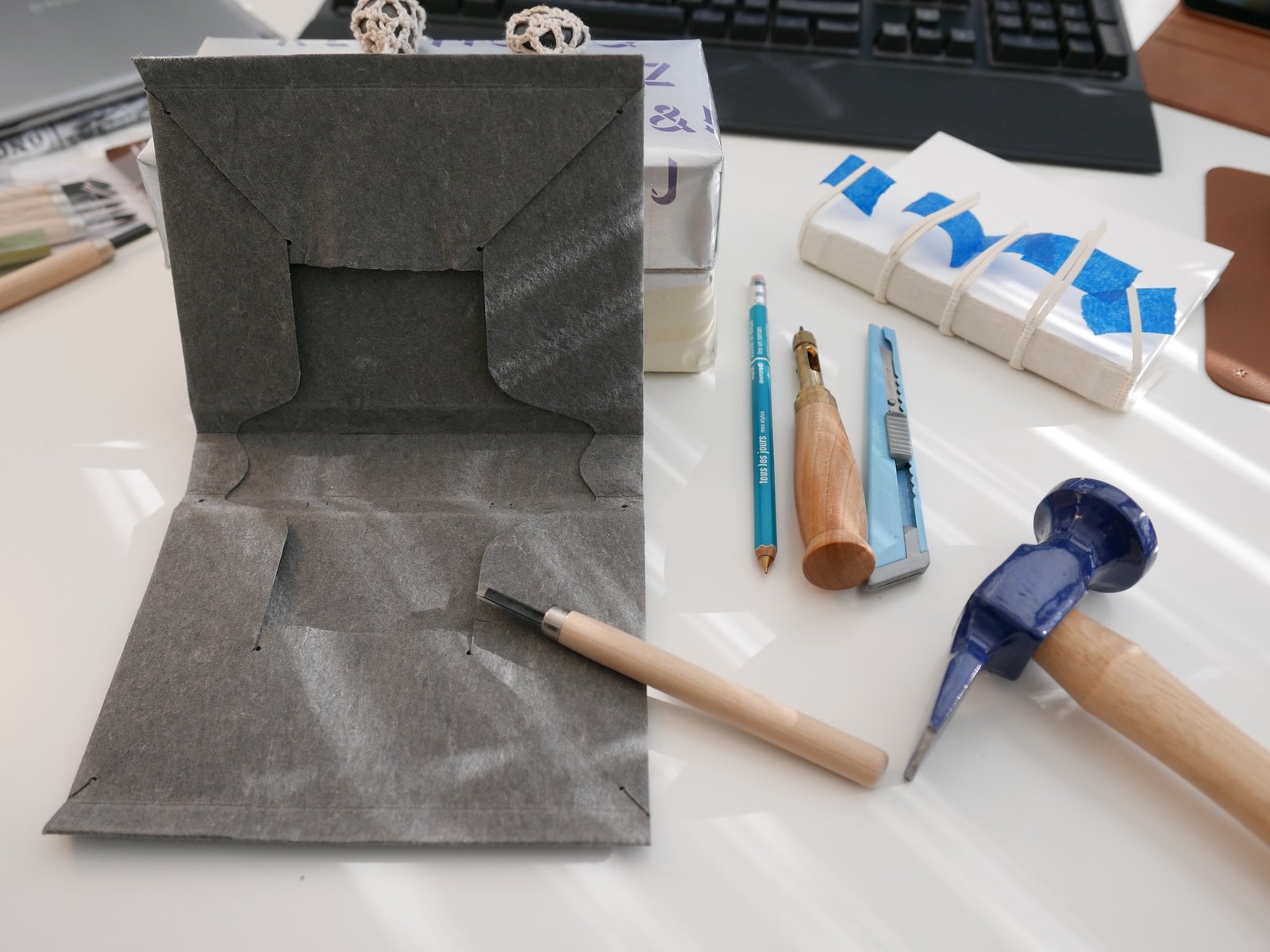
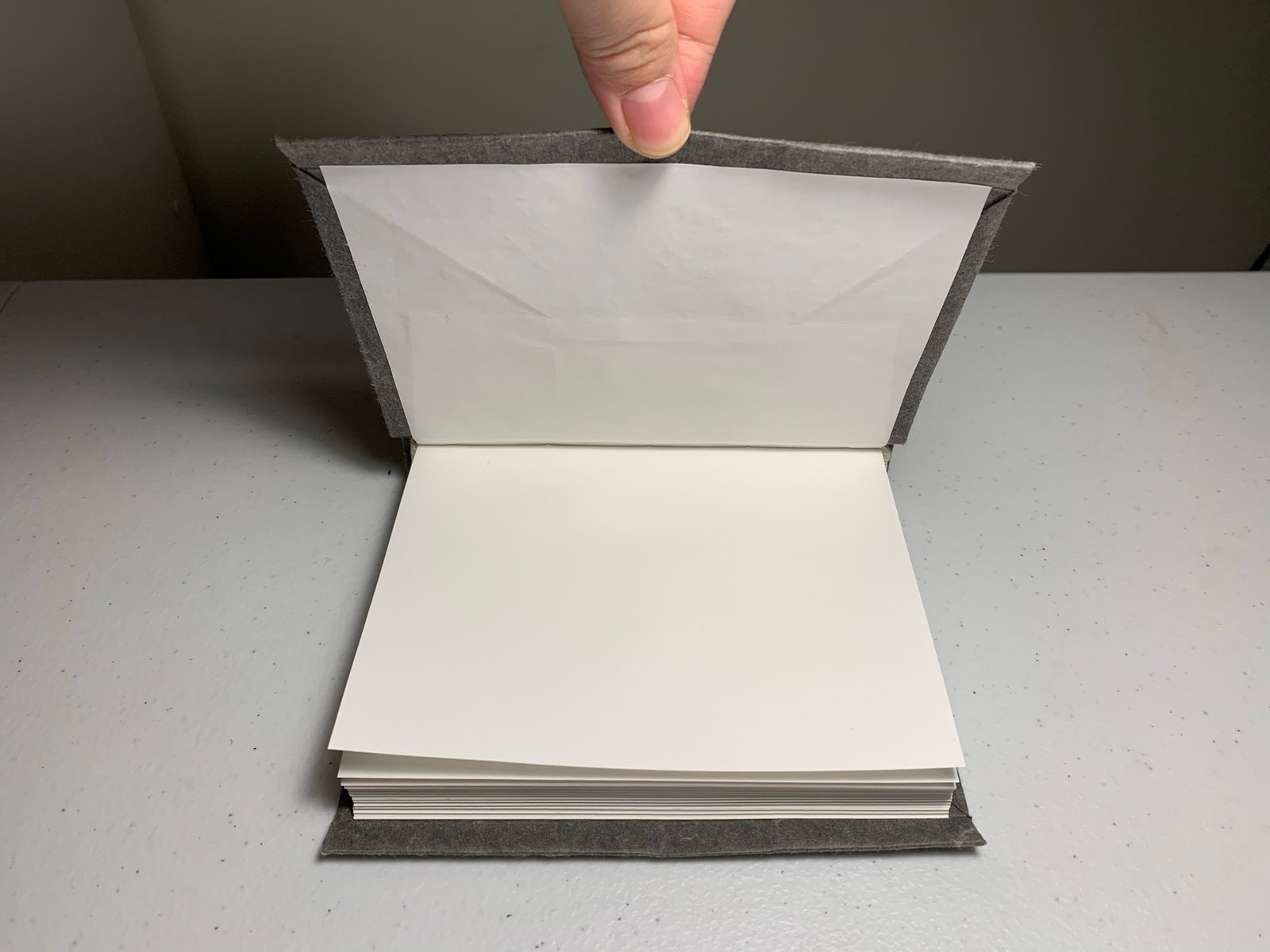
With Ann’s Zoom demonstration as a guide, I created a limp paper case model. While Pickwoad’s survey highlights a range of historical variations, some elements in my model reflect modern modifications, such as the way the turn-ins are folded at the corners, the Yapp edge, and the use of a Japanese hole puncher. Ann’s approach to endsheets involved inserting the half of the first gathering under the turn-ins, but I also wanted to experiment with a pastedown method. My main concern was how the paper case would react to adhesive when attaching the pastedown sheet.
I tested several methods for attaching the endsheet: full coverage, perimeter attachment, and four-corner attachment. For the sake of time and cost, perimeter or corner attachment would have been more efficient, but full attachment is also supported by historical evidence. I preferred the full attachment, as it provided a more even surface while maintaining the structure’s flexibility.
3/4 front
3/4 back
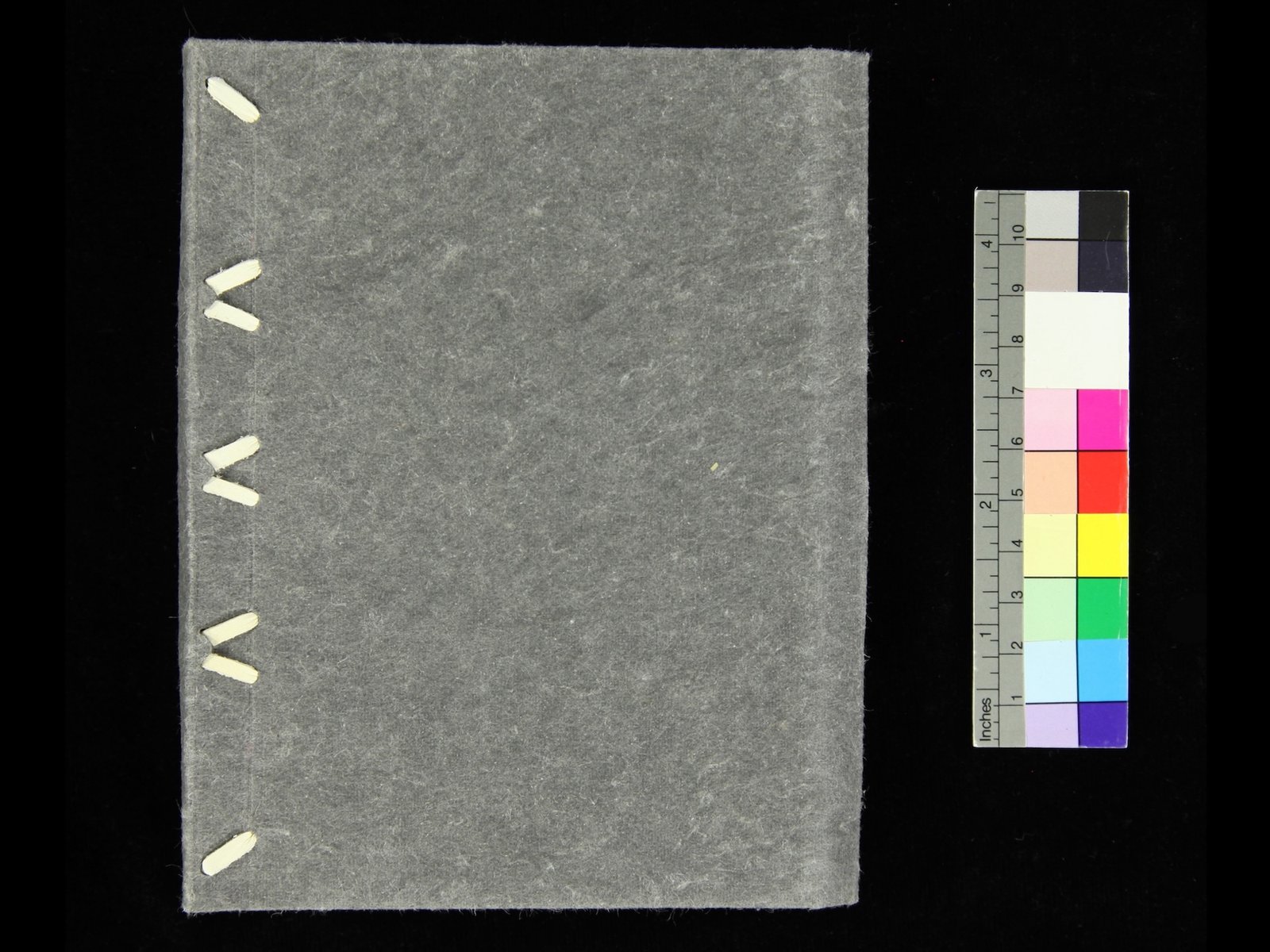
Front cover
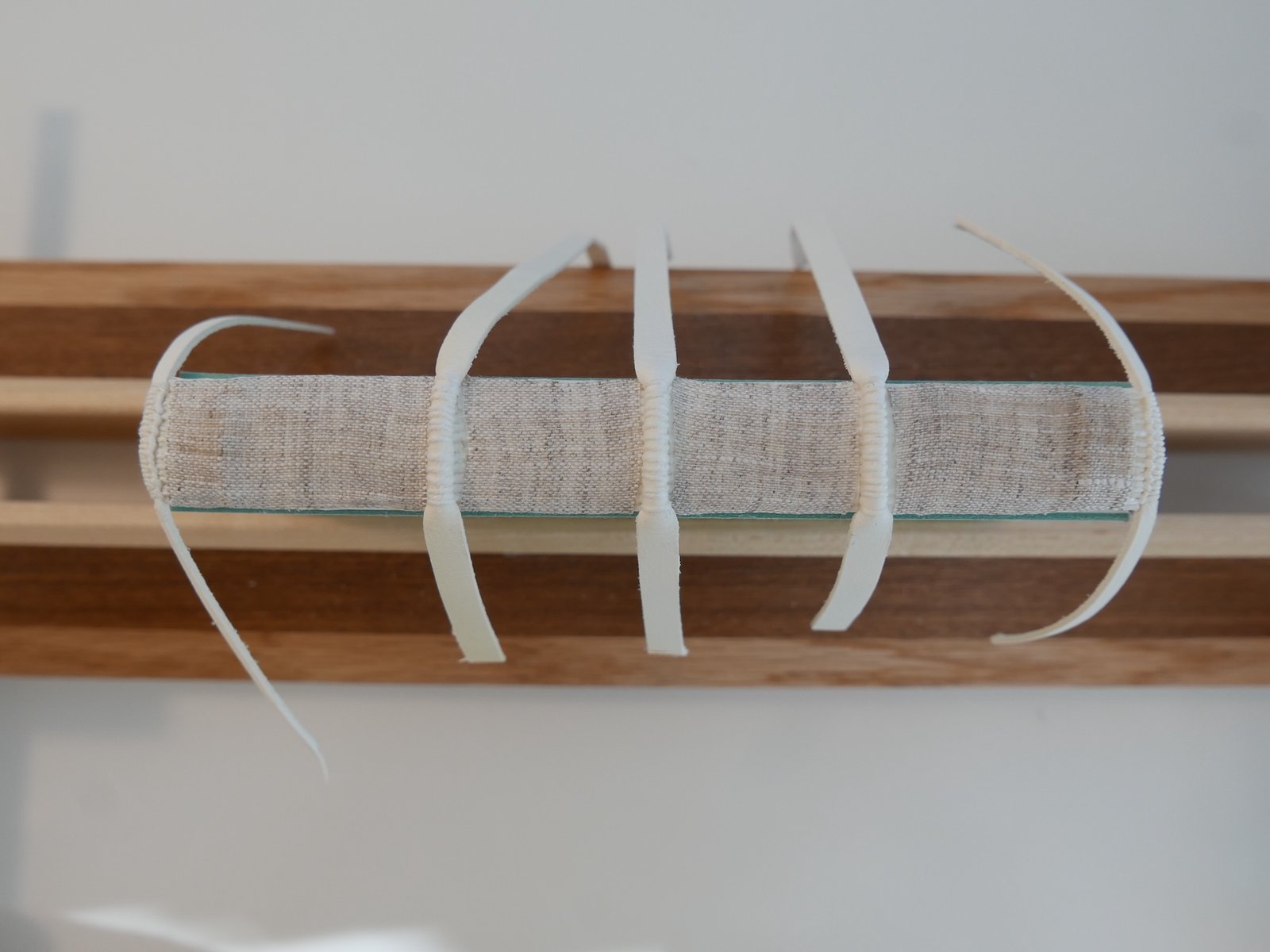
Rounded and lined spine
Folding the case paper
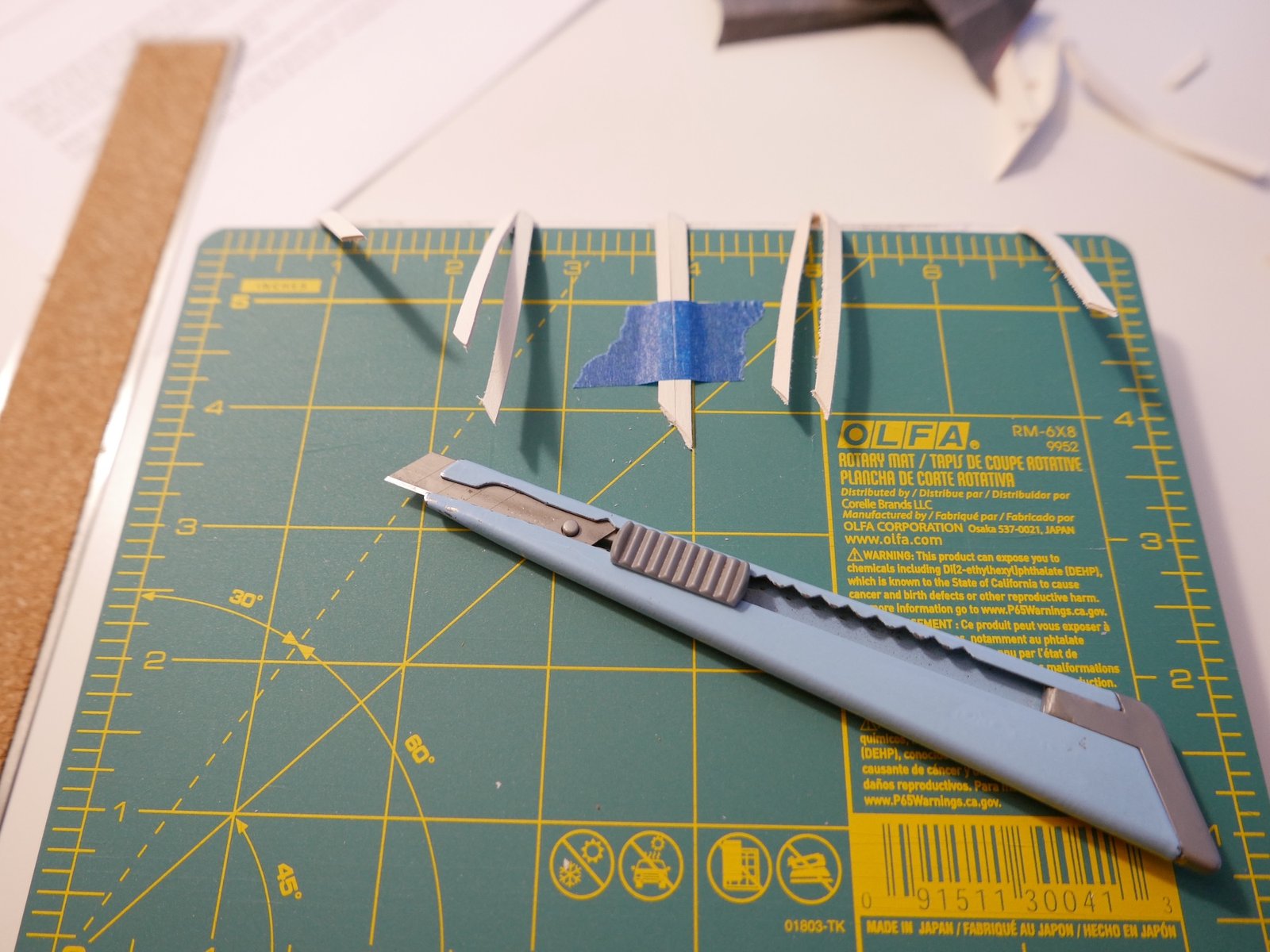
Cutting slits on alum-tawed slips
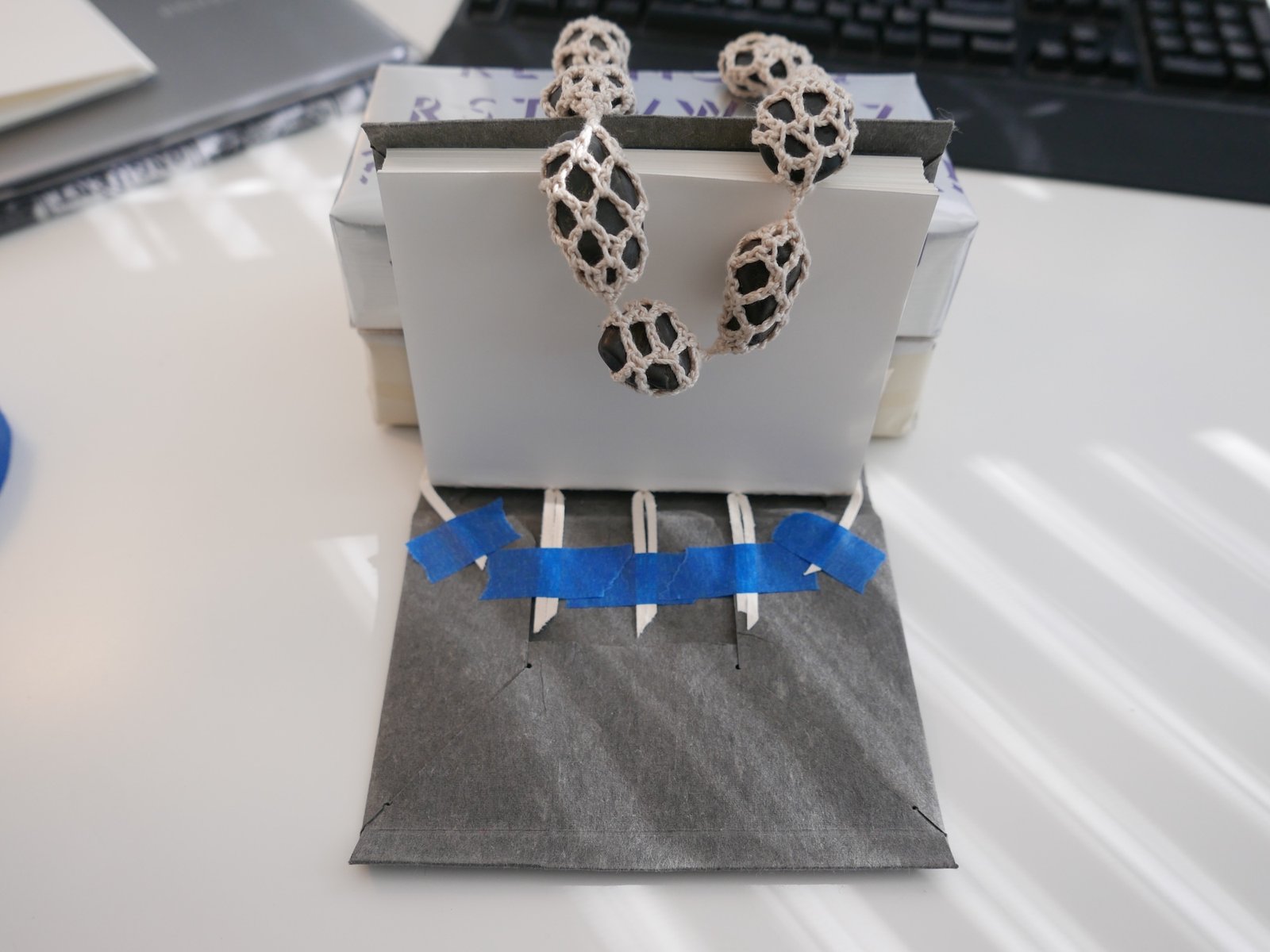
Positioning the thongs for holes
Making slits and holes with Japanese hole puncher and carving tool
Laced thongs through the case
Inserted text papers under turn-ins
Fully pasted down back endsheet
Bibliography
Cloonan, Michele Valerie. 1991. Early Bindings in Paper: a brief history of European hand-made paper-covered books with a multilingual glossary. Boston, MA: G. K. Hall & Co.
Pickwoad, Nicholas. 2019. “Italian Laced-Case Paper Bindings.” Journal of Paper Conservation 20(1-4): 122-151.
Szirmai, J. A. 1999. “Chapter 10 Limp bindings.” In The Archaeology of Medieval Bookbinding. London and New York: Routledge.