Treatment and Rehousing of Papyrus and Palm Leaf Manuscripts

Project: Treatment and rehousing of three papyrus and three palm leaf manuscripts

Owner: Mahn Center for Archives and Special Collections, Ohio University Libraries

Collection: The Pages from the Past Collection and the Specimens of Eastern Manuscripts and Printing collection

About the Project
Three papyri and three palm leaves were treated and rehoused due to their fragile condition and unsuitable previous enclosures. Each item was removed from its old housing and underwent conservation treatments including blotter washing, fiber realignment, reinforcement, and tape removal. Following the treatment, they were housed in custom enclosures, ensuring safe handling for classroom and research use, as well as long-term storage.
Treatment Examples
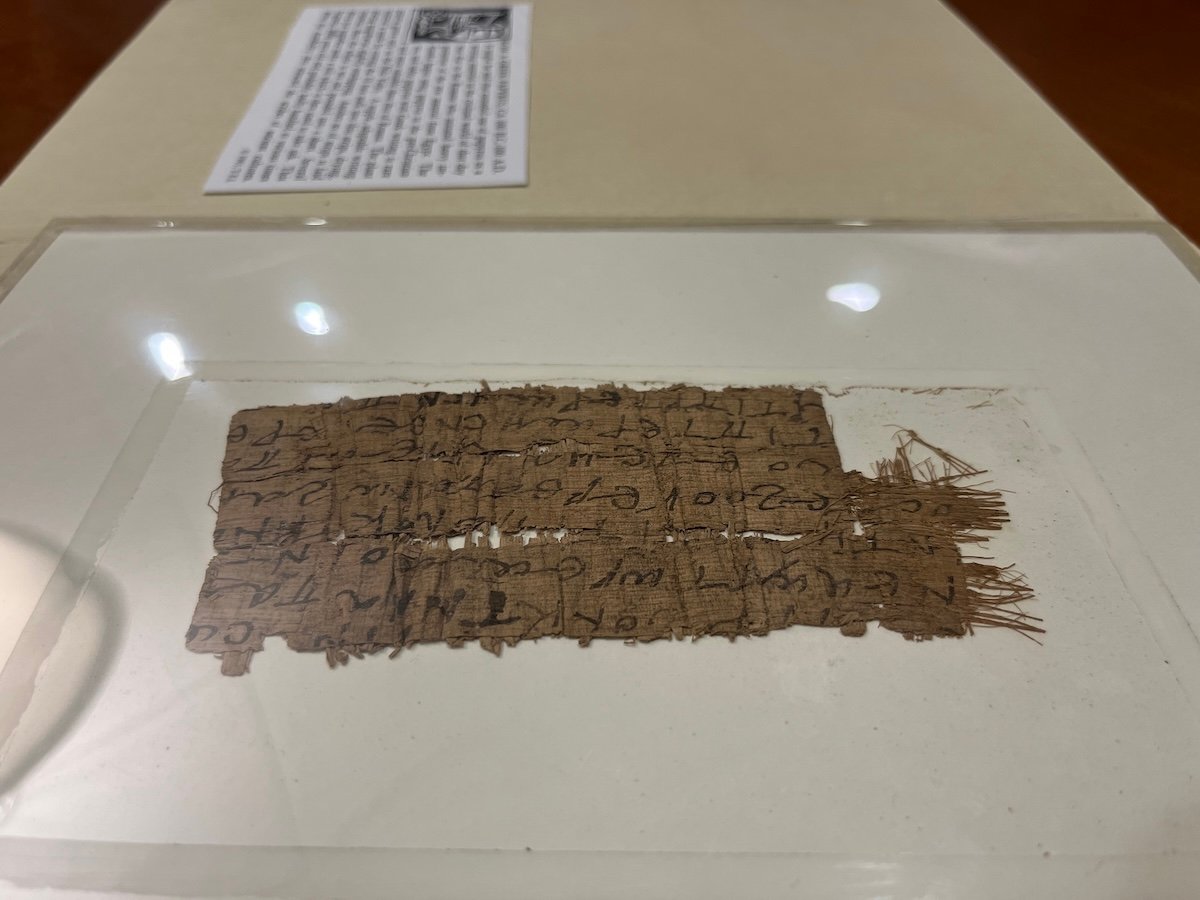
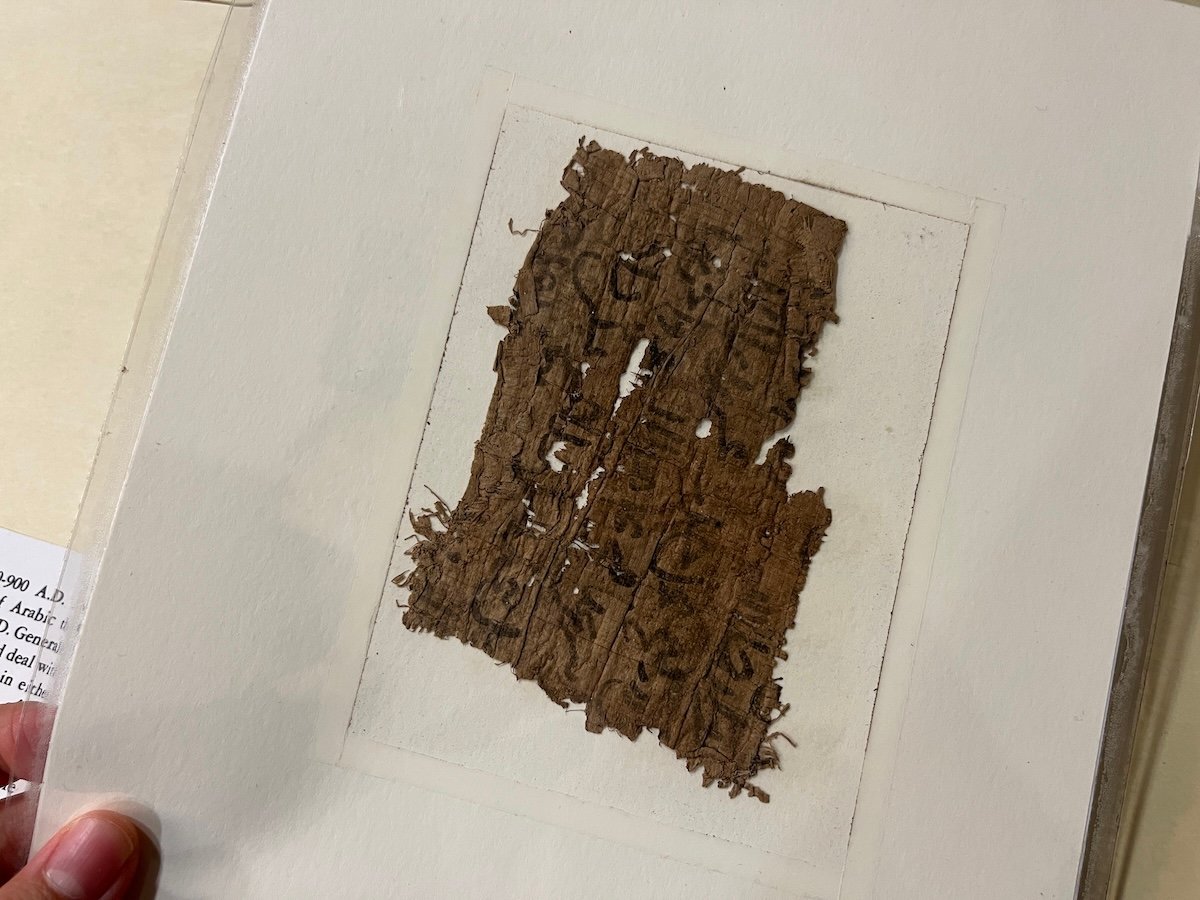
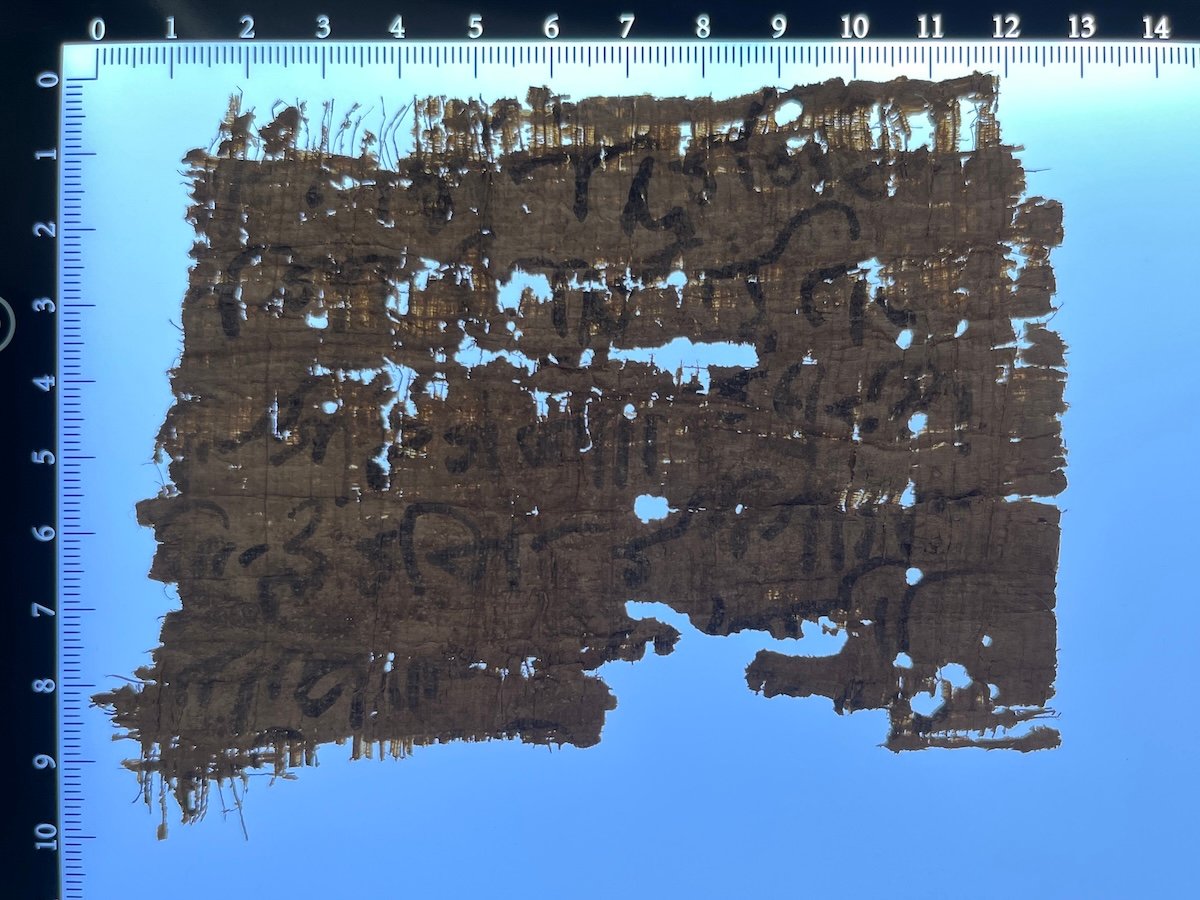
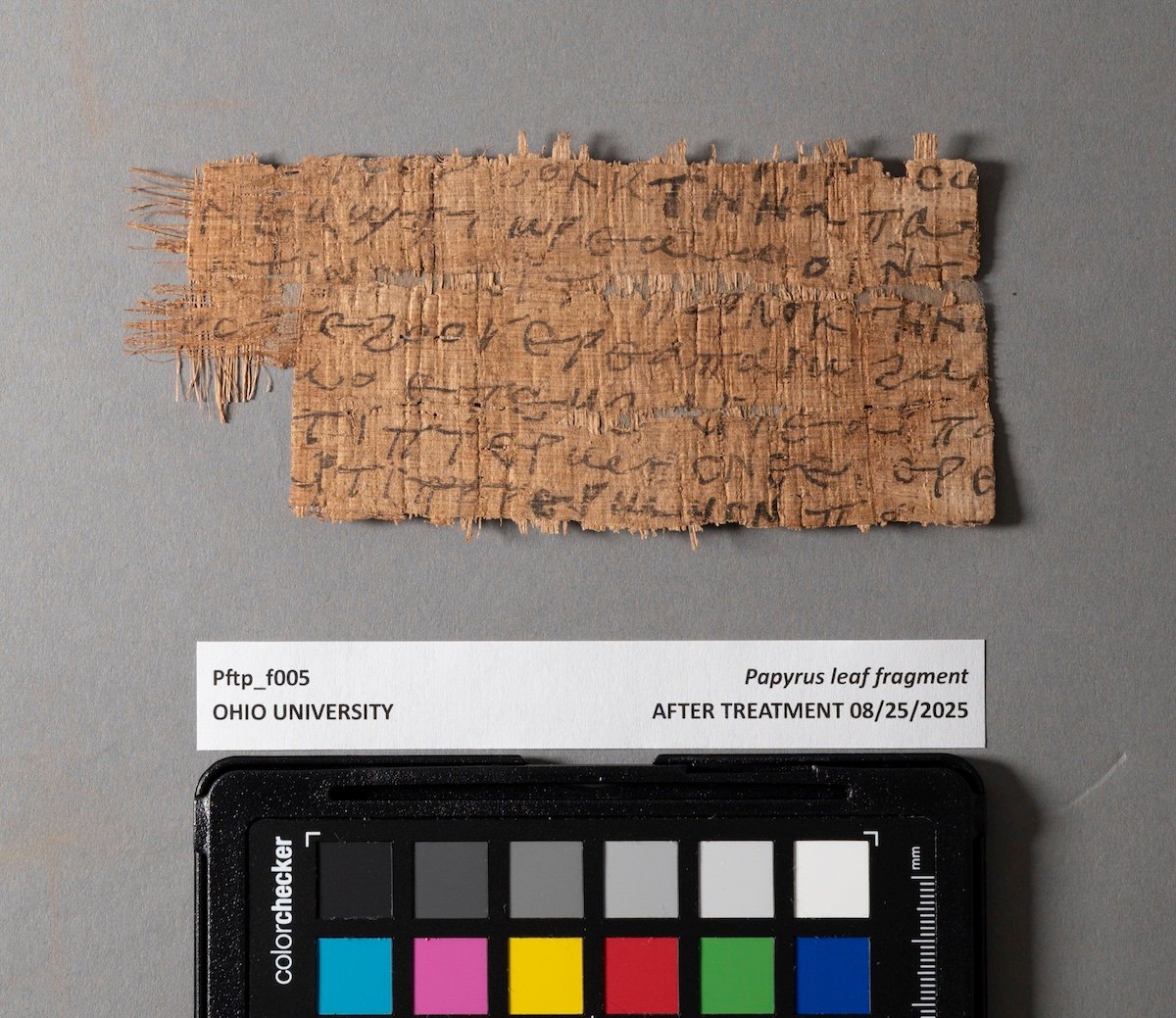
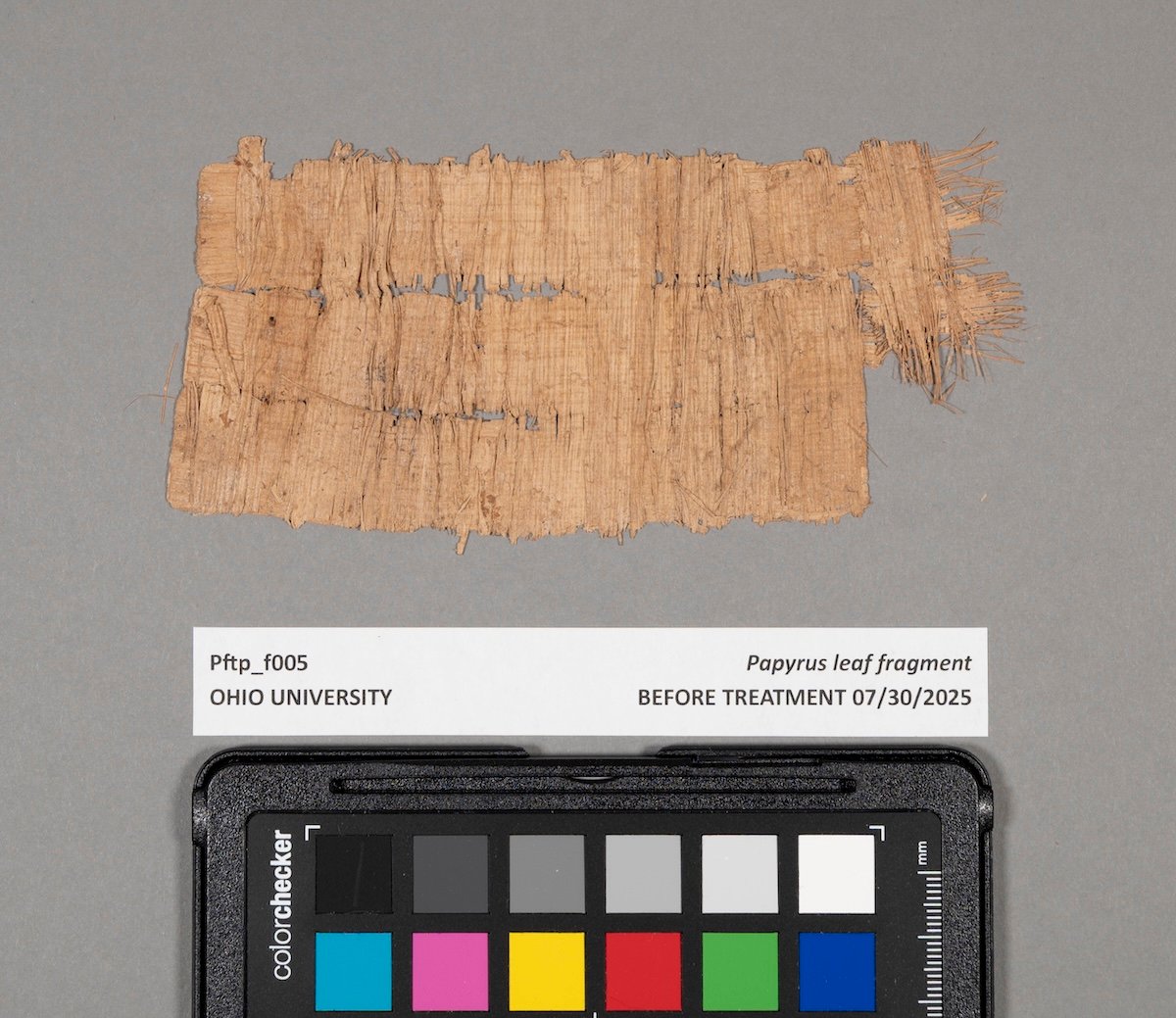
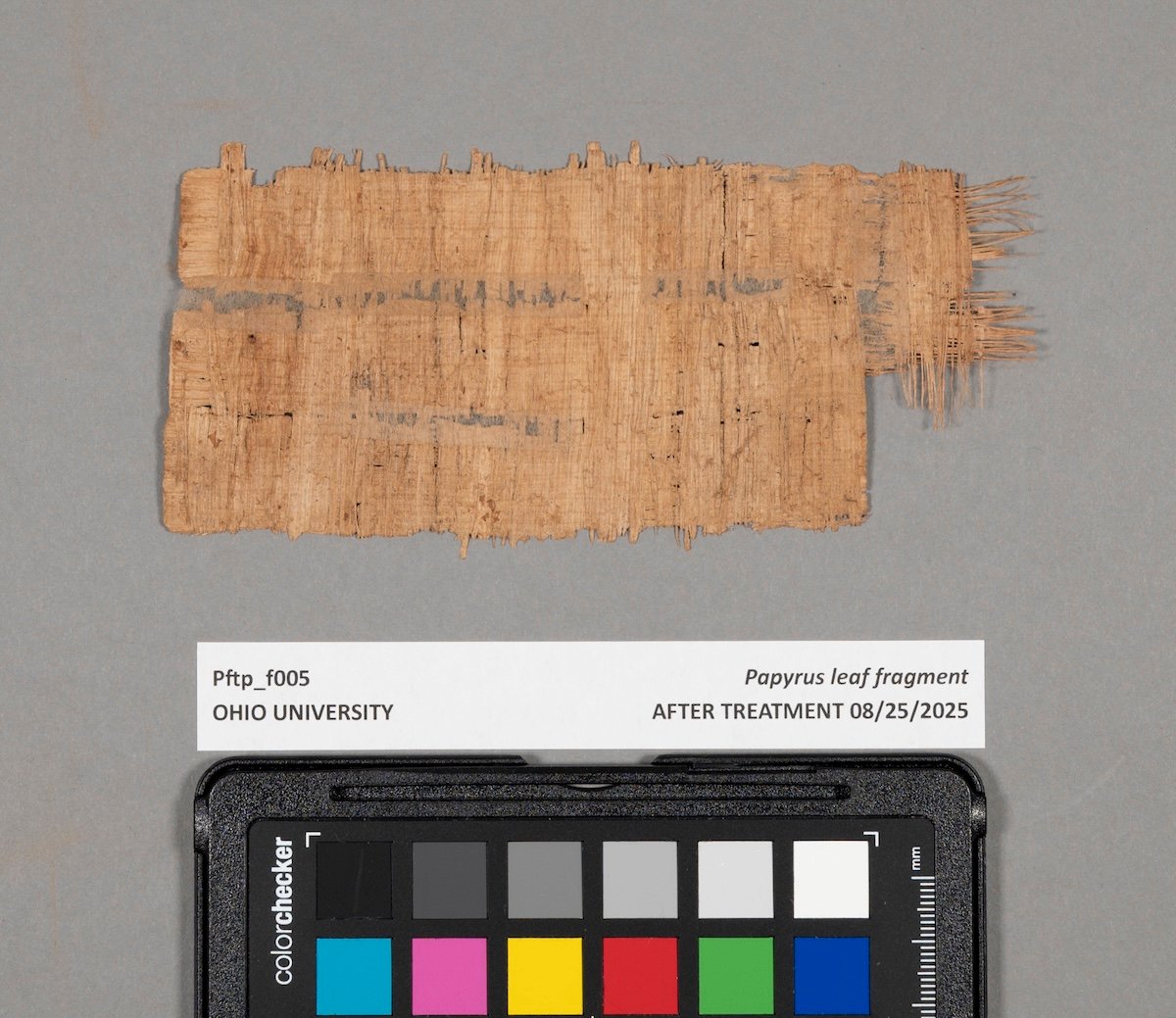
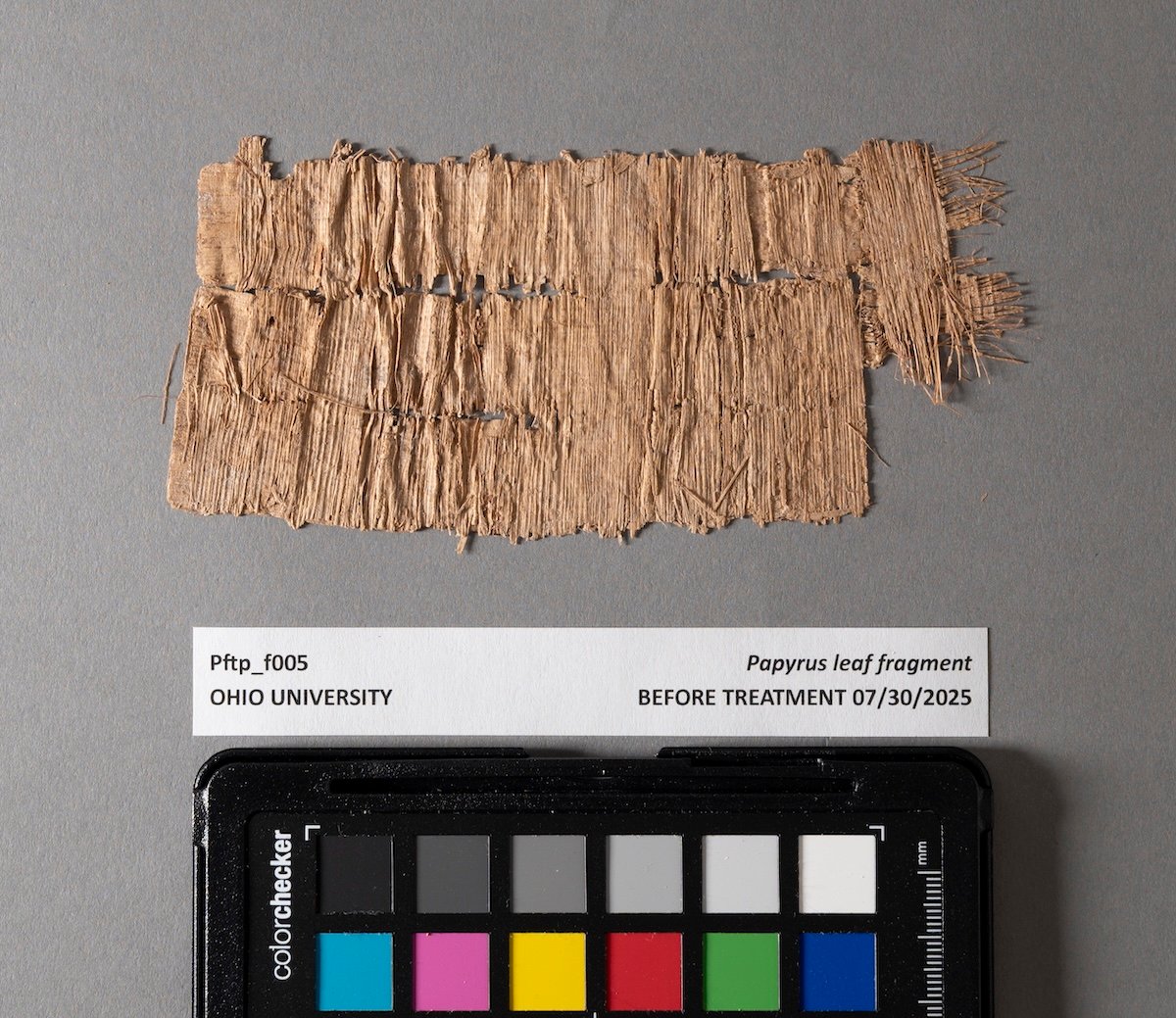
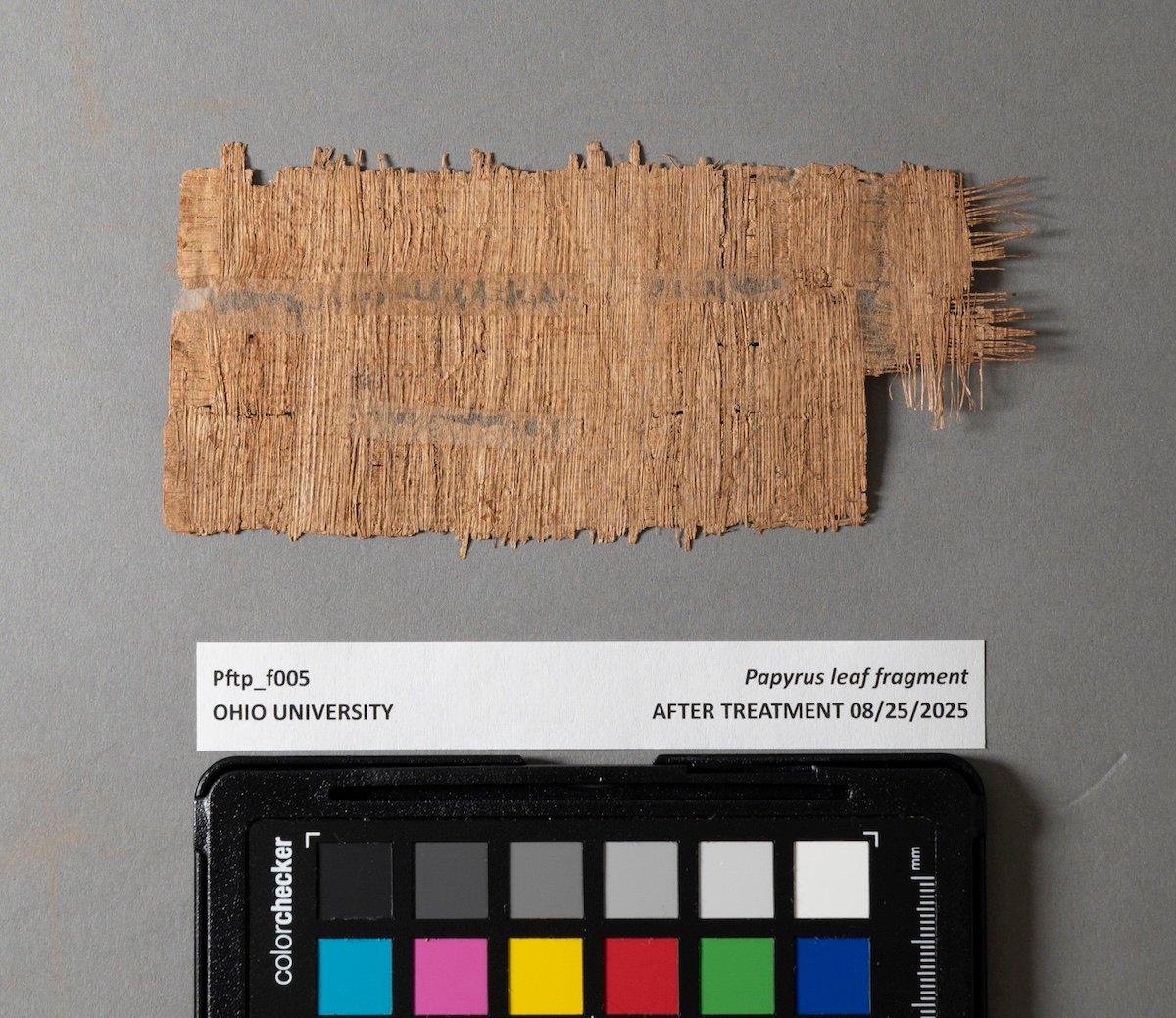
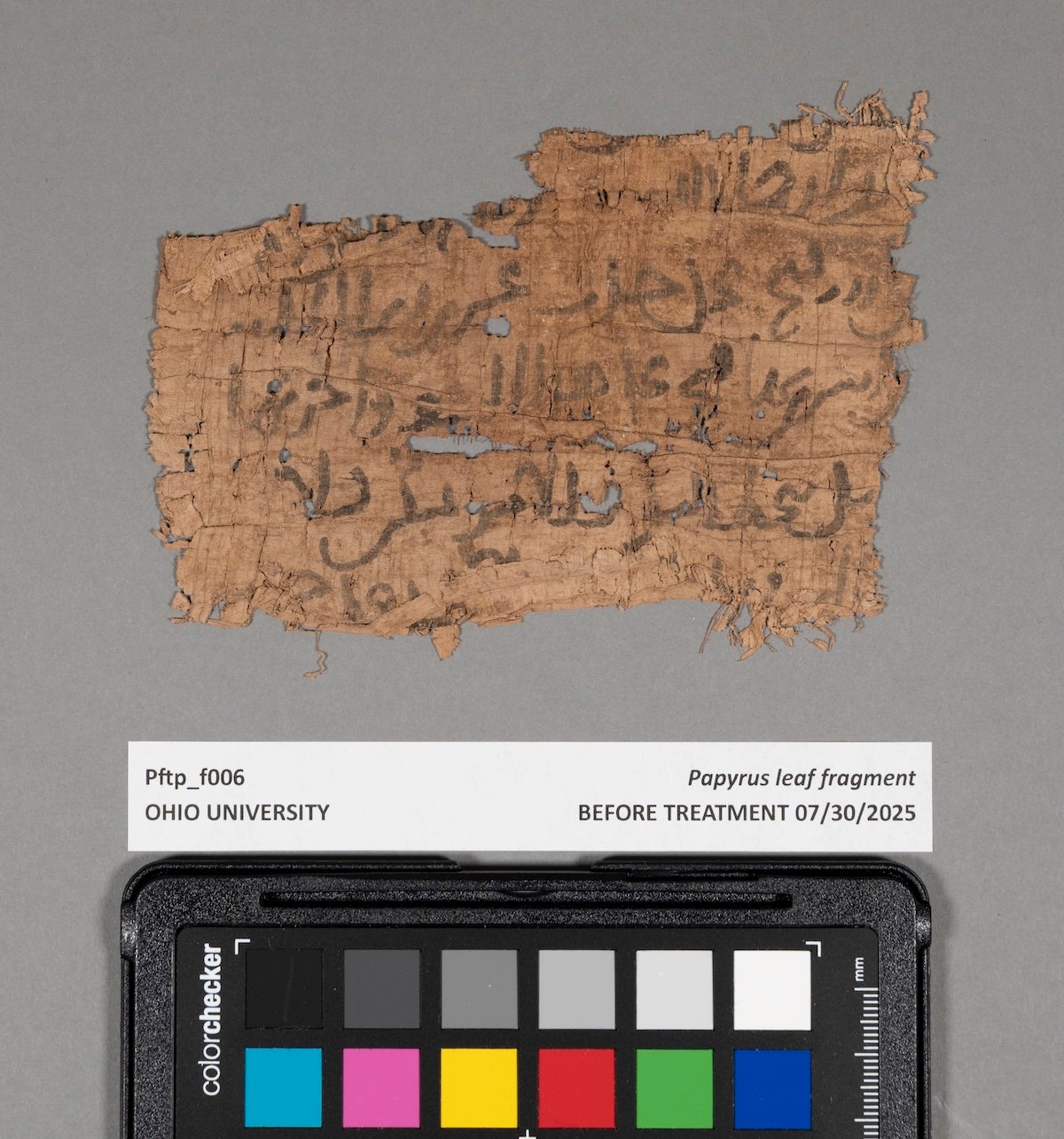
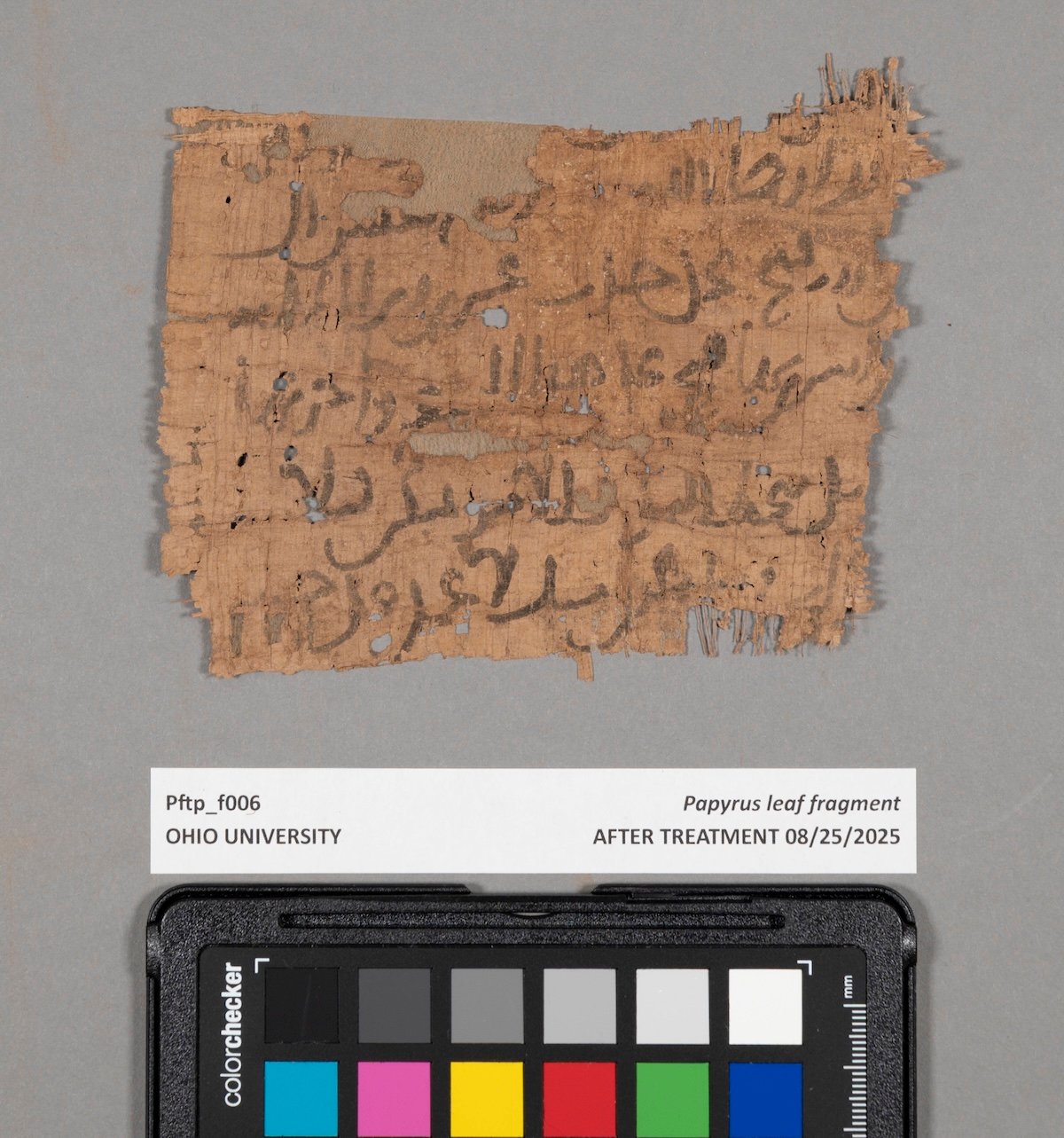
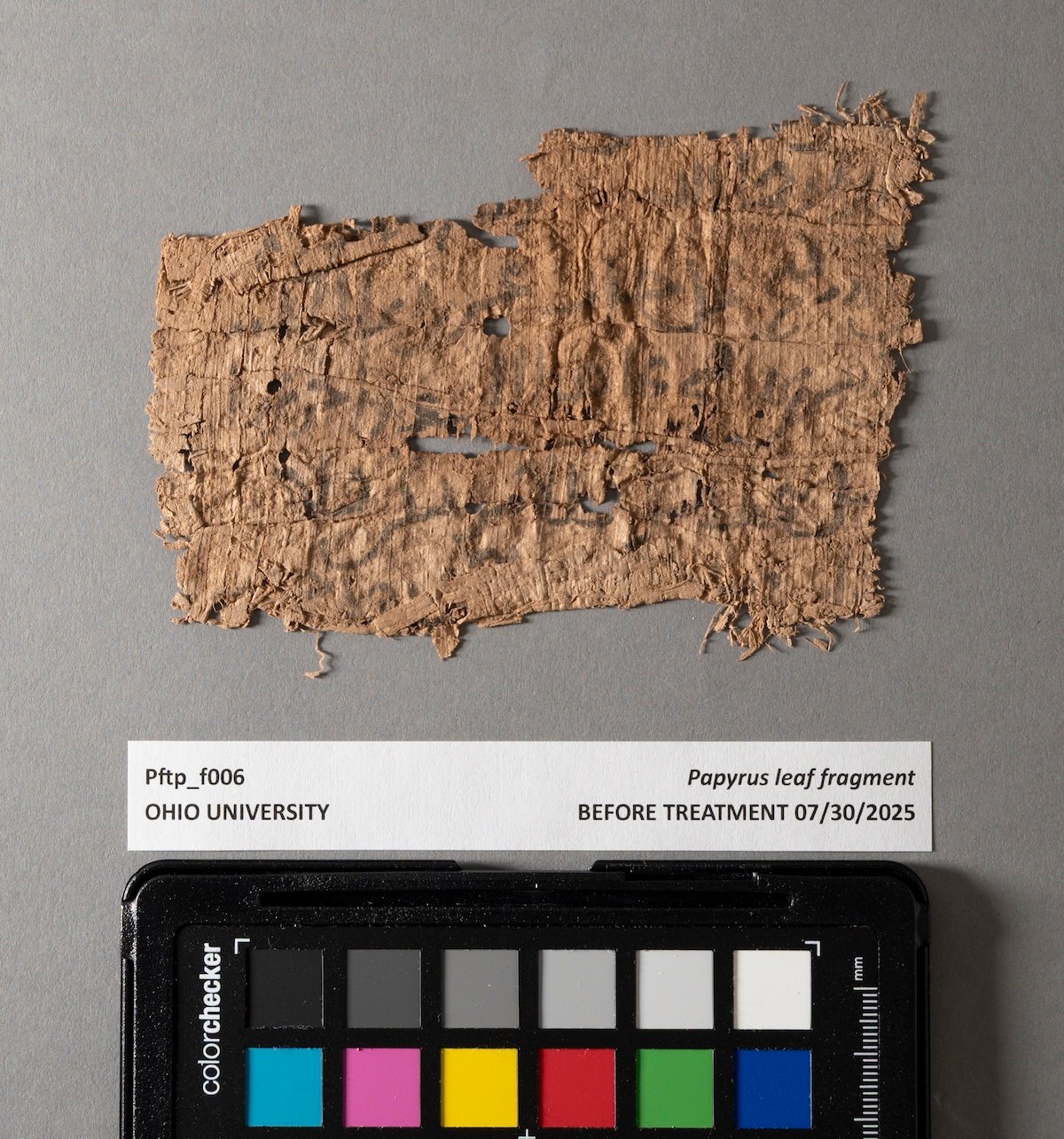
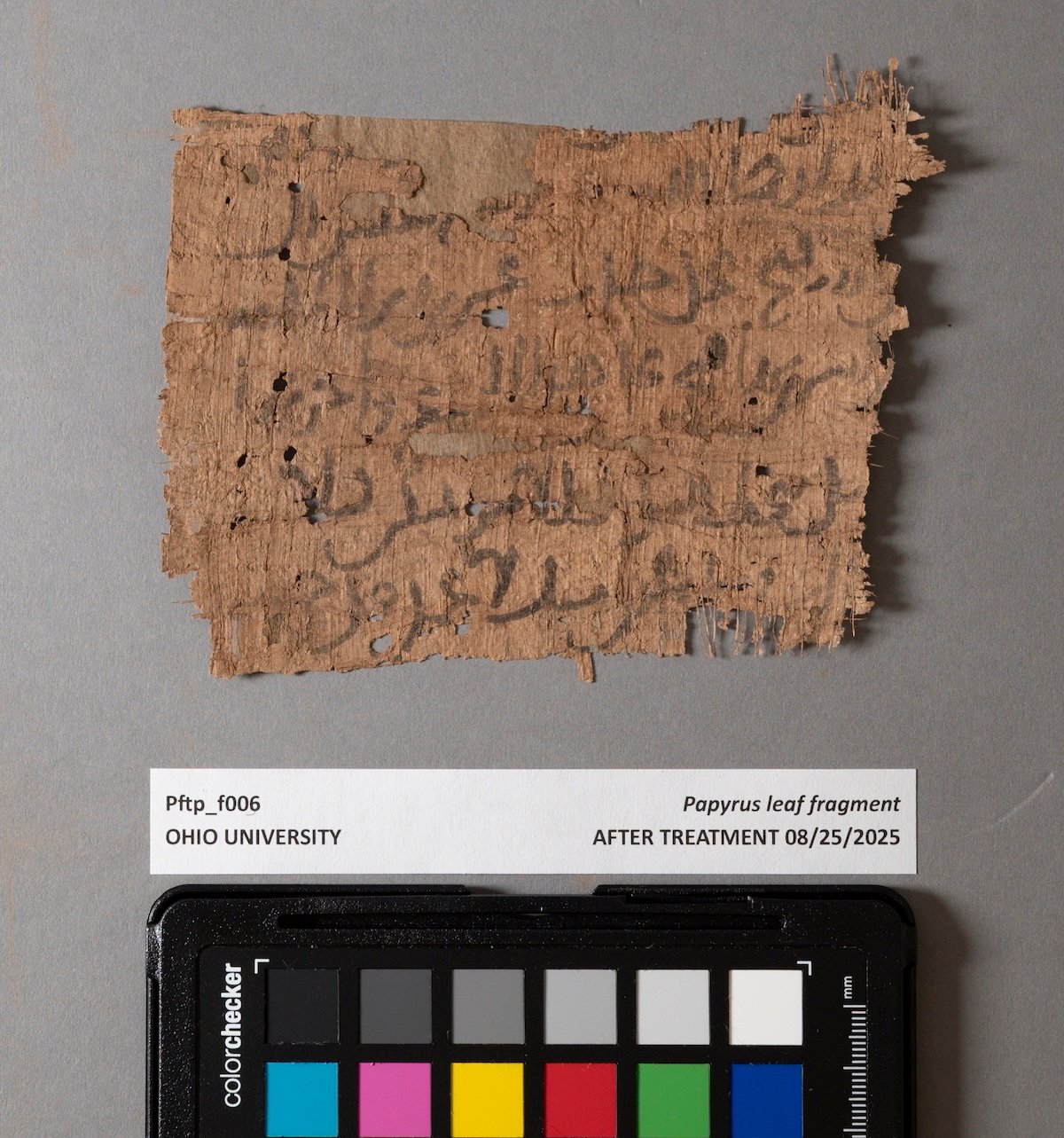
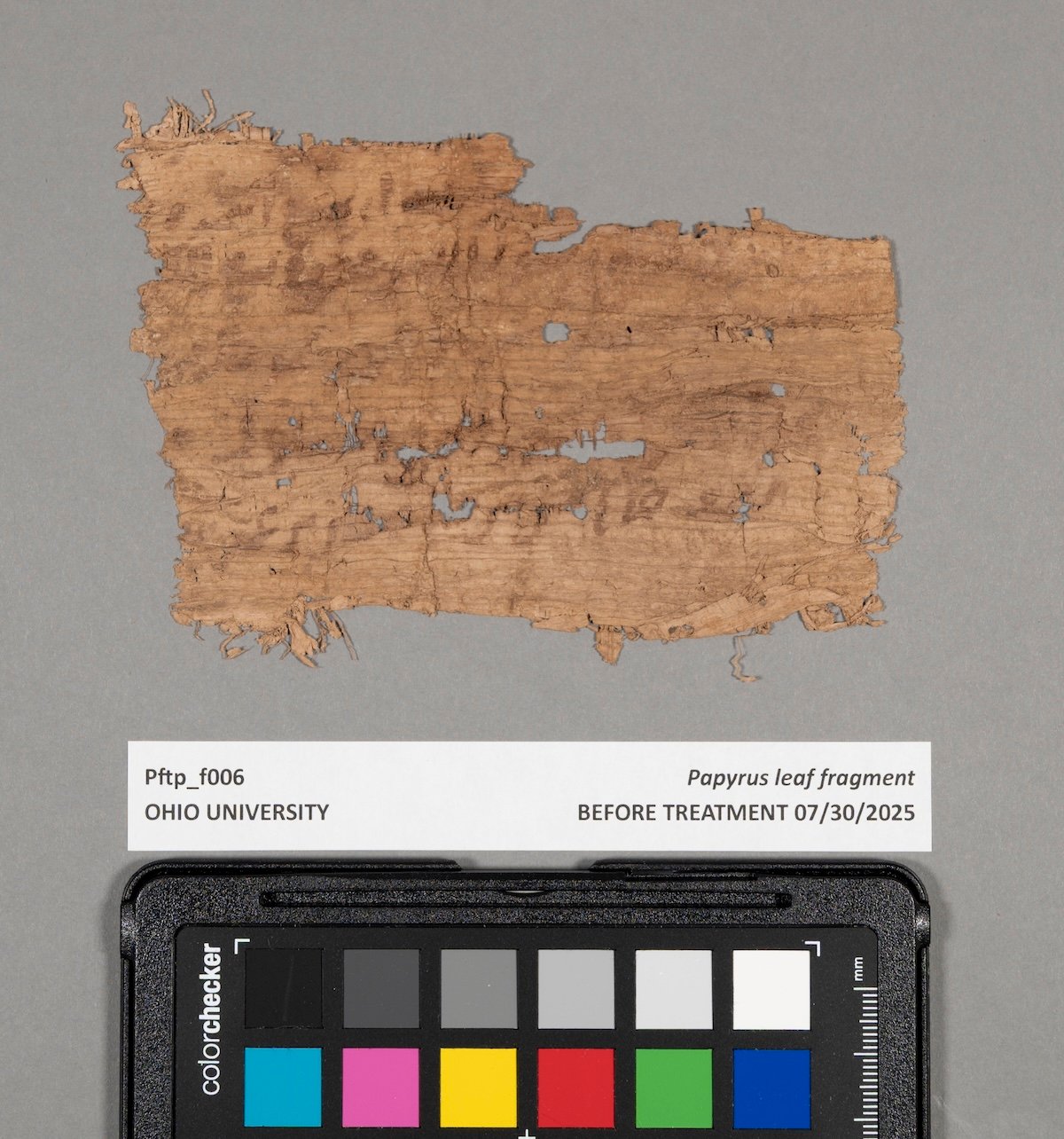
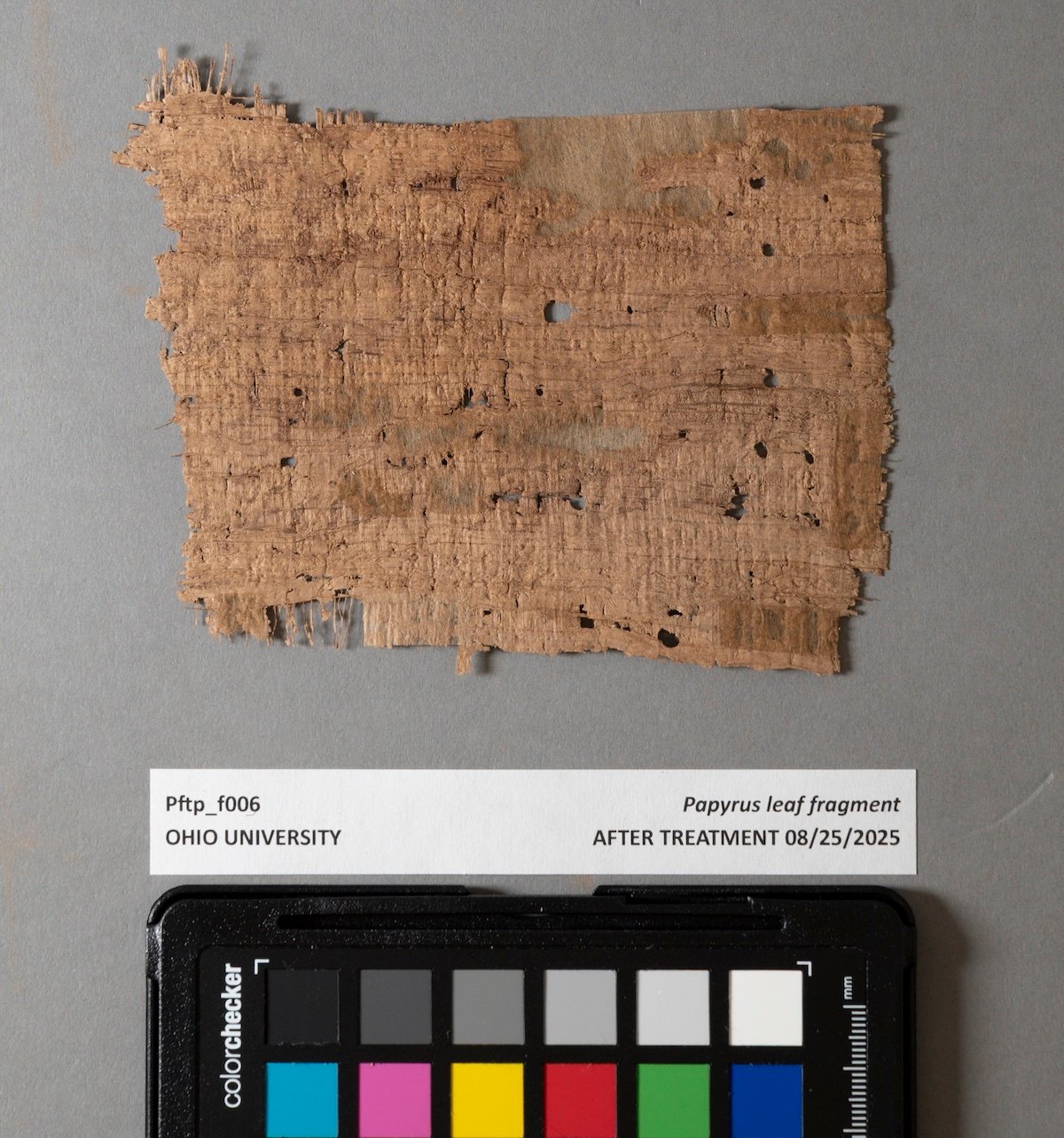
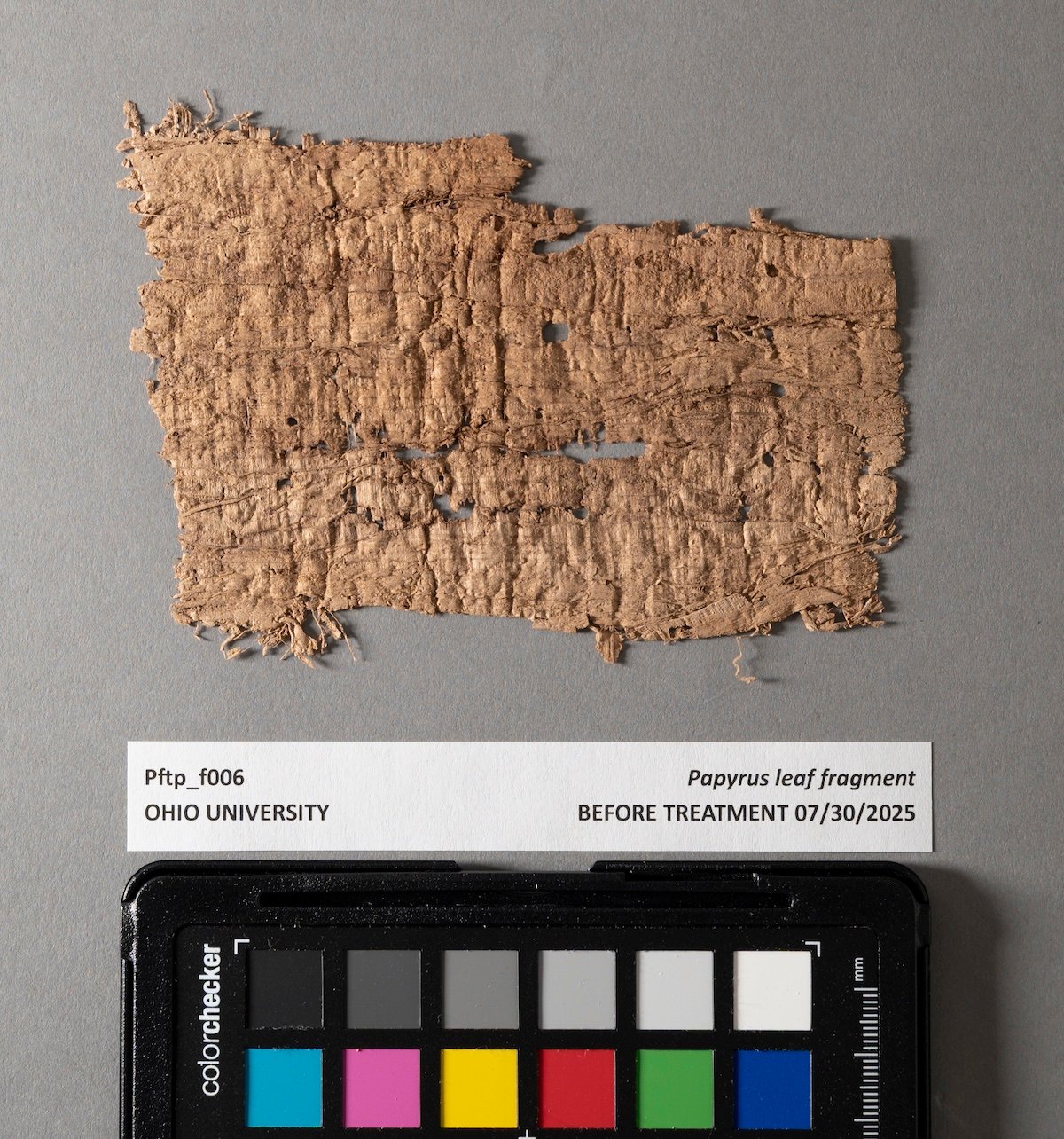
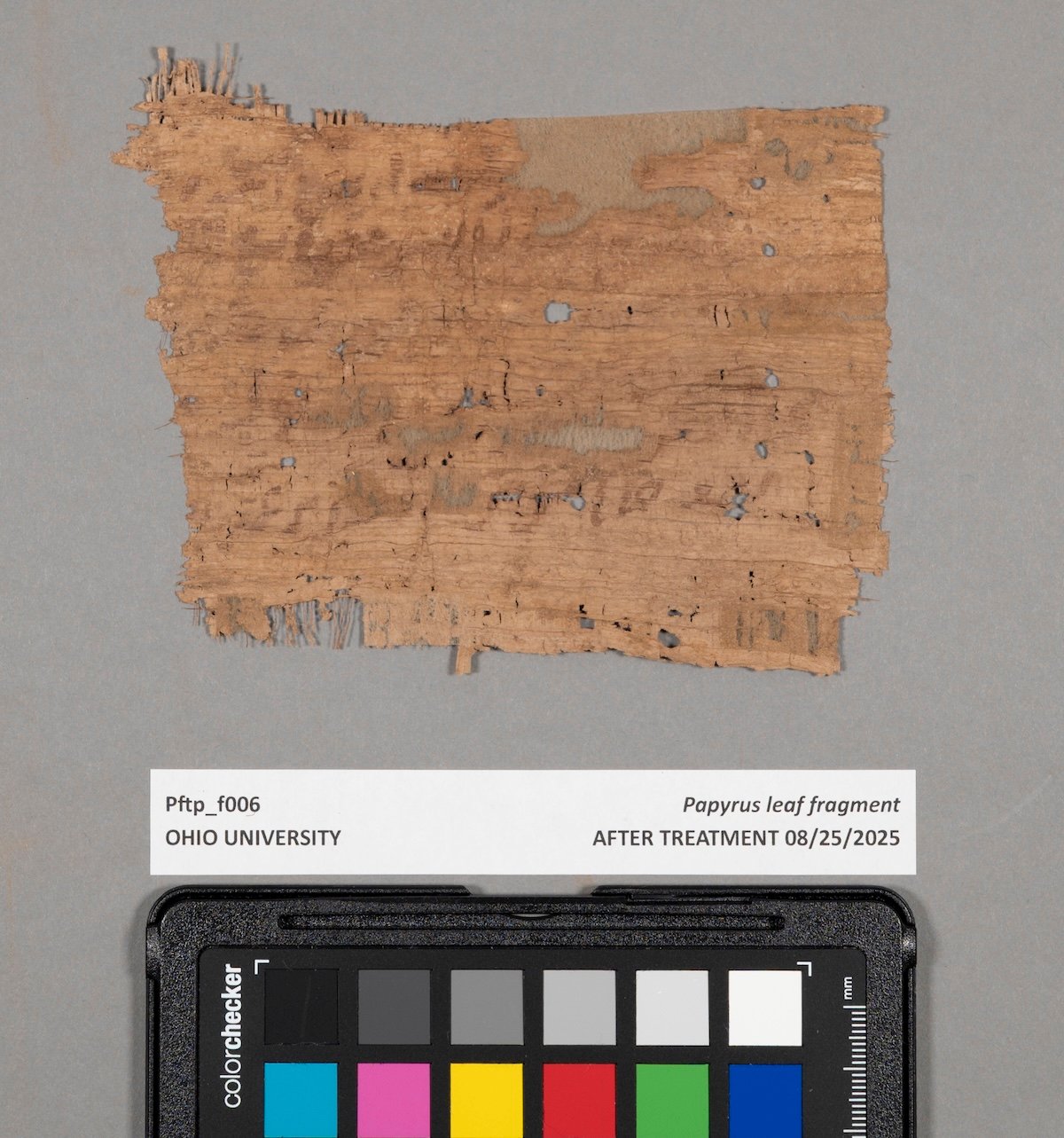
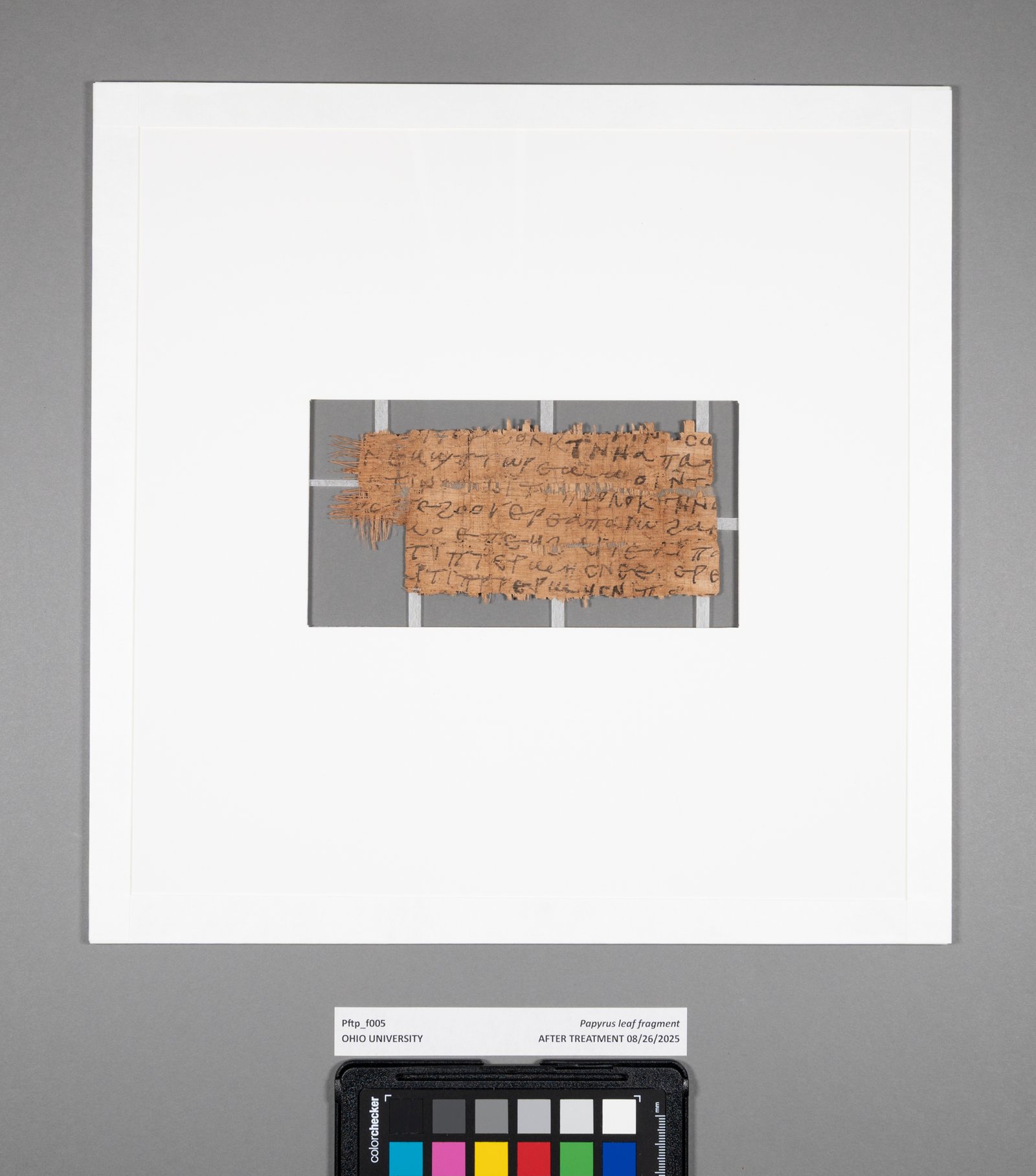
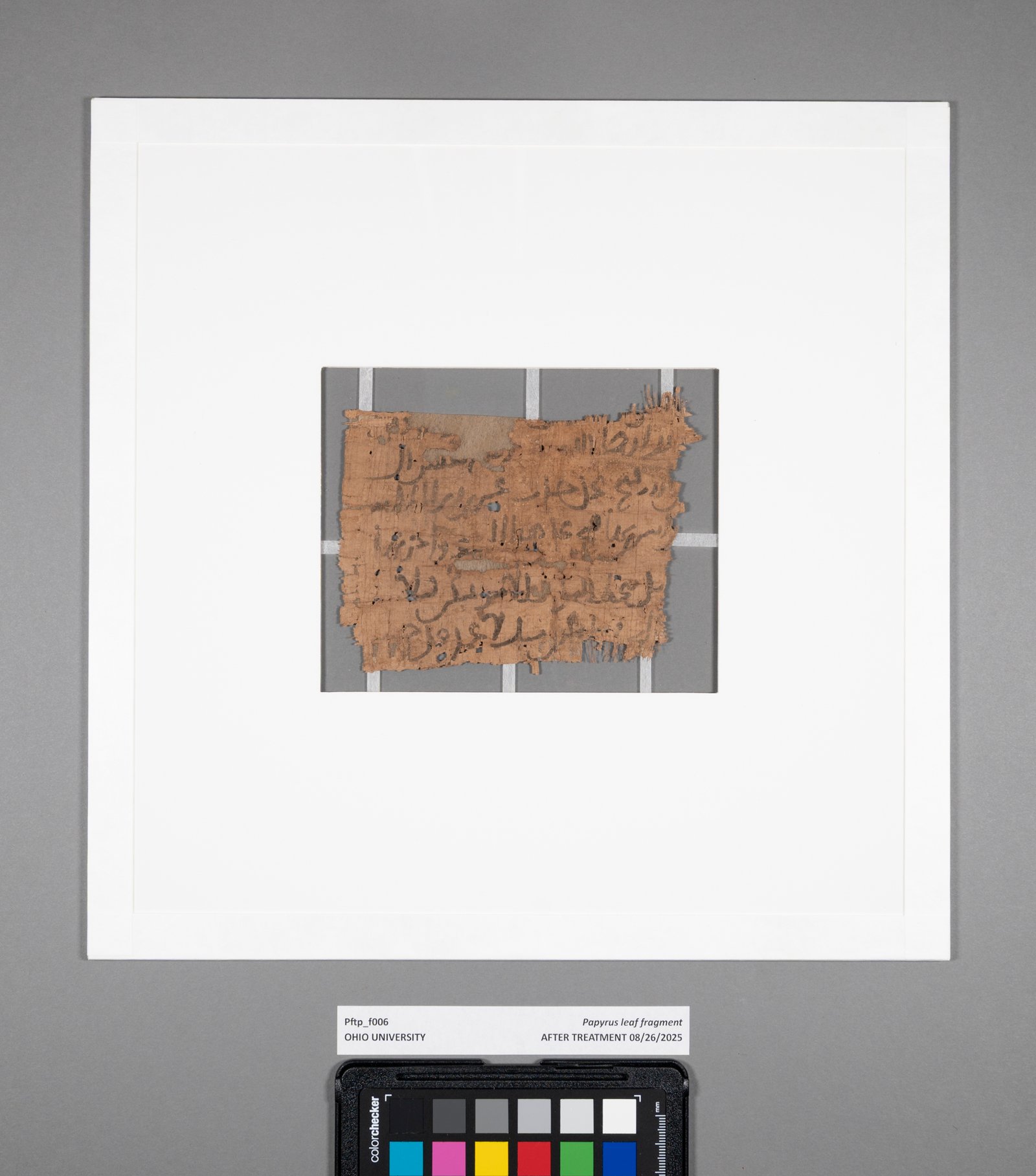
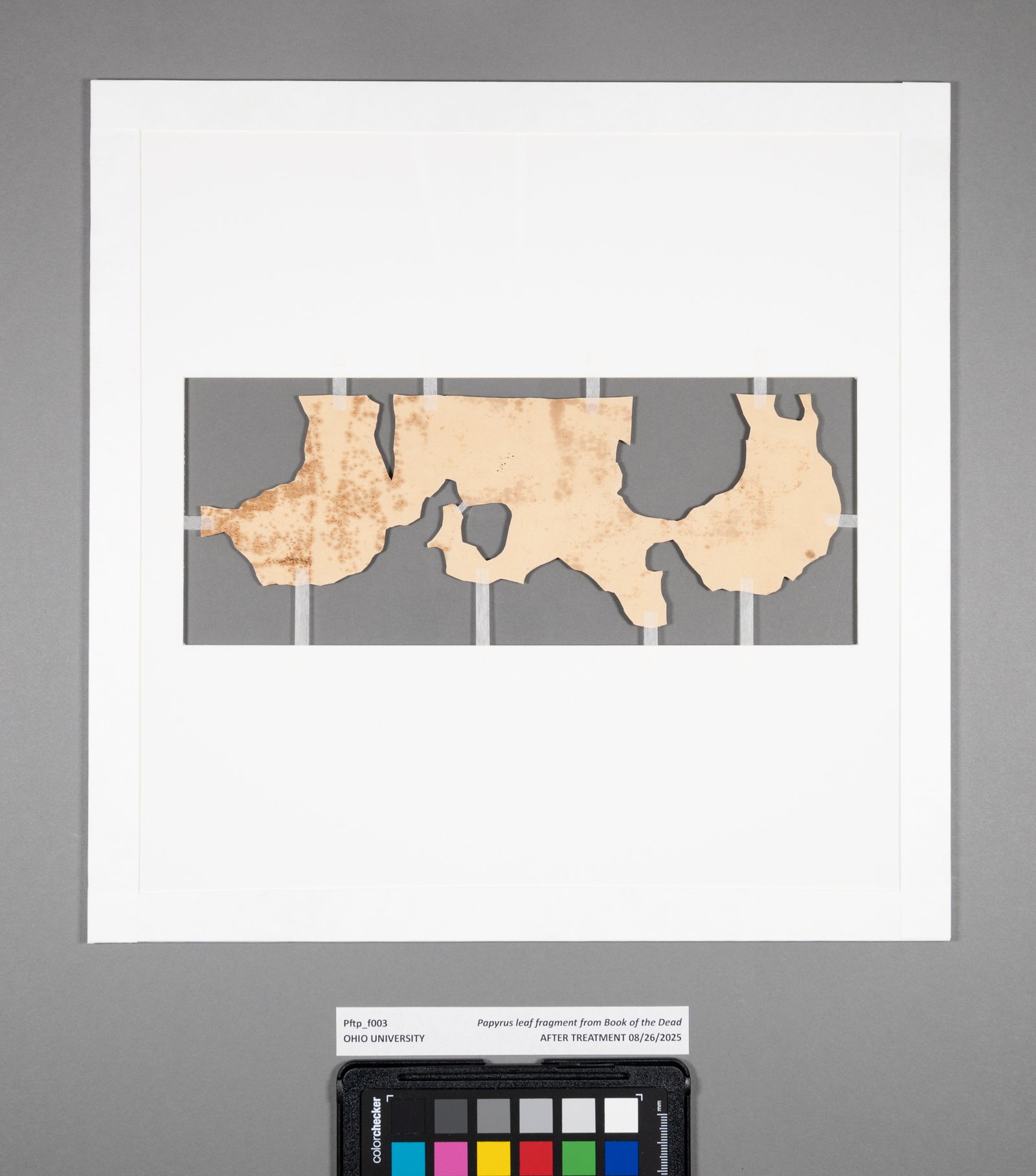
PFTP F005 & PFTP F006

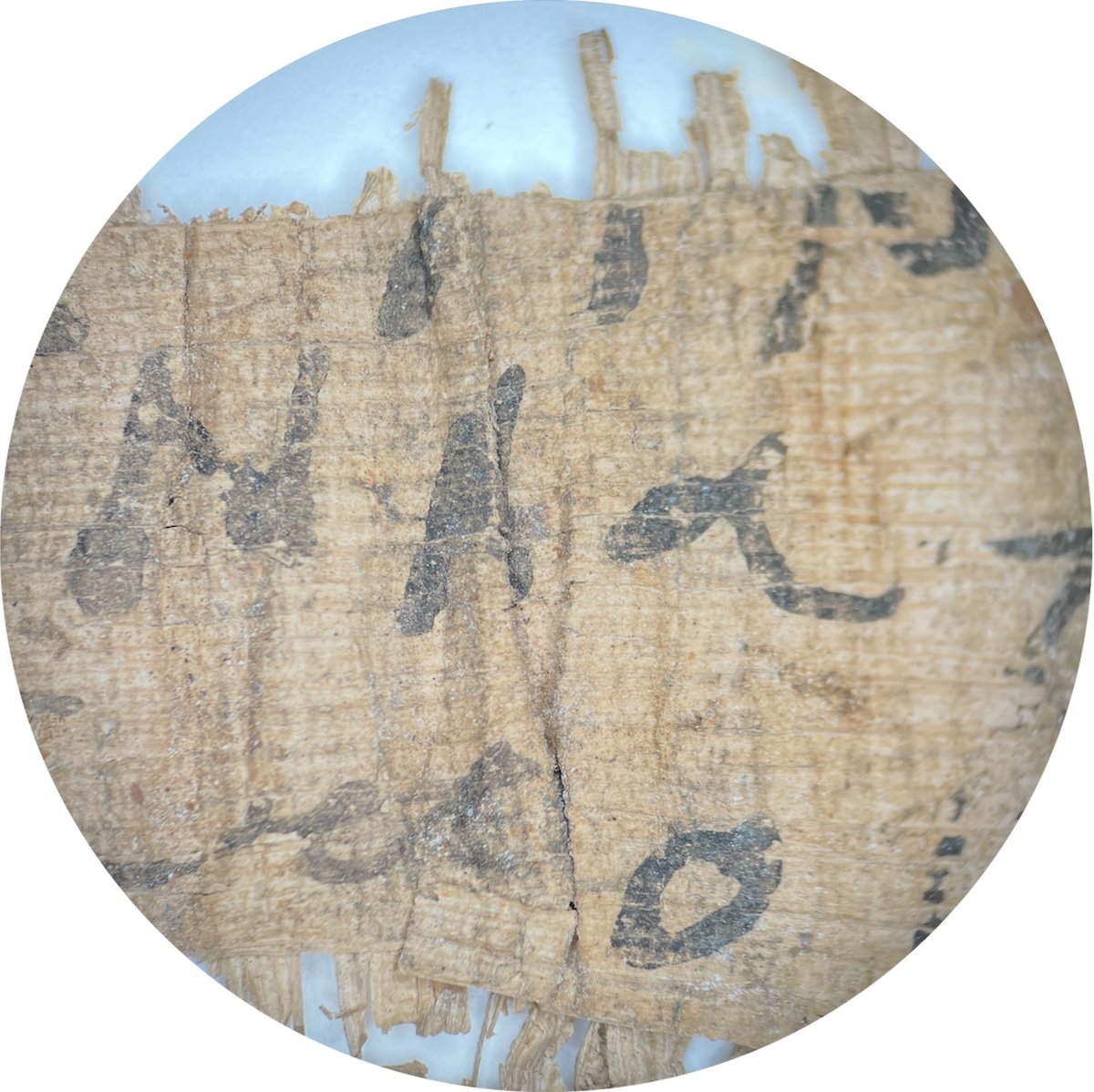
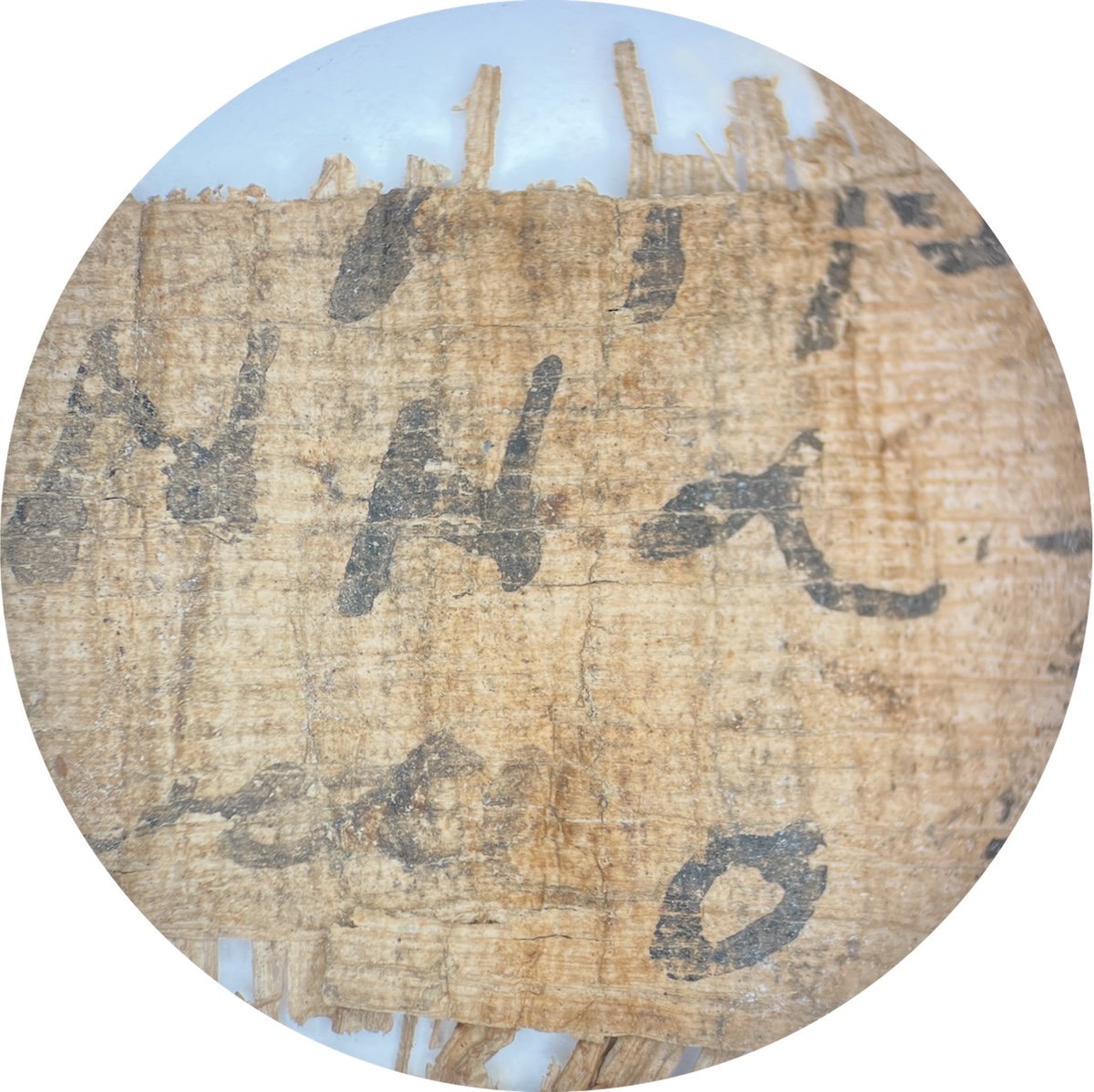
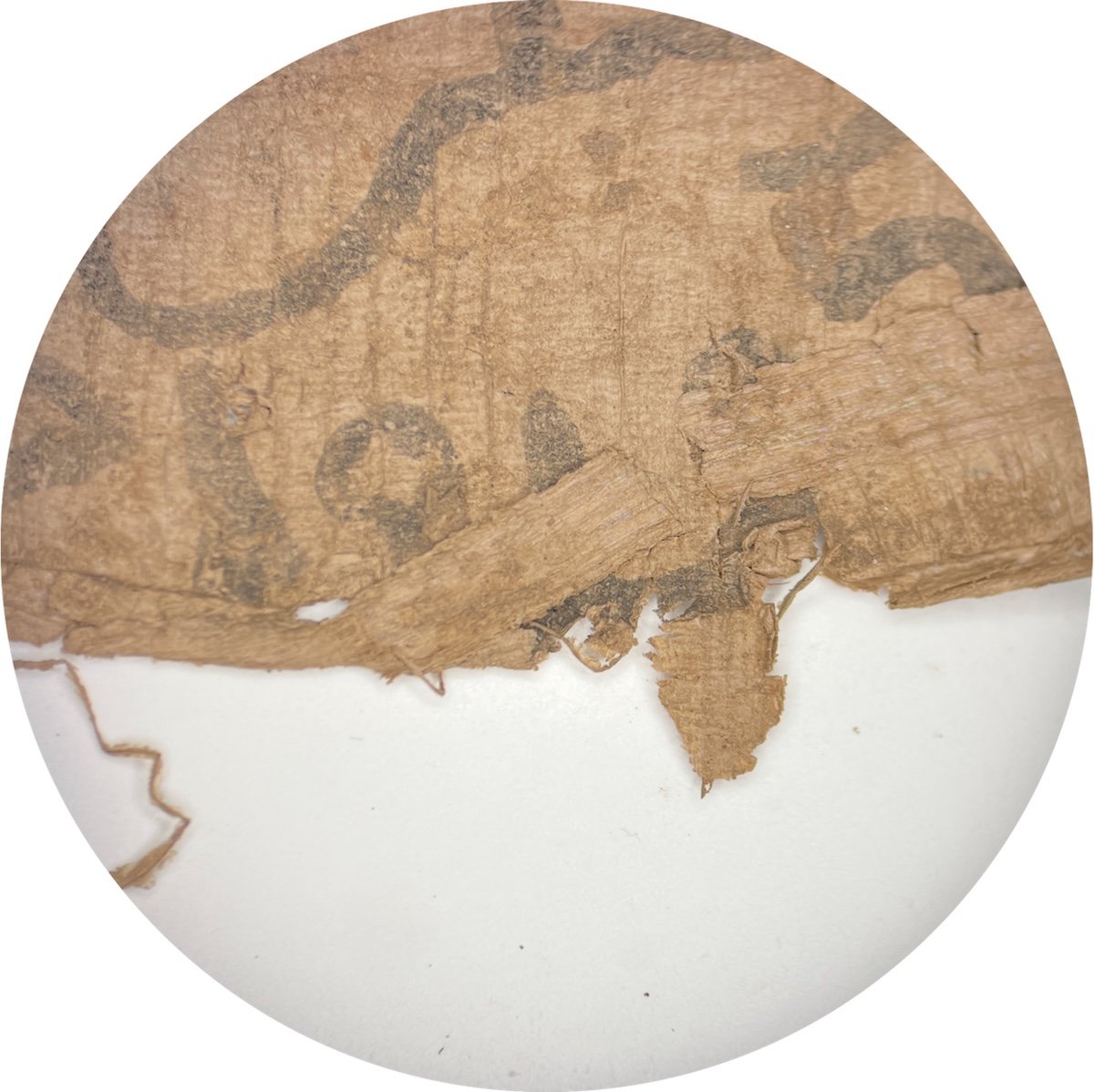
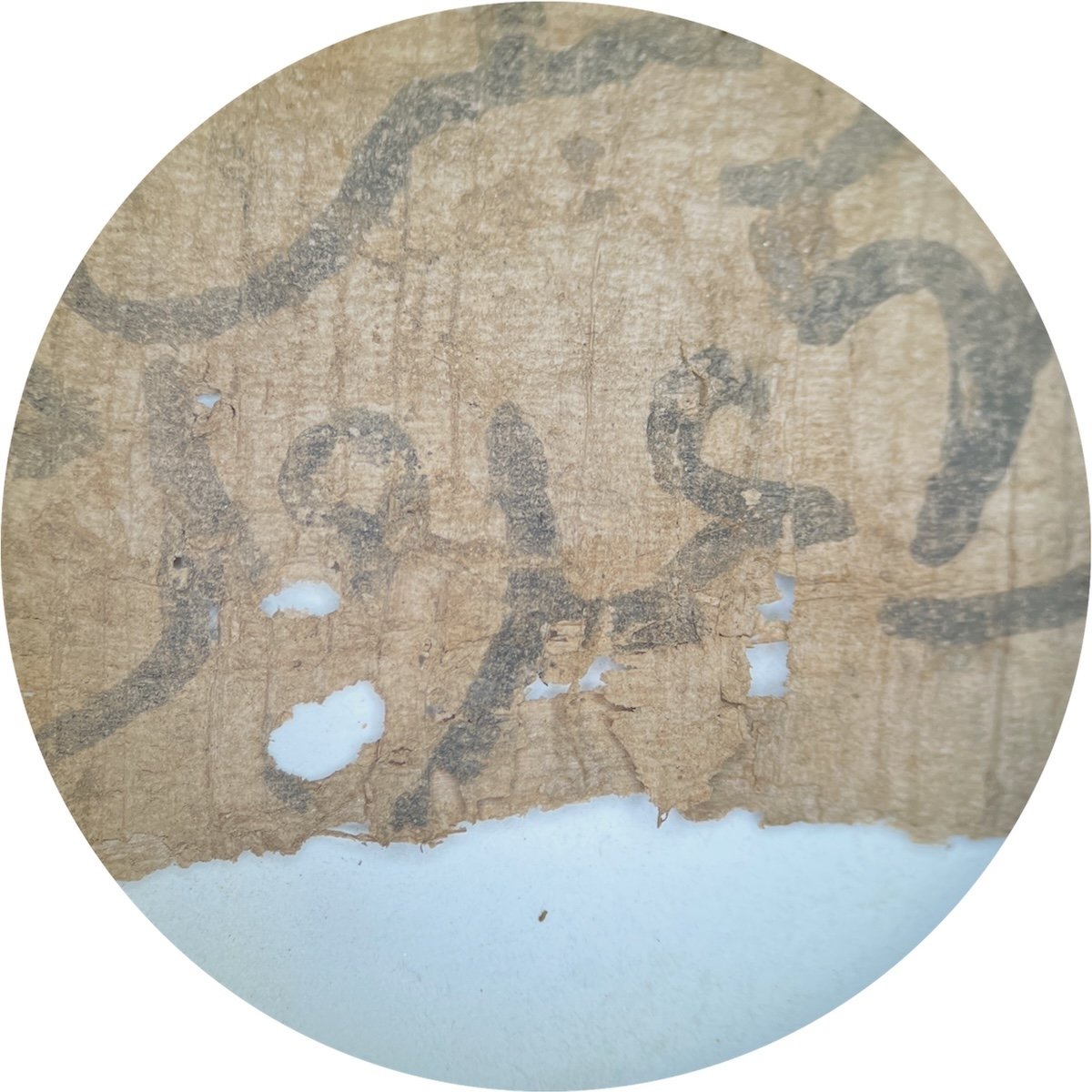
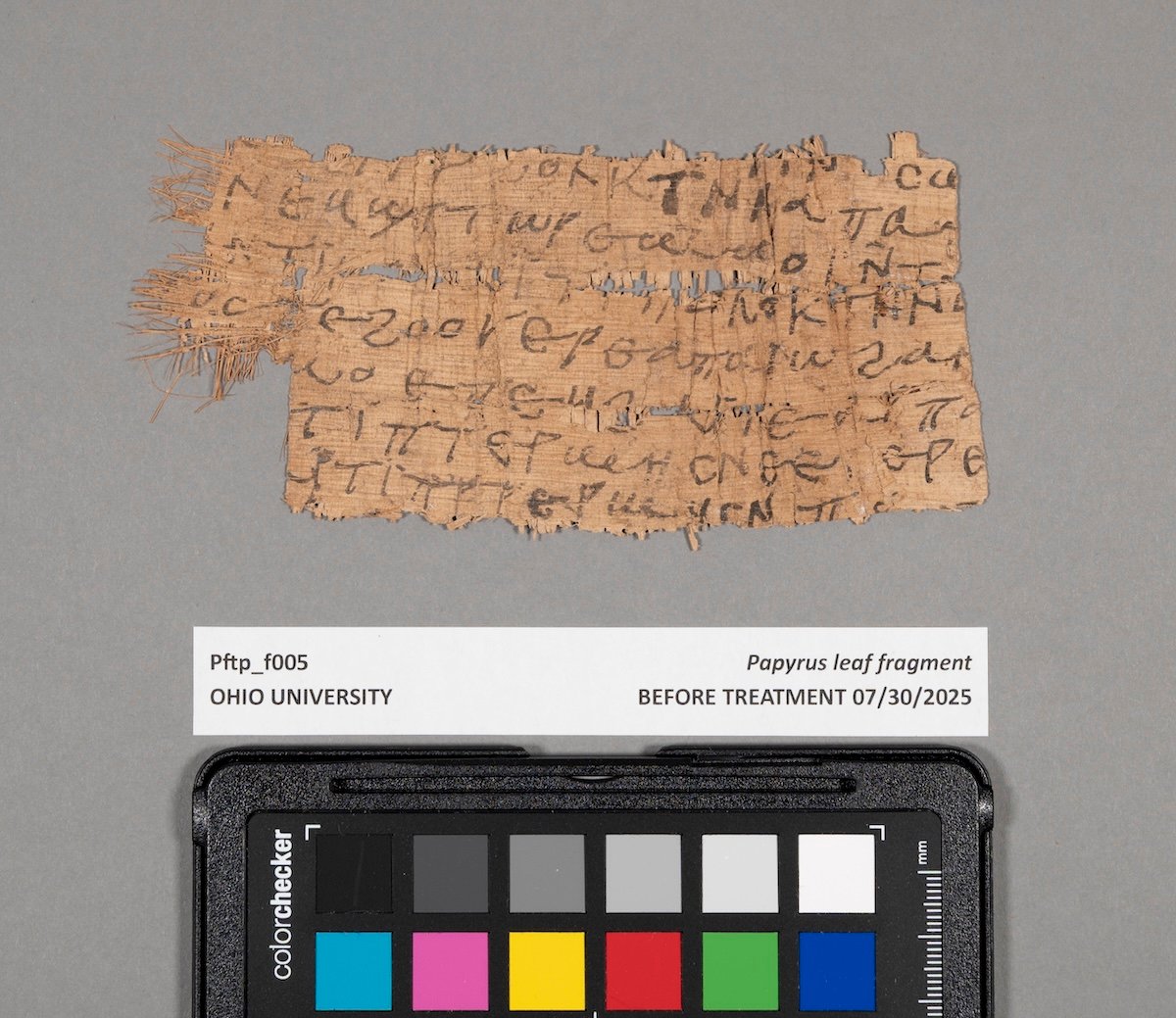
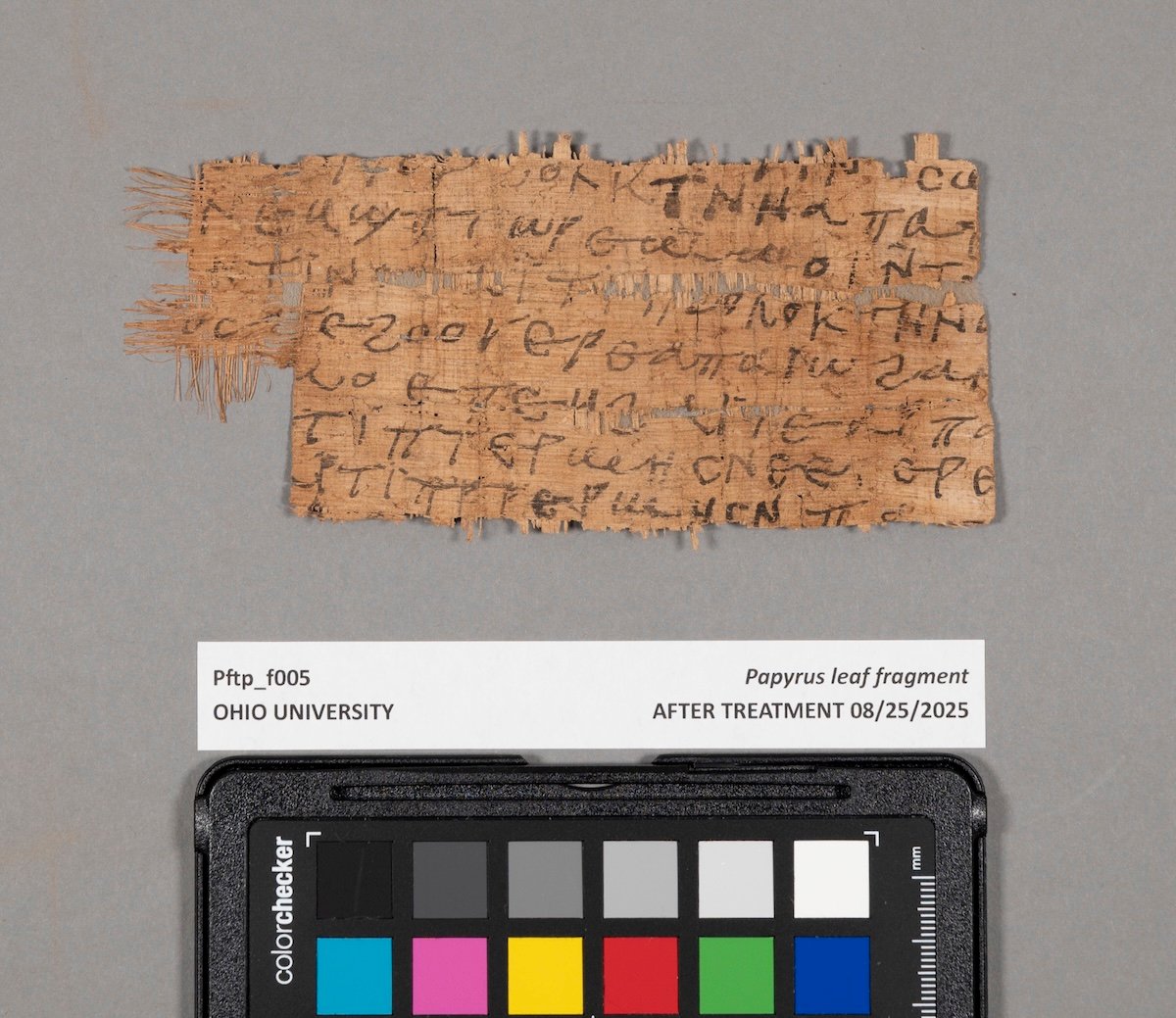
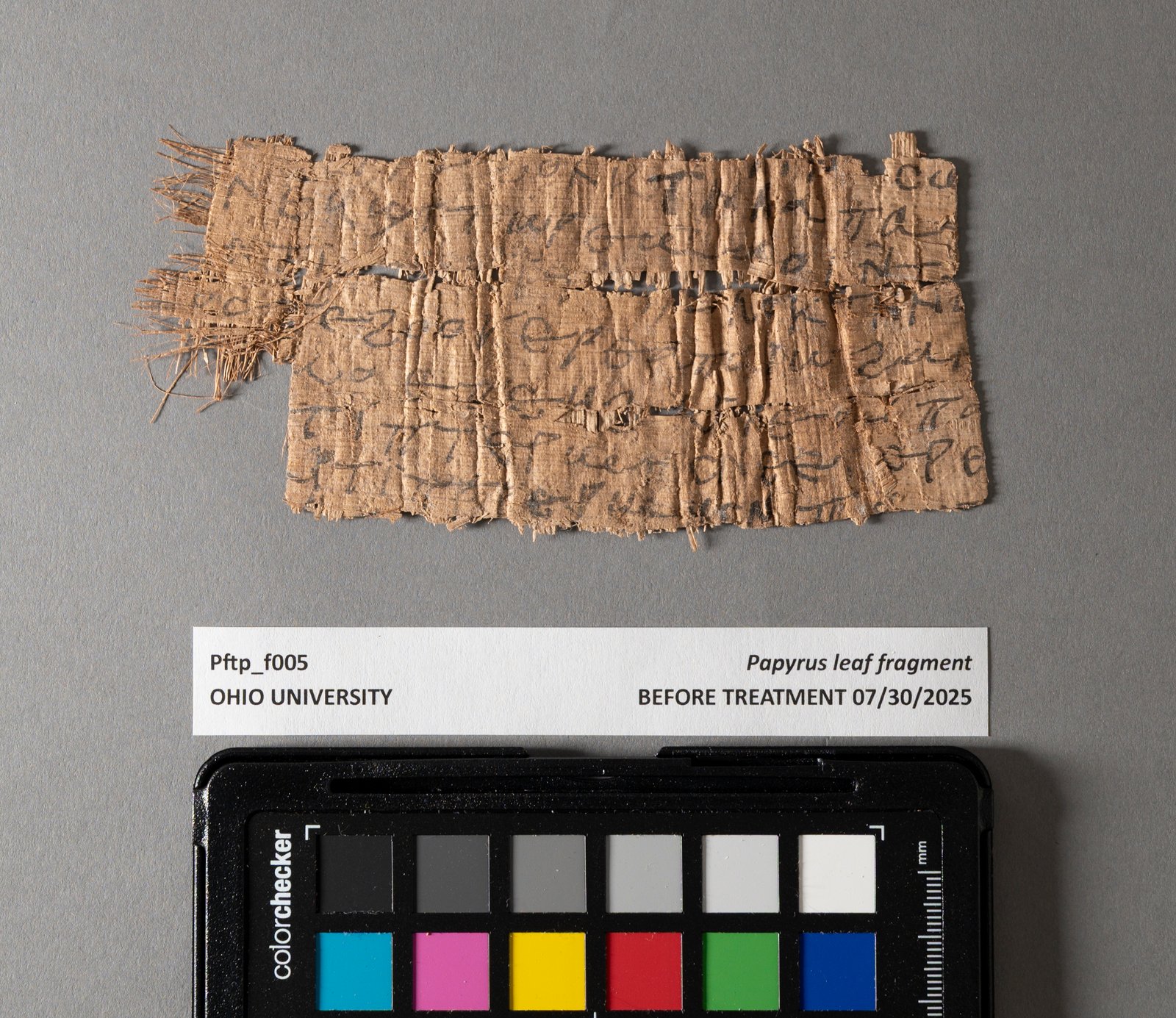
Treatment Notes: These papyrus fragments were extremely fragile with many creases and losses. The edges were frayed with broken fibers. The black media were slightly friable but insoluble in alcohol and water.

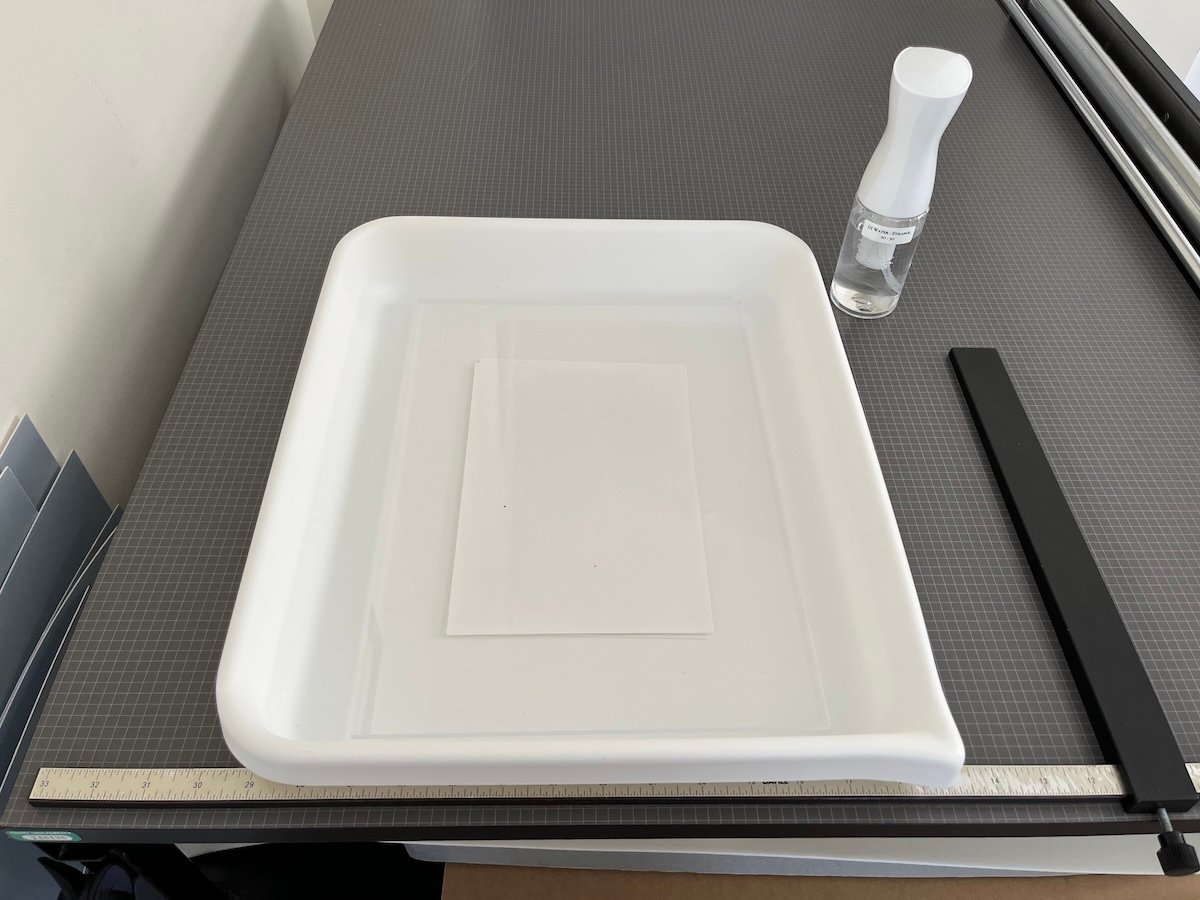
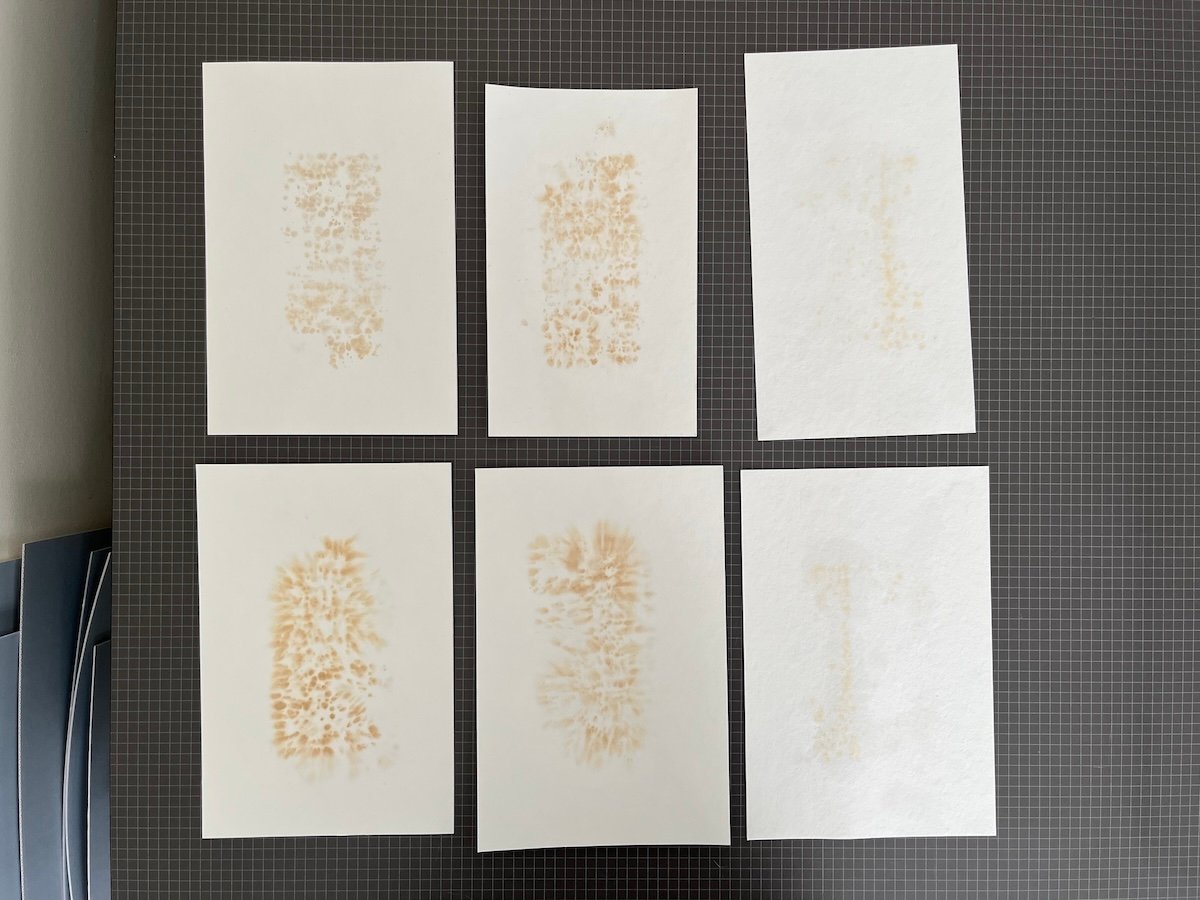
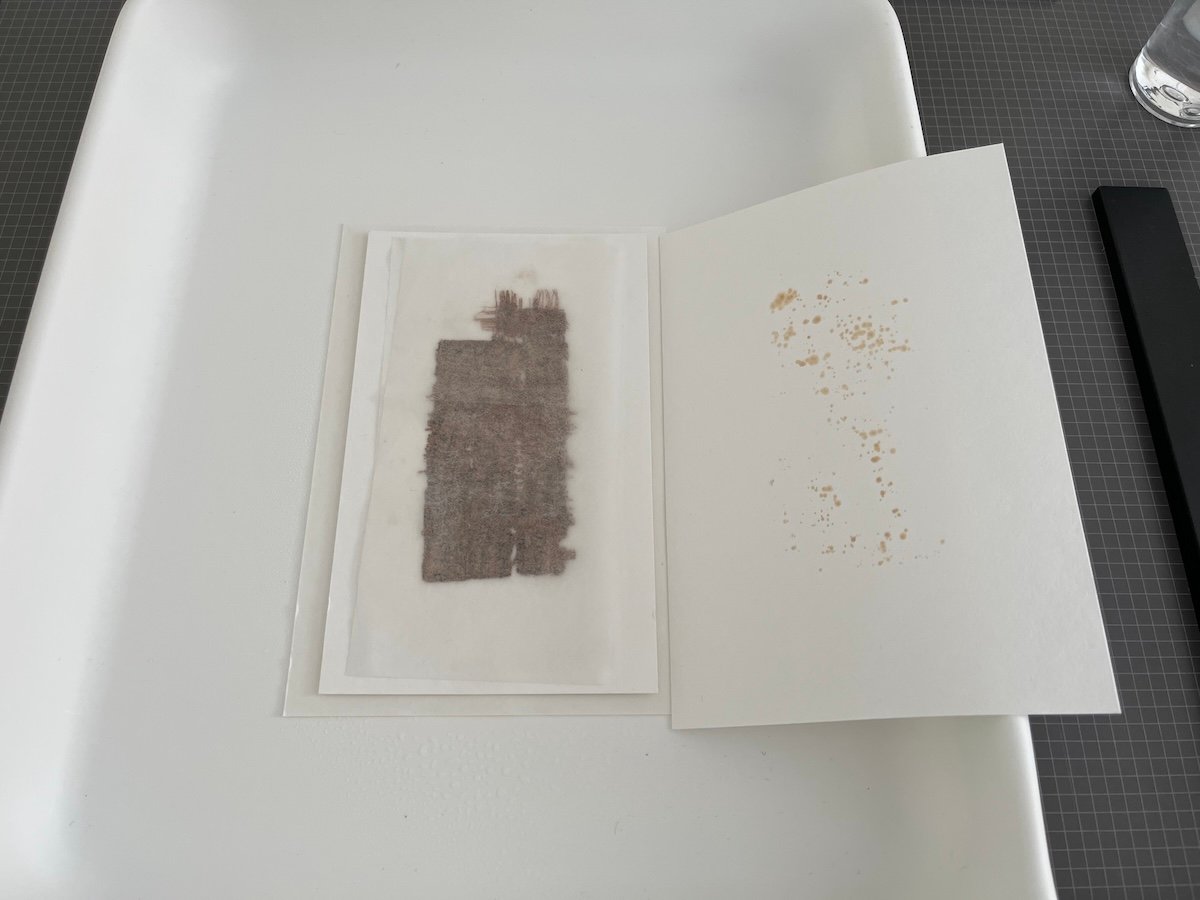
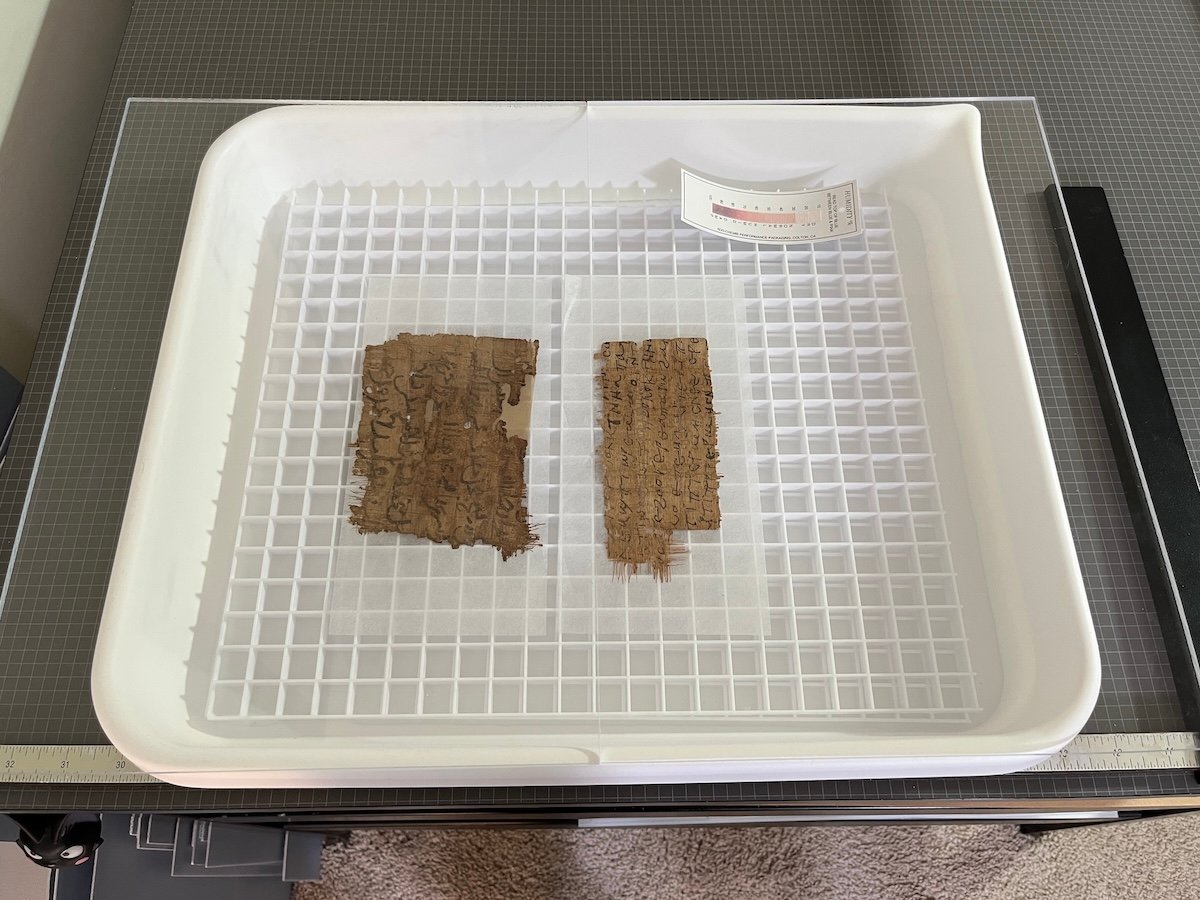
The pieces were initially unfolded by locally humidifying the creases, working under the microscope. Then, they were blotter-washed in a water-ethanol mix several times. The fibers were realigned and consolidated with 1% methylcellulose, and the weak areas were reinforced with acrylic-toned Tengujo and 1% MC. The treated pieces were humidified and flattened. The items were then rehoused between two sheets of Gorilla Glass, hinged onto a 4-ply window mat.
PFTP F005

Title: [Papyrus leaf fragment]

Created: Egypt or Greece, ca. 100 BCE – 100 CE

Dimensions: H 6.4cm x W 13.3cm

PFTP F006

Title: [Papyrus leaf fragment]

Created: Middle East, ca. 9th Century

Dimensions: H 8.3cm x W 12.1cm

Housing Examples

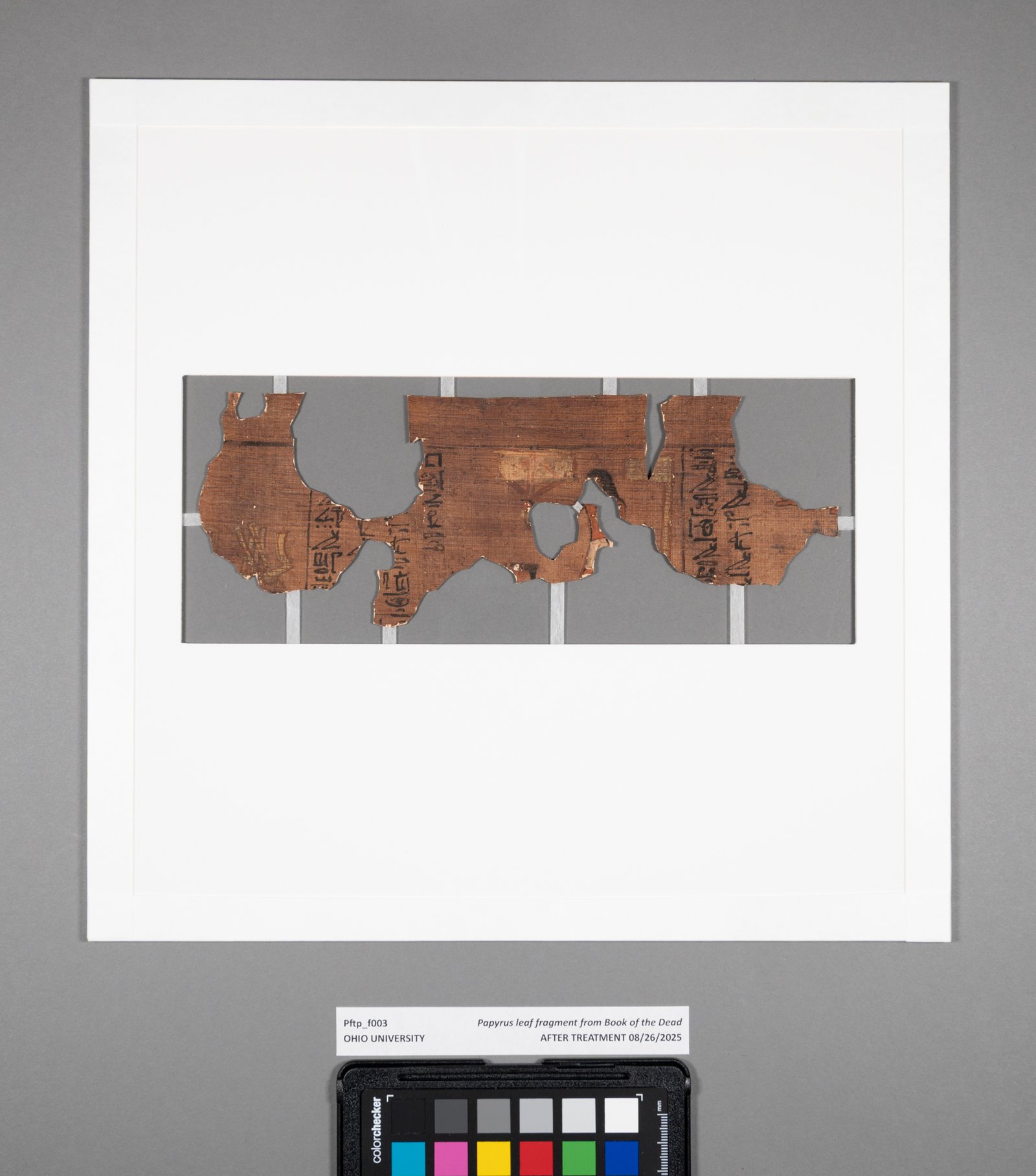
Papyrus Housing

Rehousing Note: The papyrus fragments were hinged to a 4-ply mat board using strips of Uso Mino Thin and wheat starch paste, then sandwiched between two sheets of Gorilla Glass, sealed with Tyvek tape.

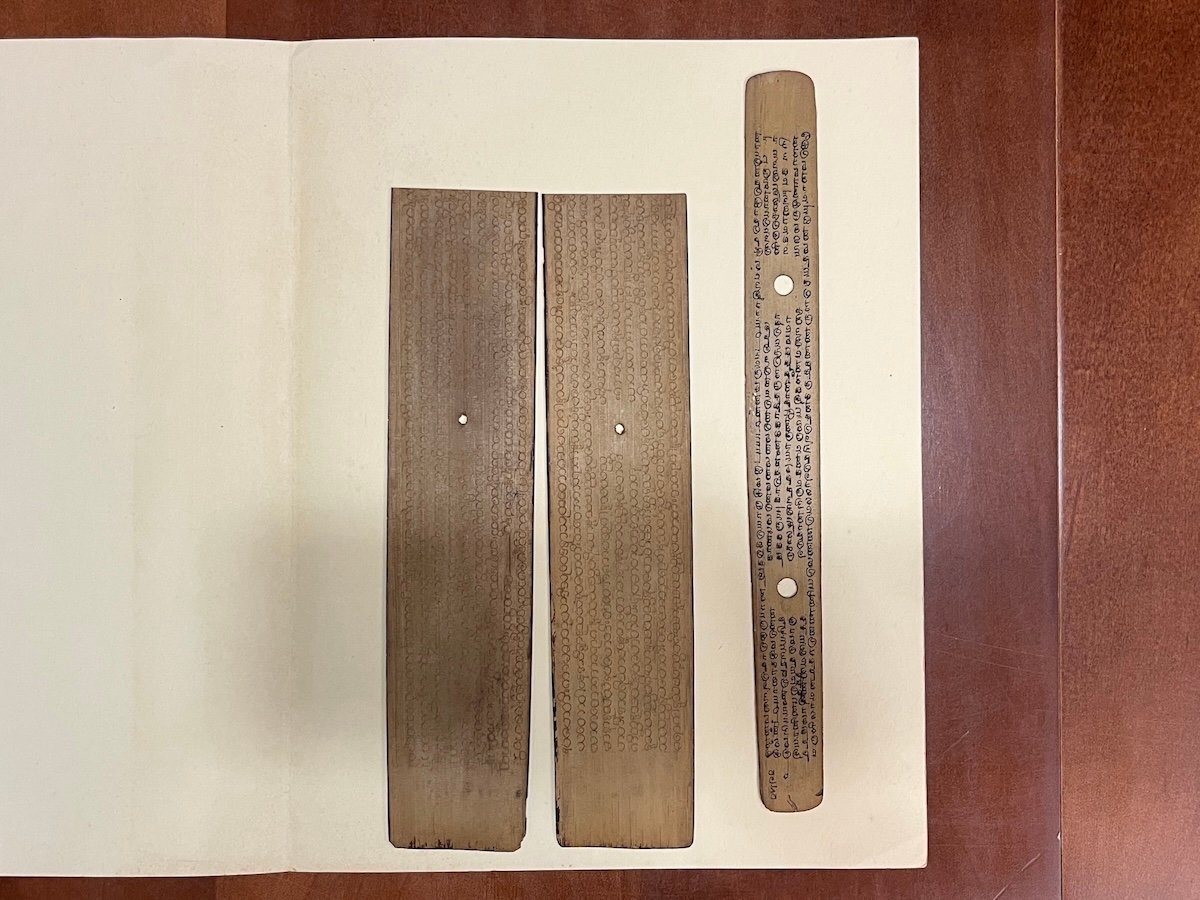
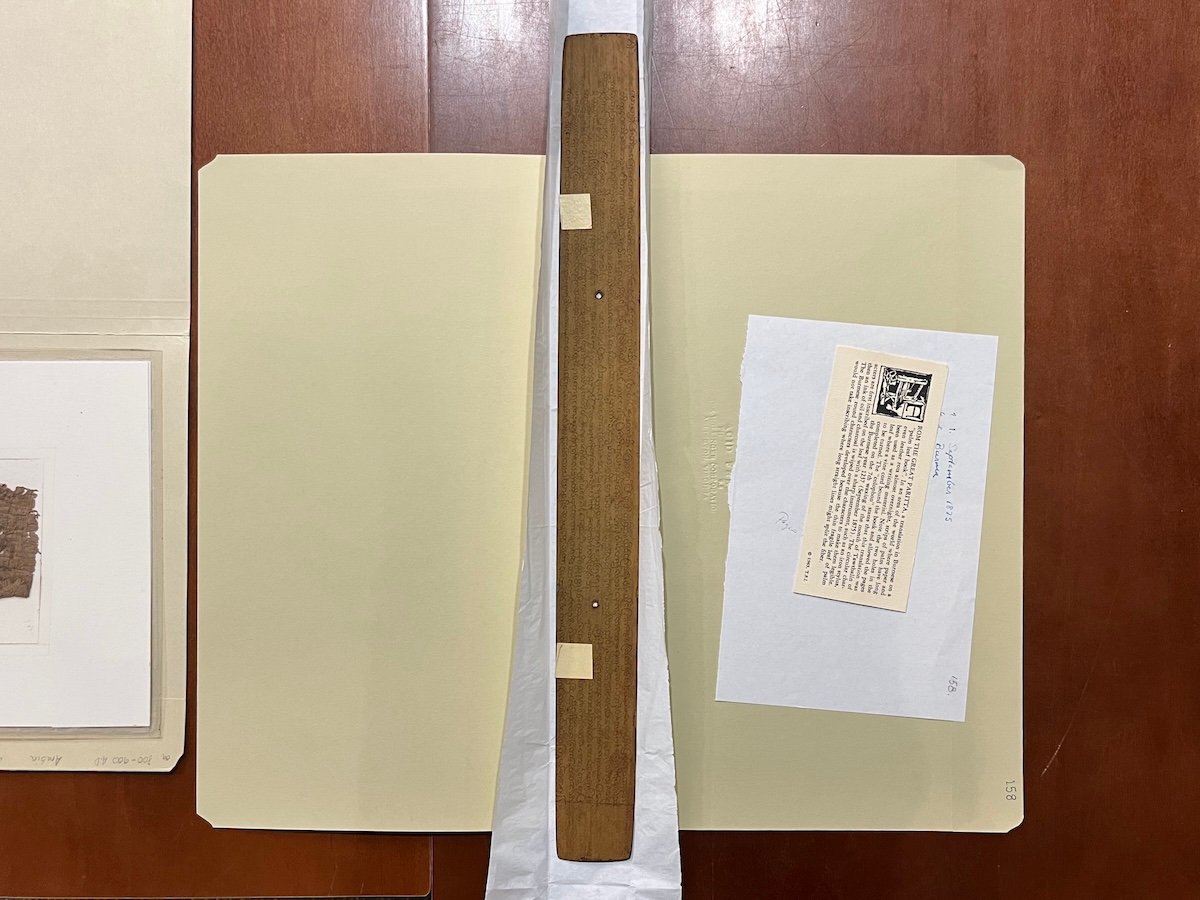
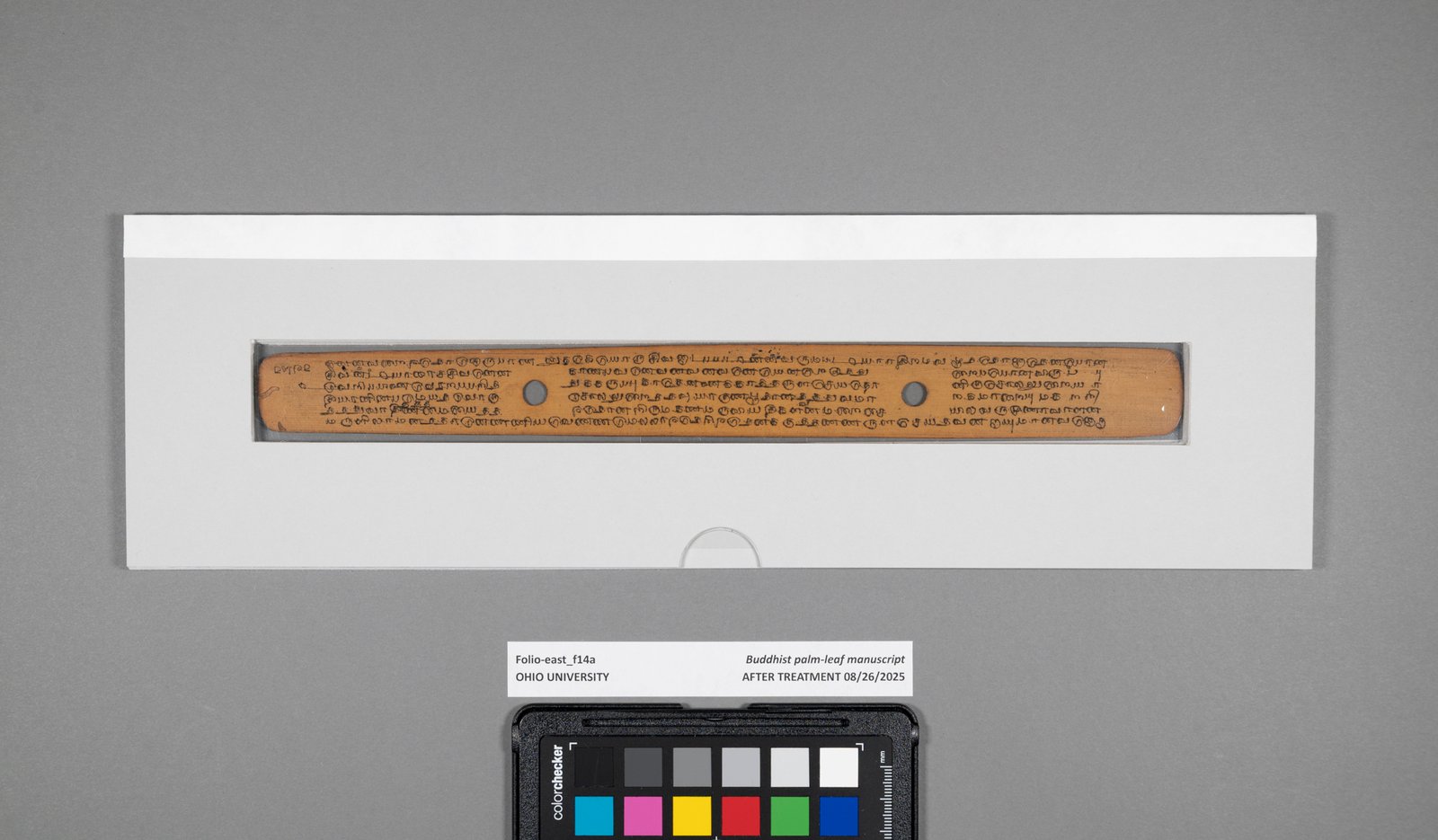
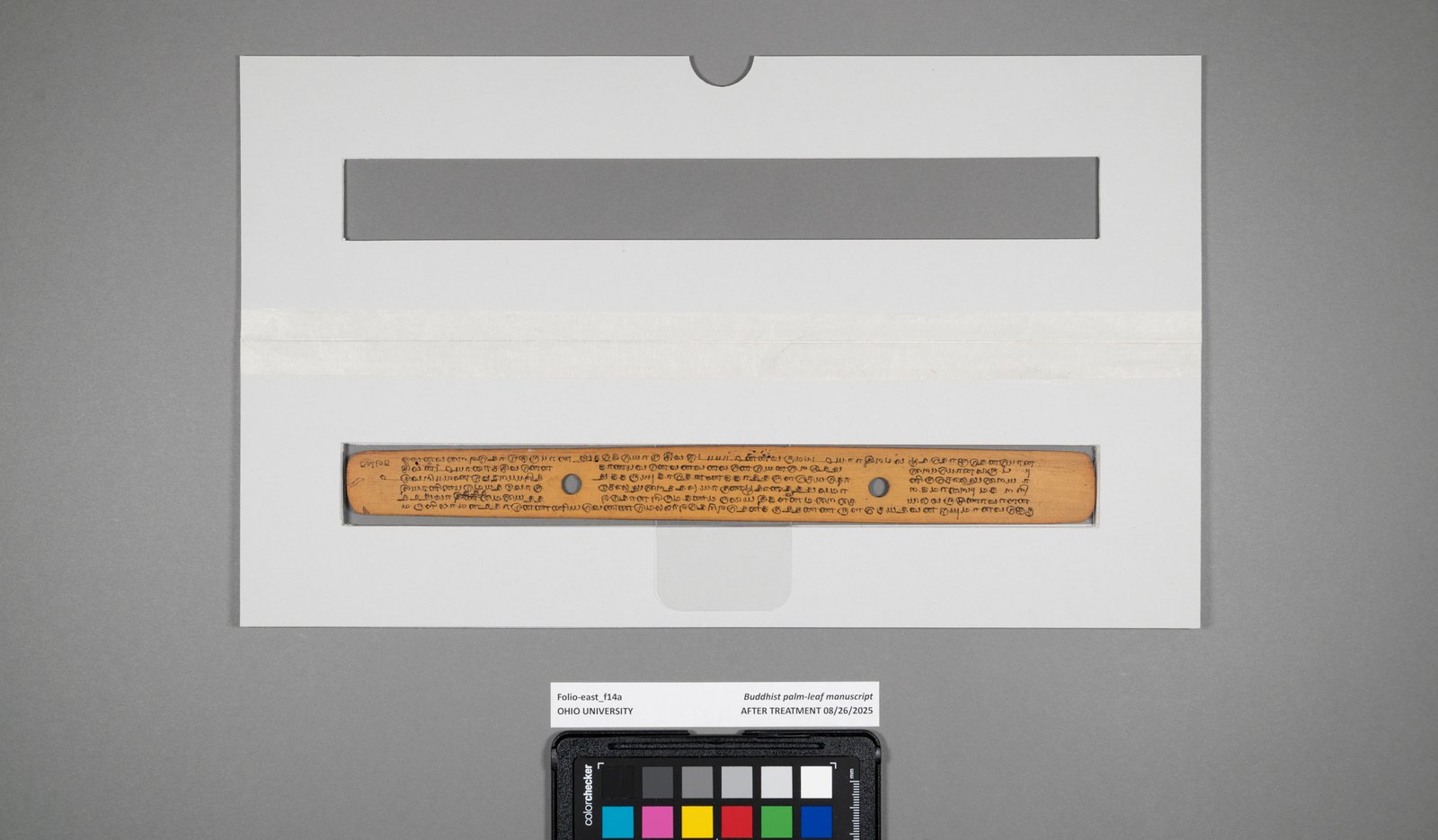
Palm Leaf Housing

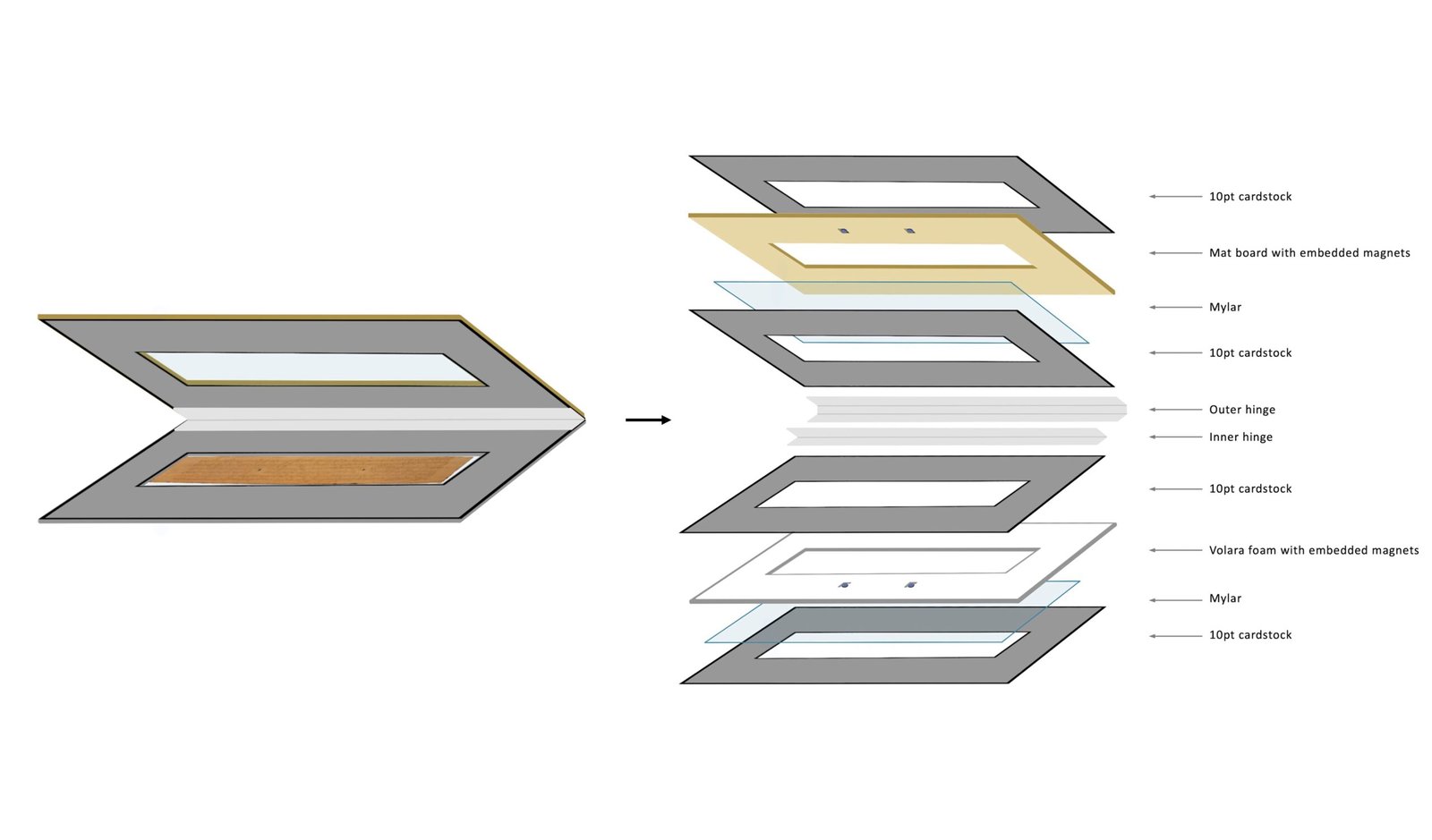
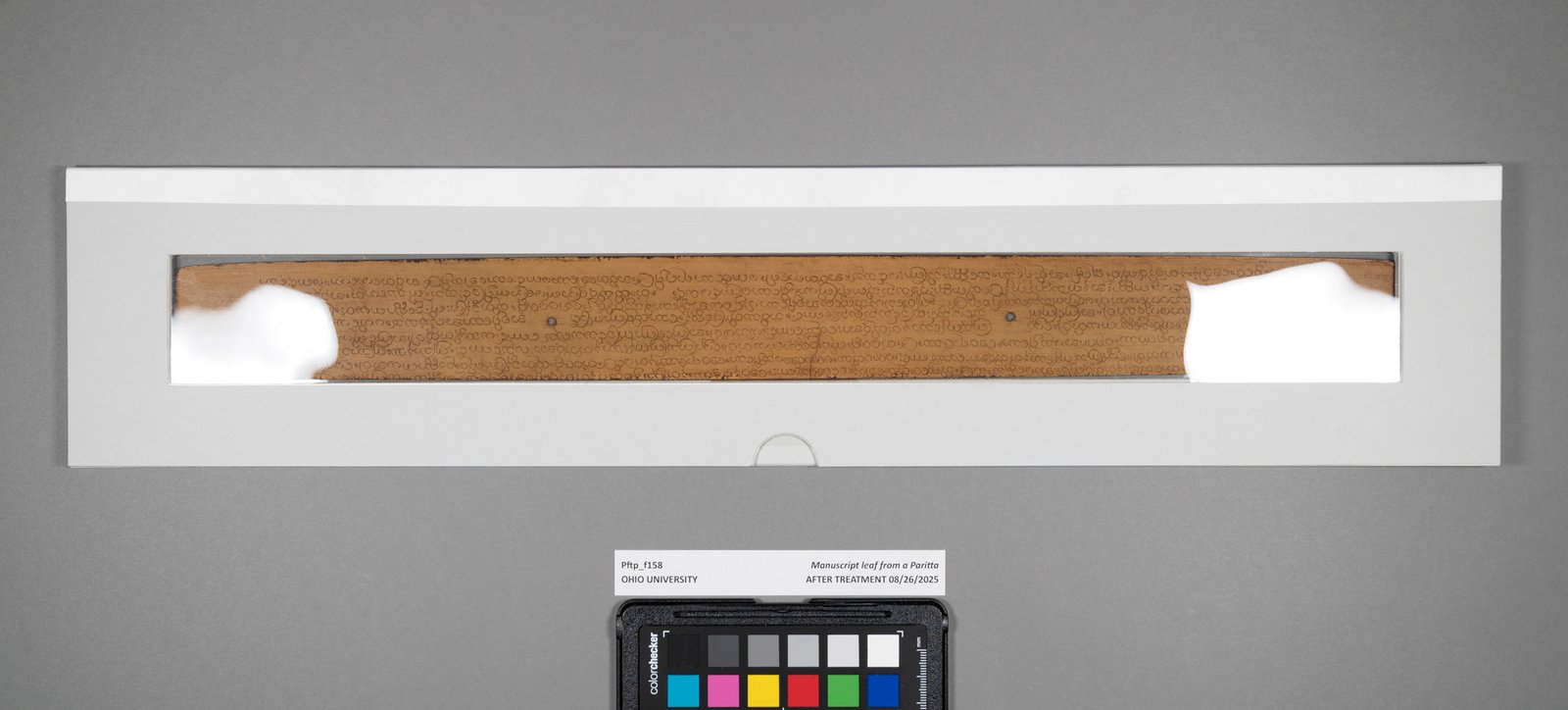
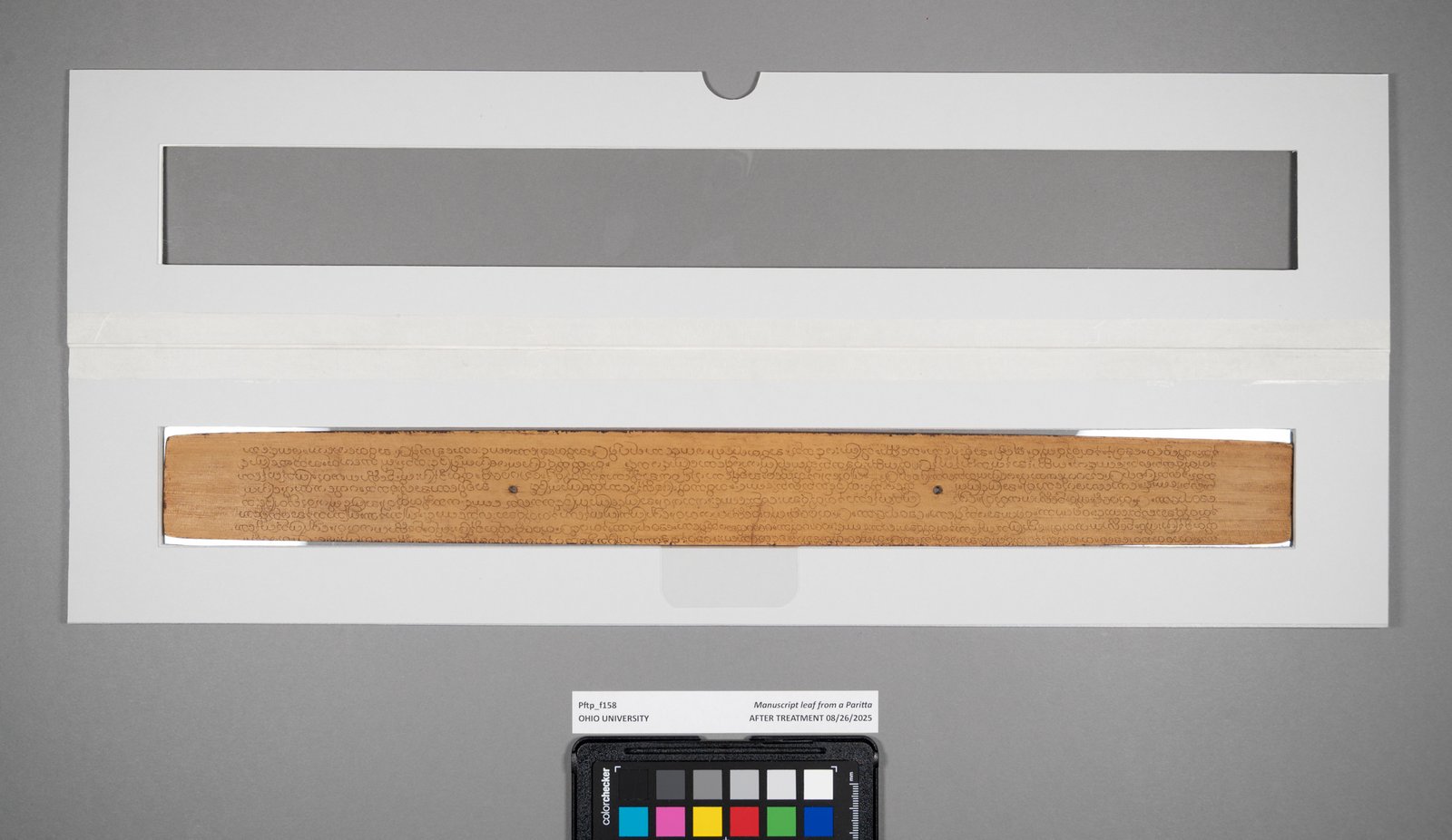
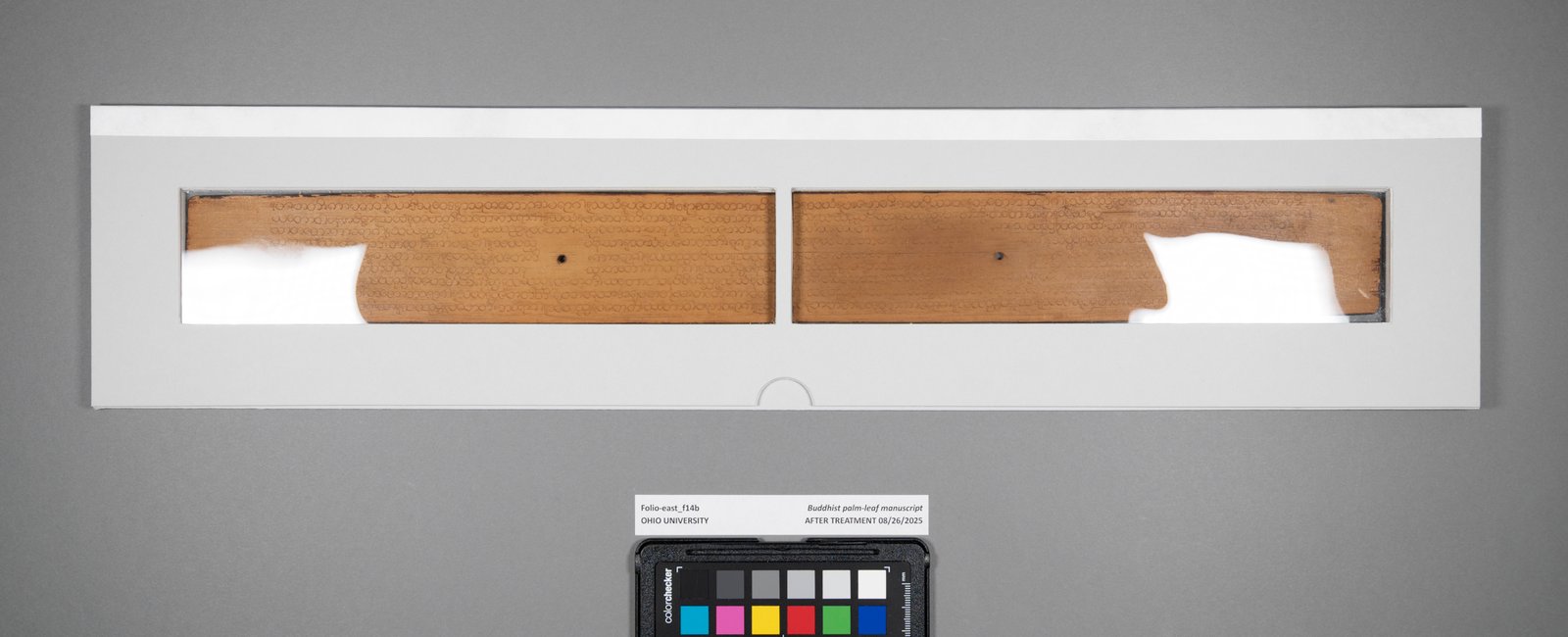
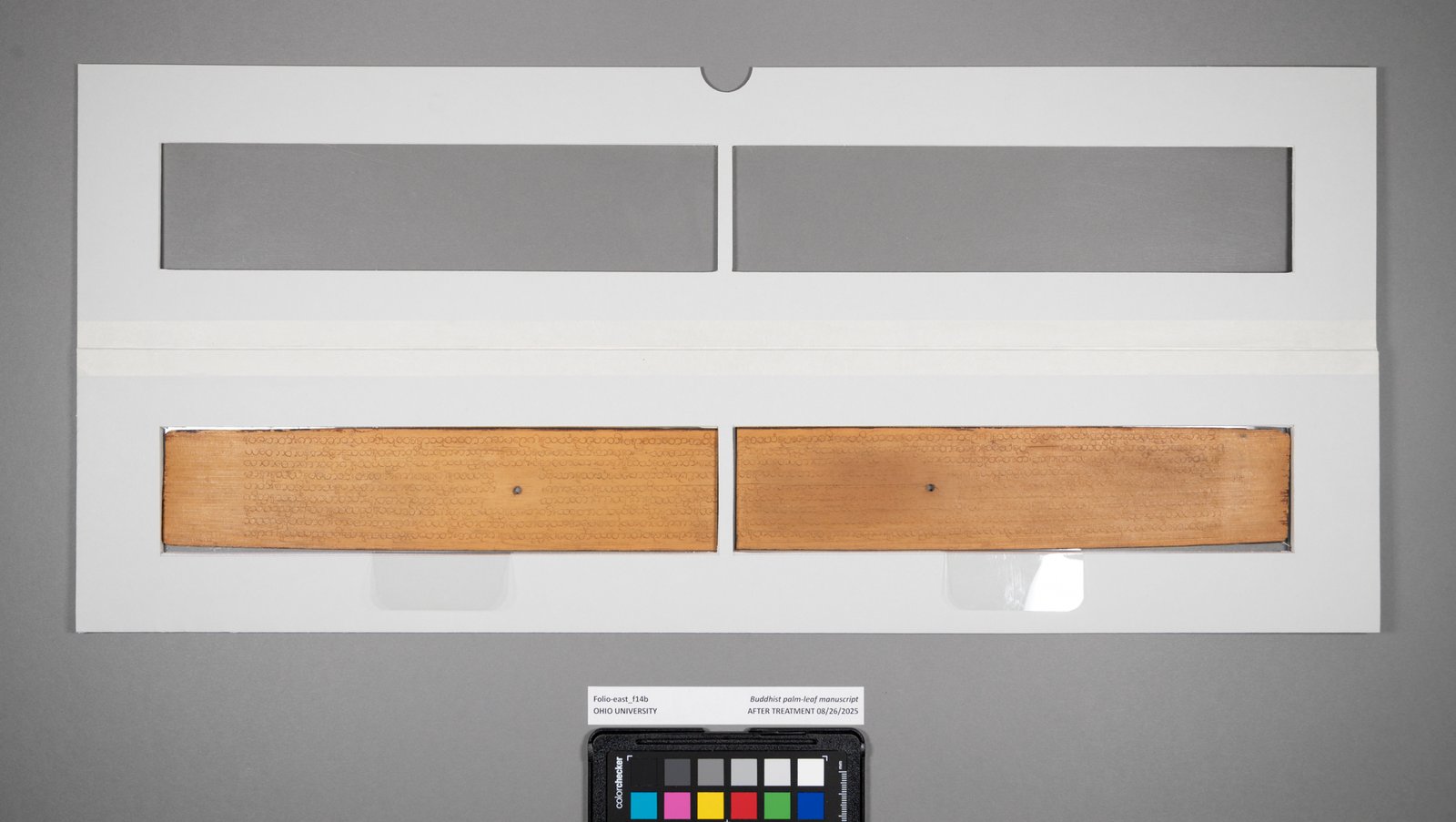
Rehousing Note: At the librarian’s request, both sides of the palm leaves needed to remain visible within the housing, allowing users to observe the object without direct handling. To achieve this, a double sink mat was constructed using Volara foam and mat board with Mylar windows, covered with 10pt. cardstock. The mat is secured with Tyvek tape on one side and two magnets on the other.