Project: Recasing of the Five Volumes of Description de l’Égypte
Objects: Description de l’Égypte… V.28, V.30, V.31, V.33, and V.33 pt.2
Location: Paris: Imprimerie de C. L. F. Panckoucke
Date: 1822
Owner: Hobson Library, Ohio Wesleyan University
About the Project
The Special Collections and Digital Initiatives Librarian at Ohio Wesleyan University (OWU) selected a group of objects to apply for the Library Services and Technology Act (LSTA) Conservation Grant, supported by the State Library of Ohio in partnership with the Ohio Preservation Council (OPC) and the America250-Ohio Commission.
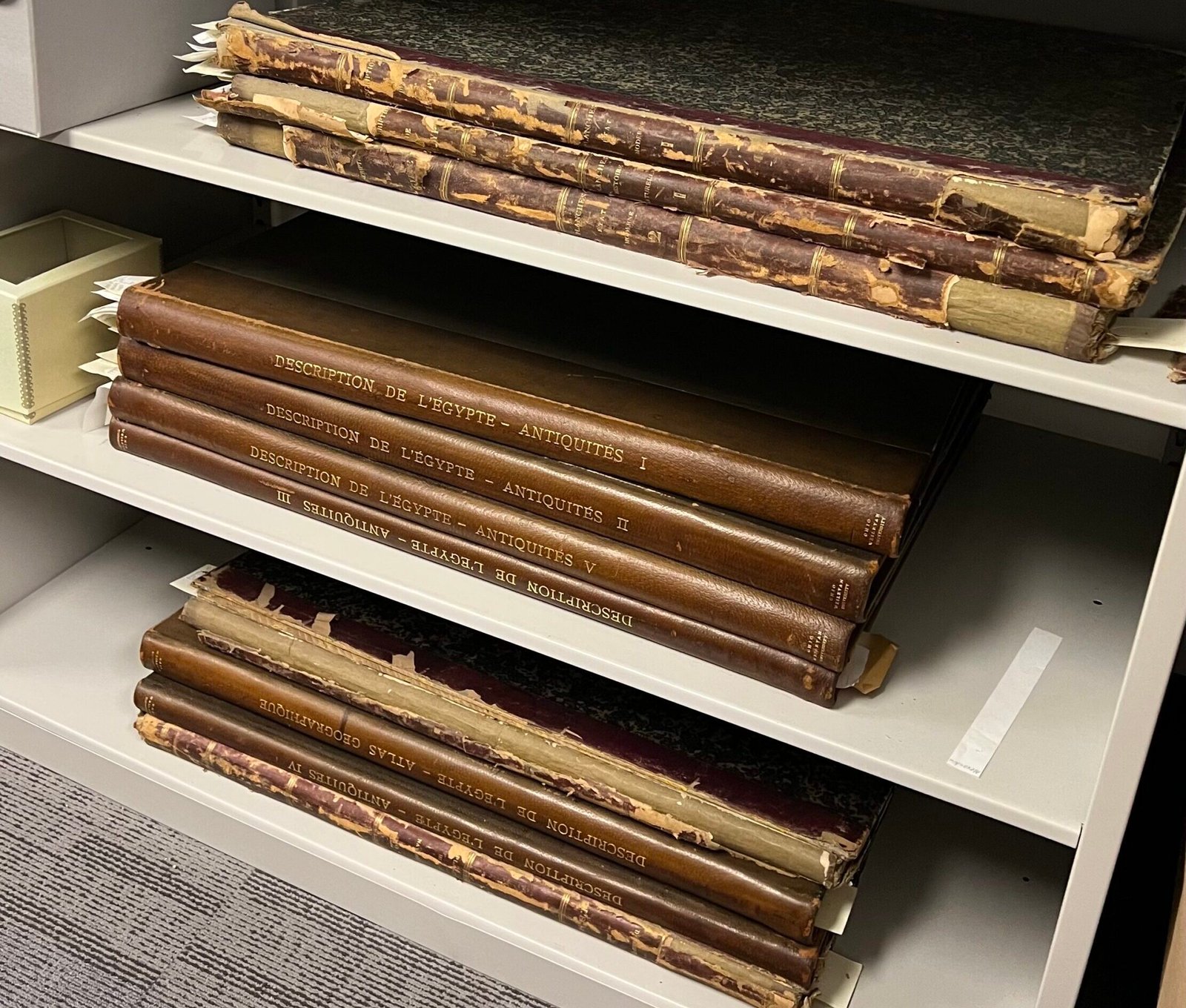
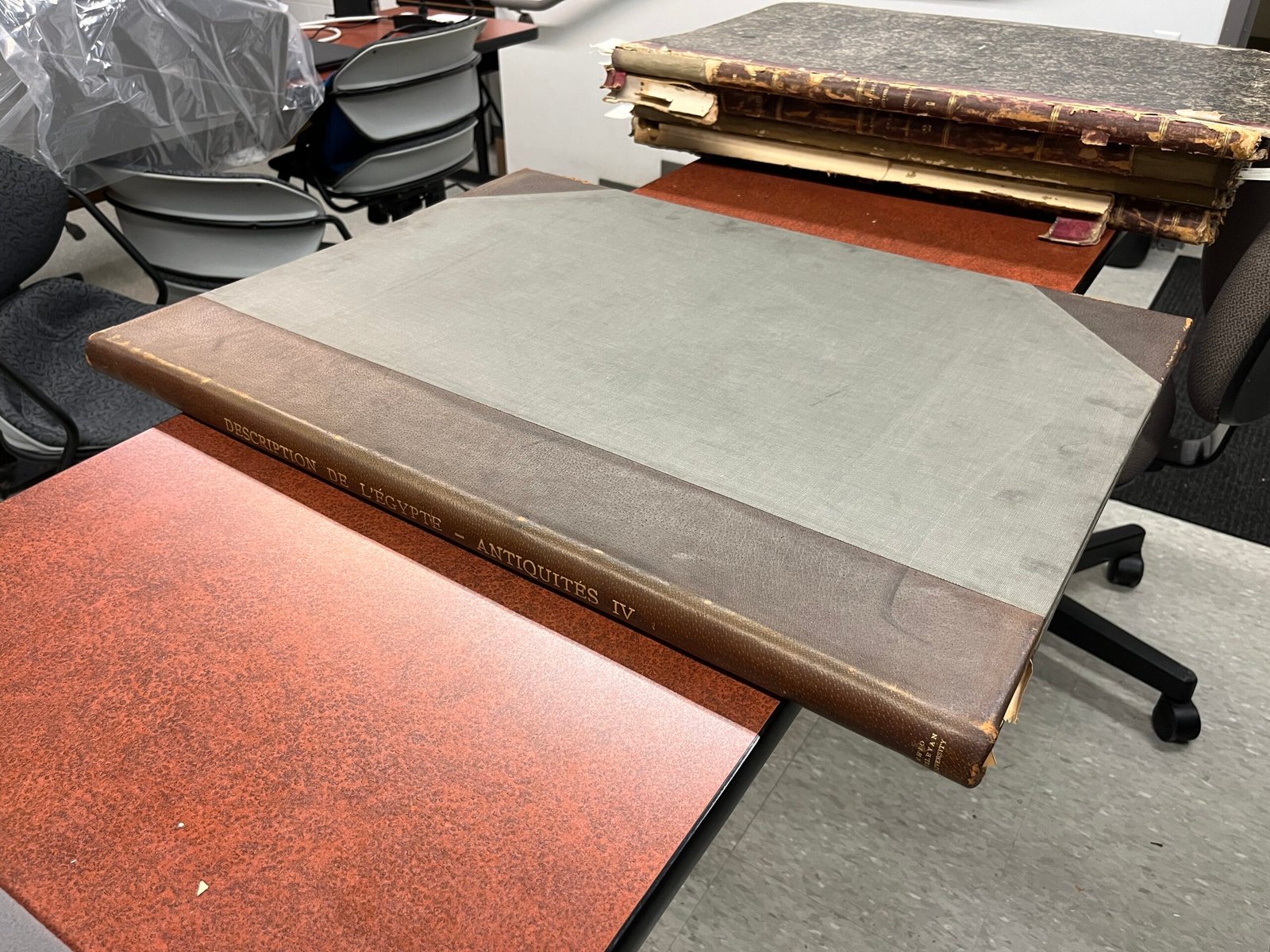
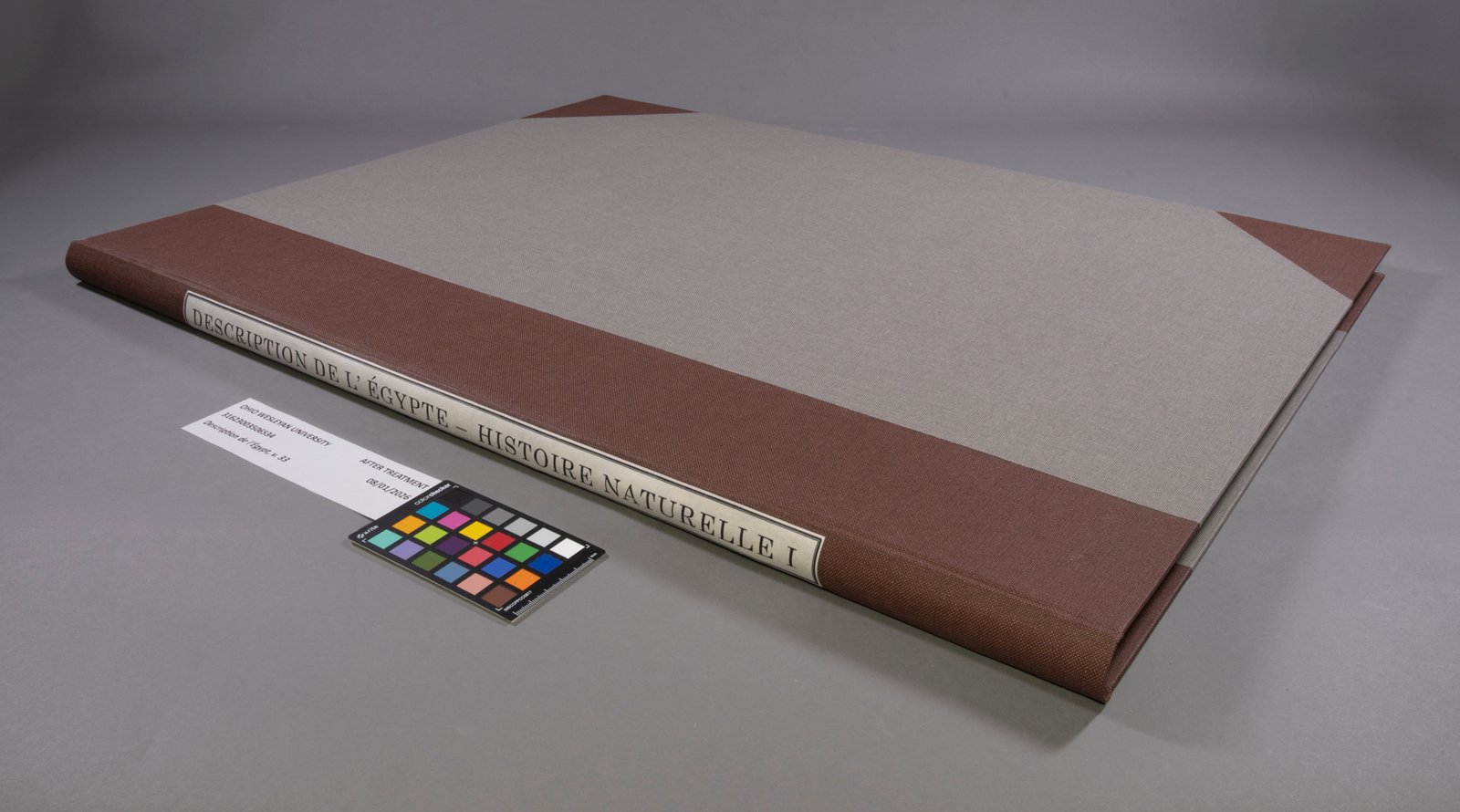
Five volumes from the Description de l’Égypte set were selected for treatment, all requiring the same recasing procedure. The librarian requested that the new cases resemble those of other volumes in the set that had been previously rebound. The old cases were failing as protective covers, making these heavy elephant folio bindings difficult to handle safely. The librarian wanted the volumes to be usable again for class use, research, and other purposes.
Description & Condition
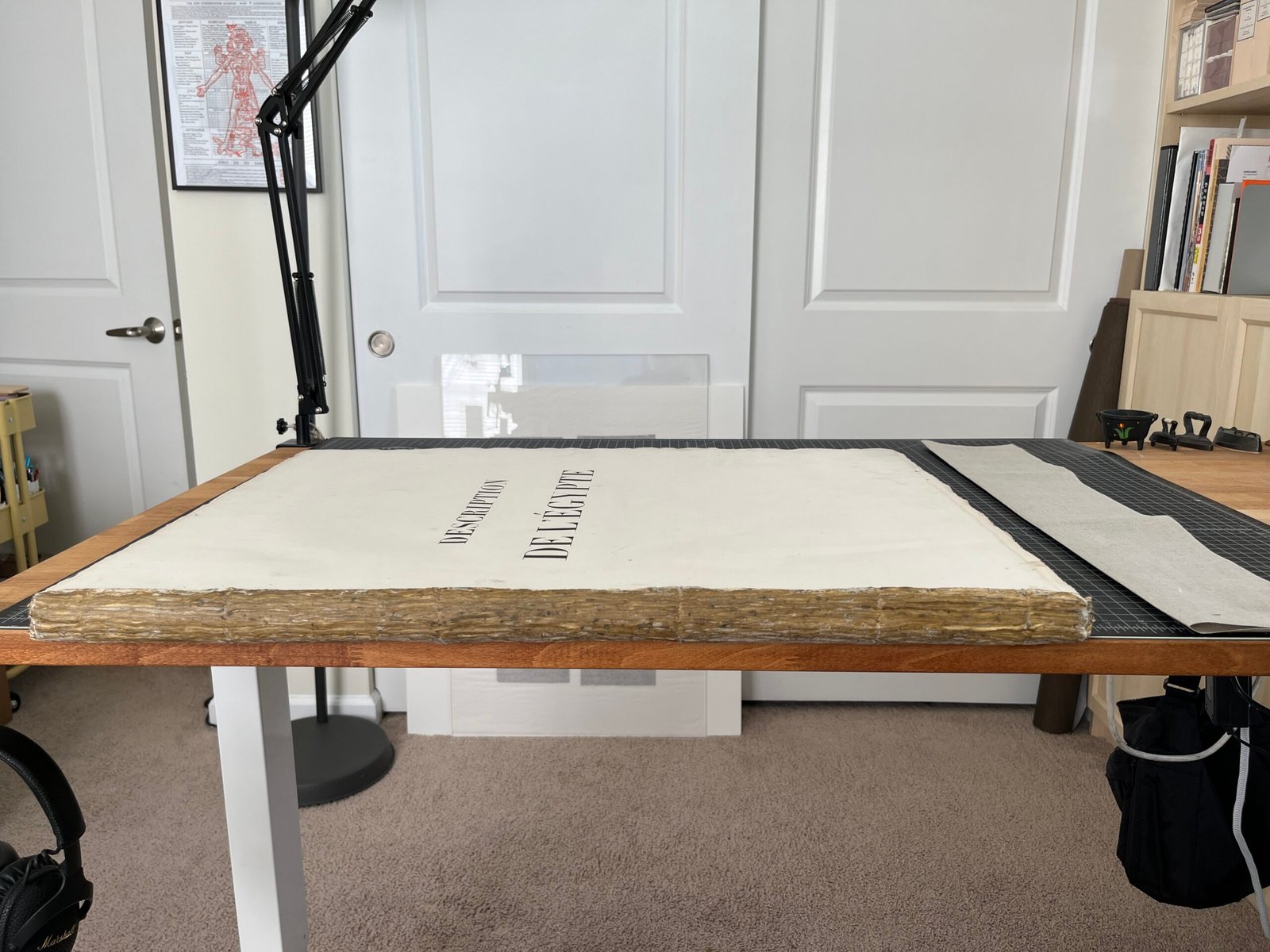
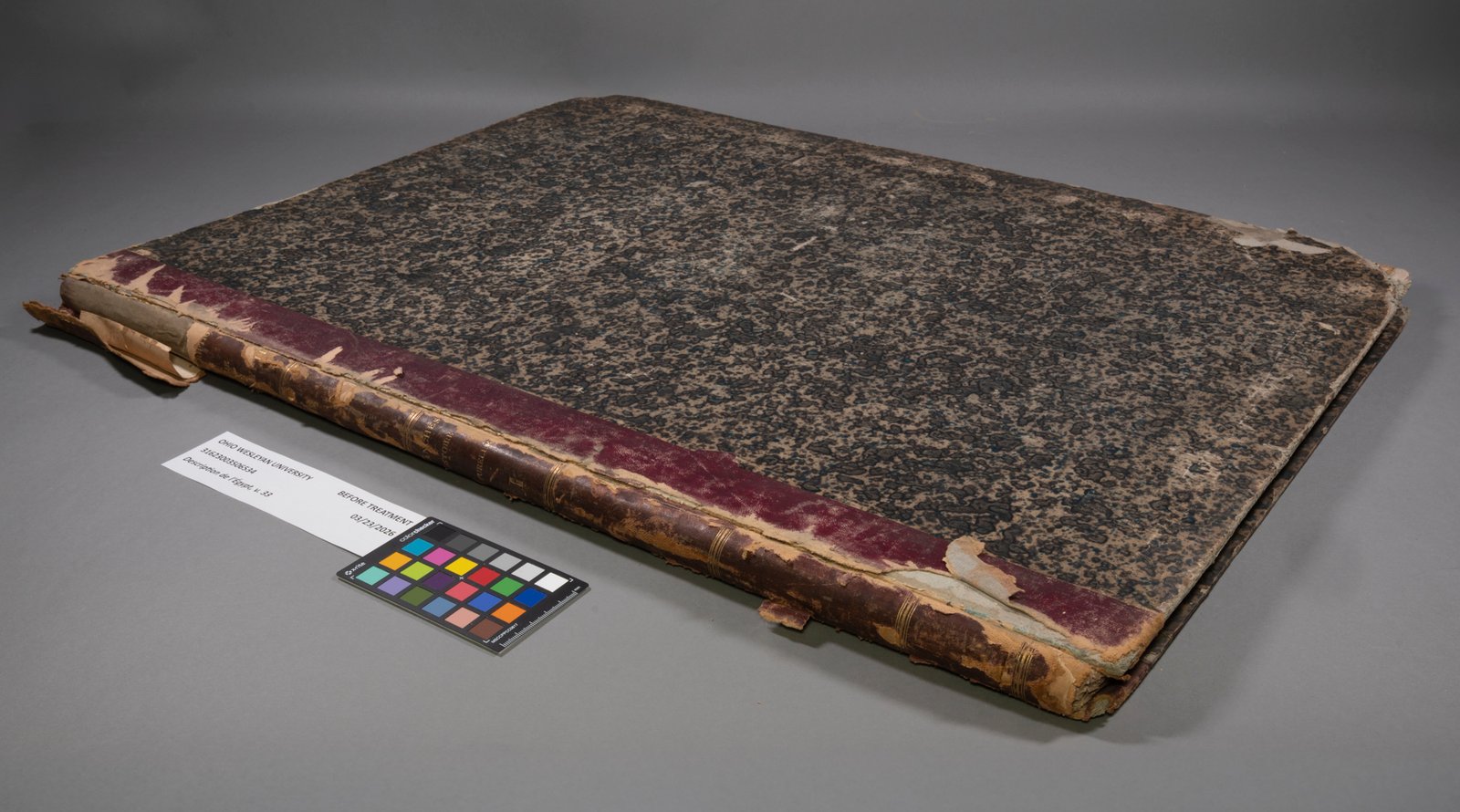
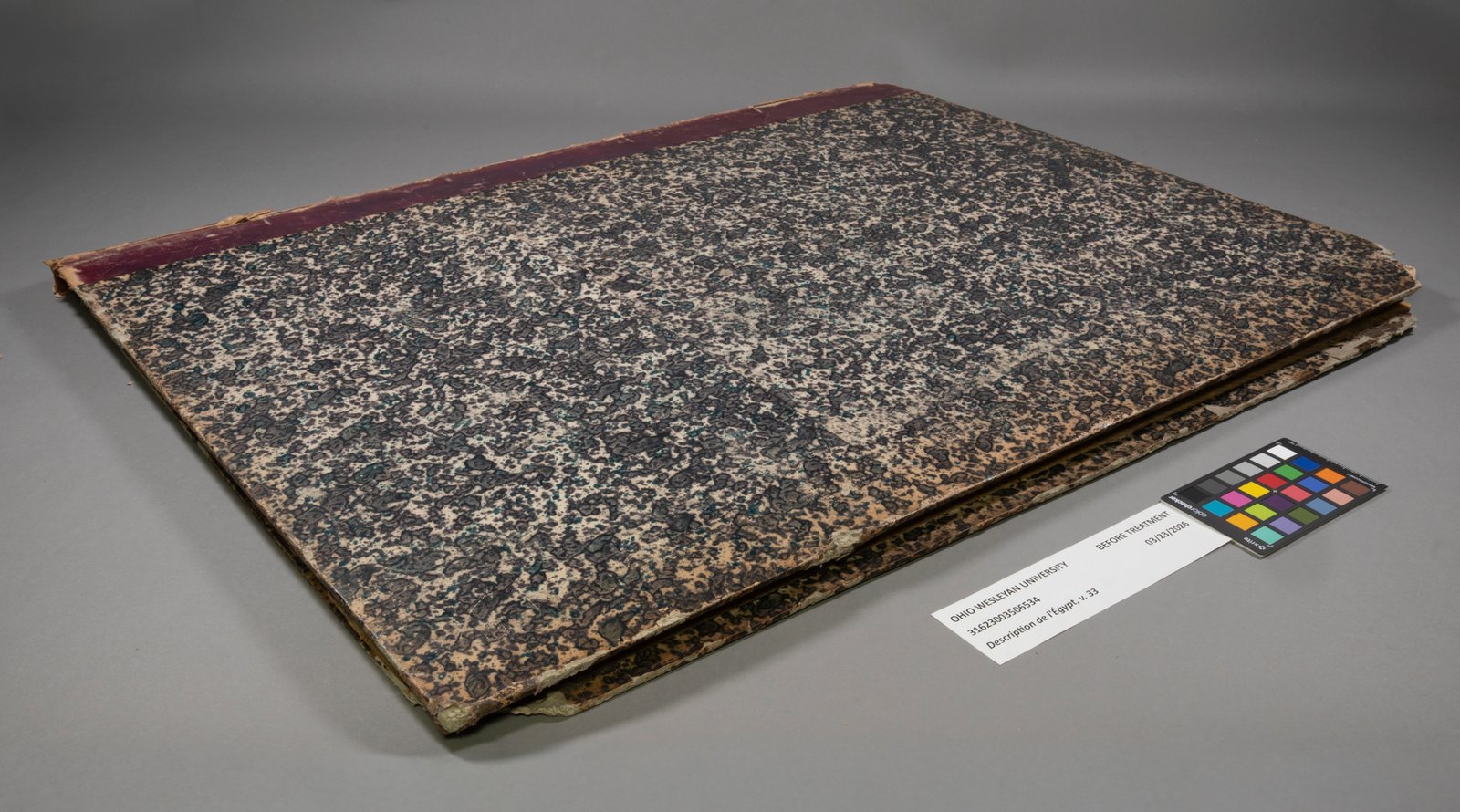
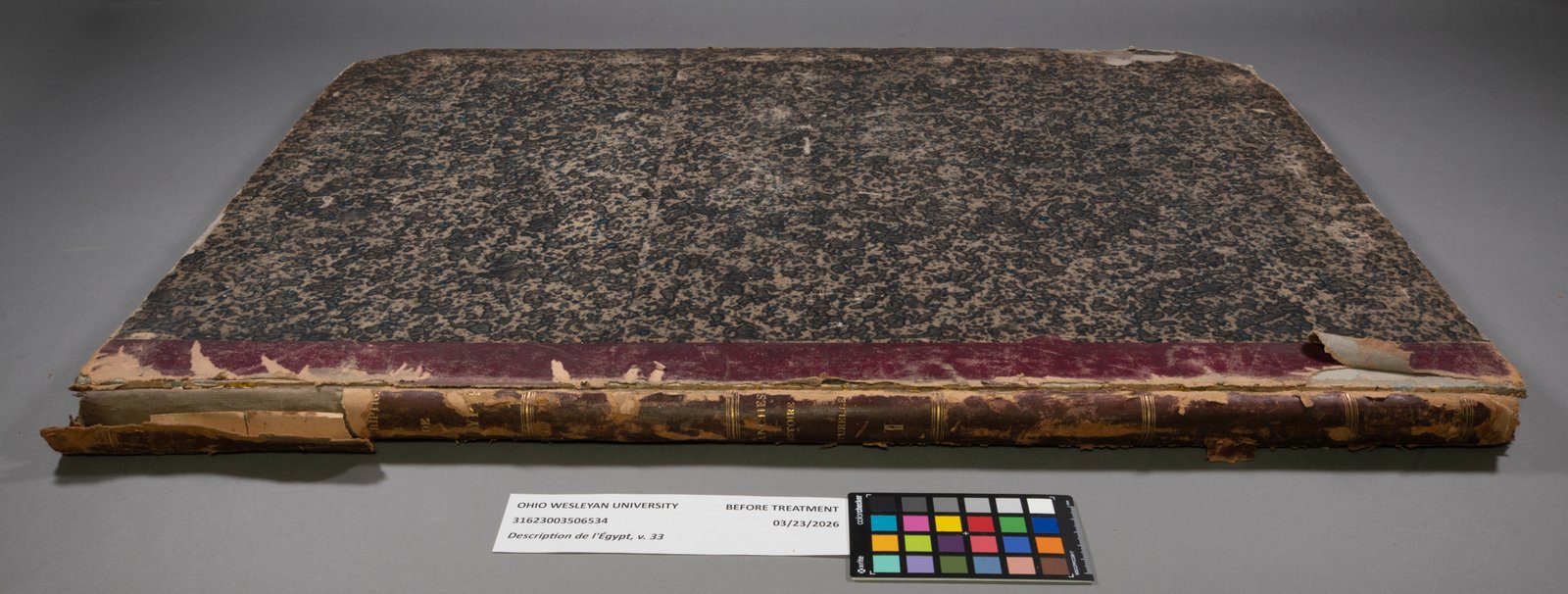
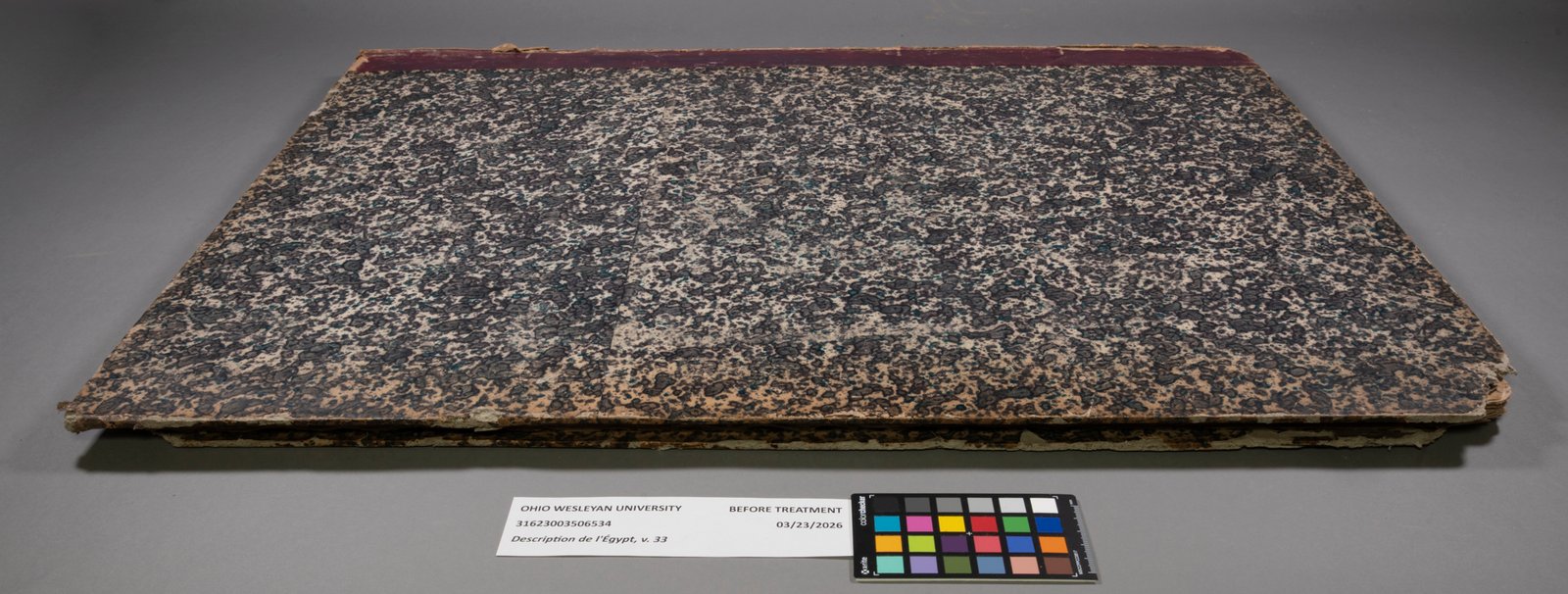
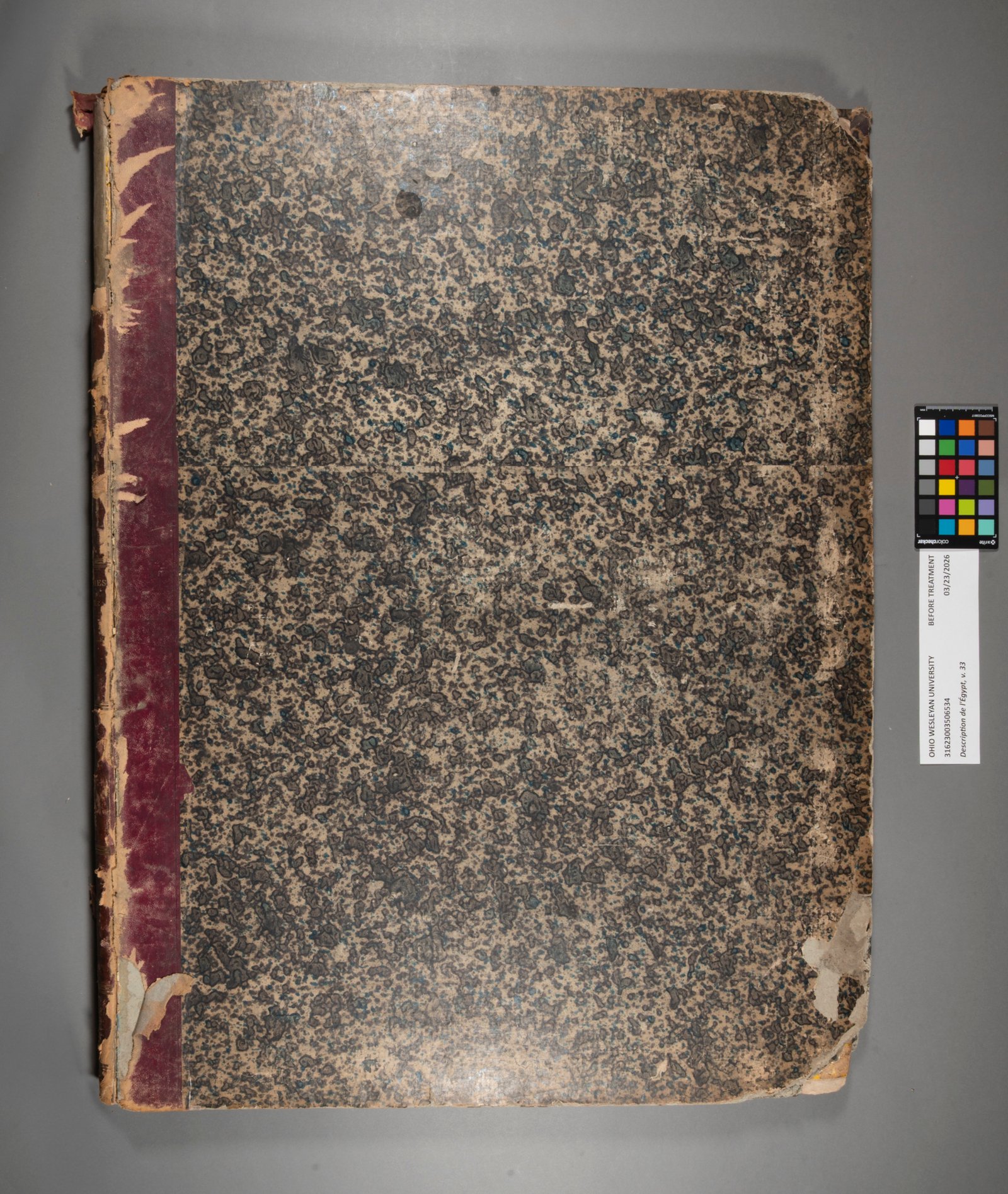
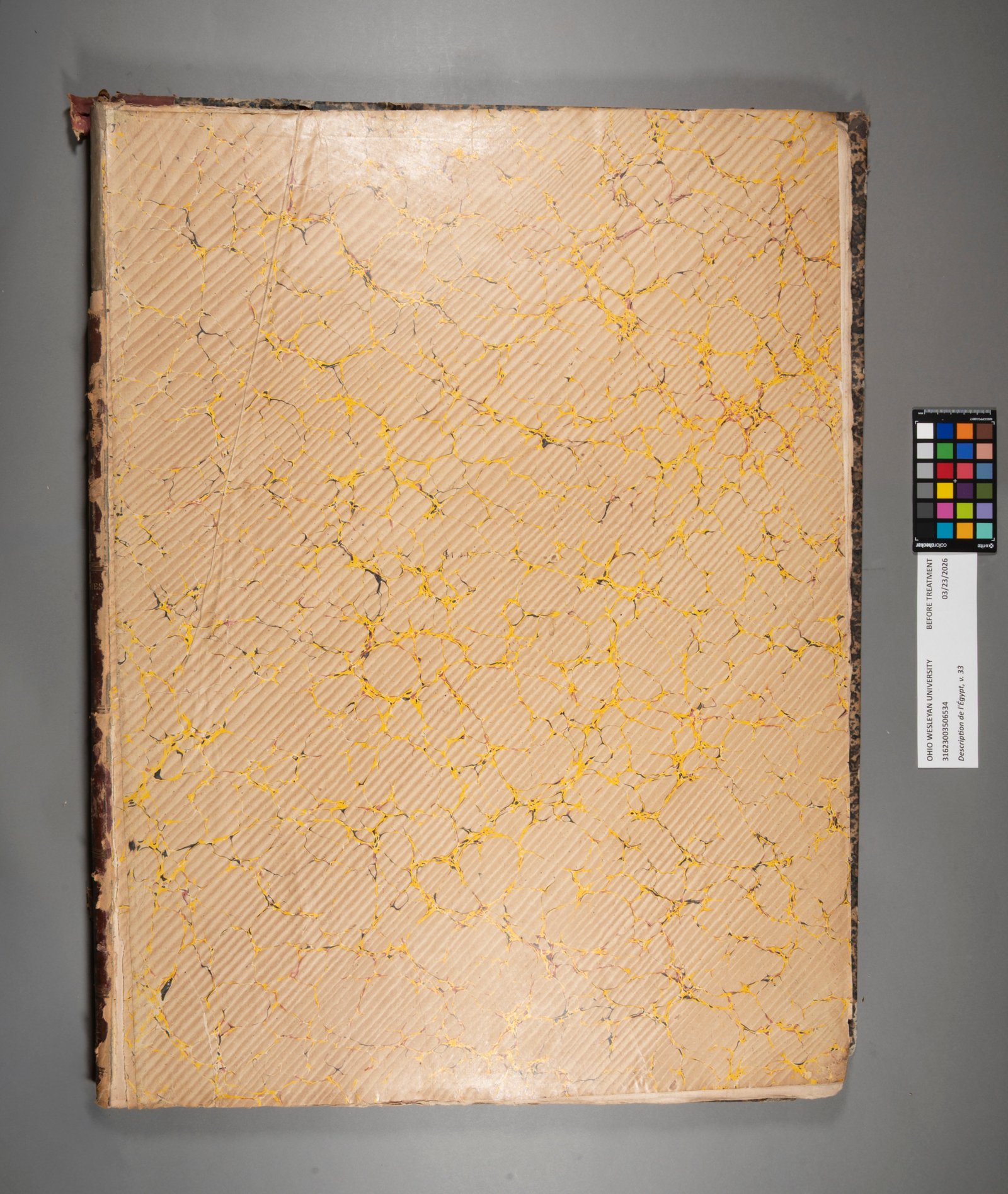
All five volumes were in the same binding style: oversized books of plates in a quarter binding with a red leather spine and marbled paper sides. The tight-back spines were smooth, with gold lettering, and the textblocks were sewn on recessed cords, either adhered to or laced through the boards. The leaves have deckle edges and marbled paper made-endleaves, with text and illustrations printed in black ink.
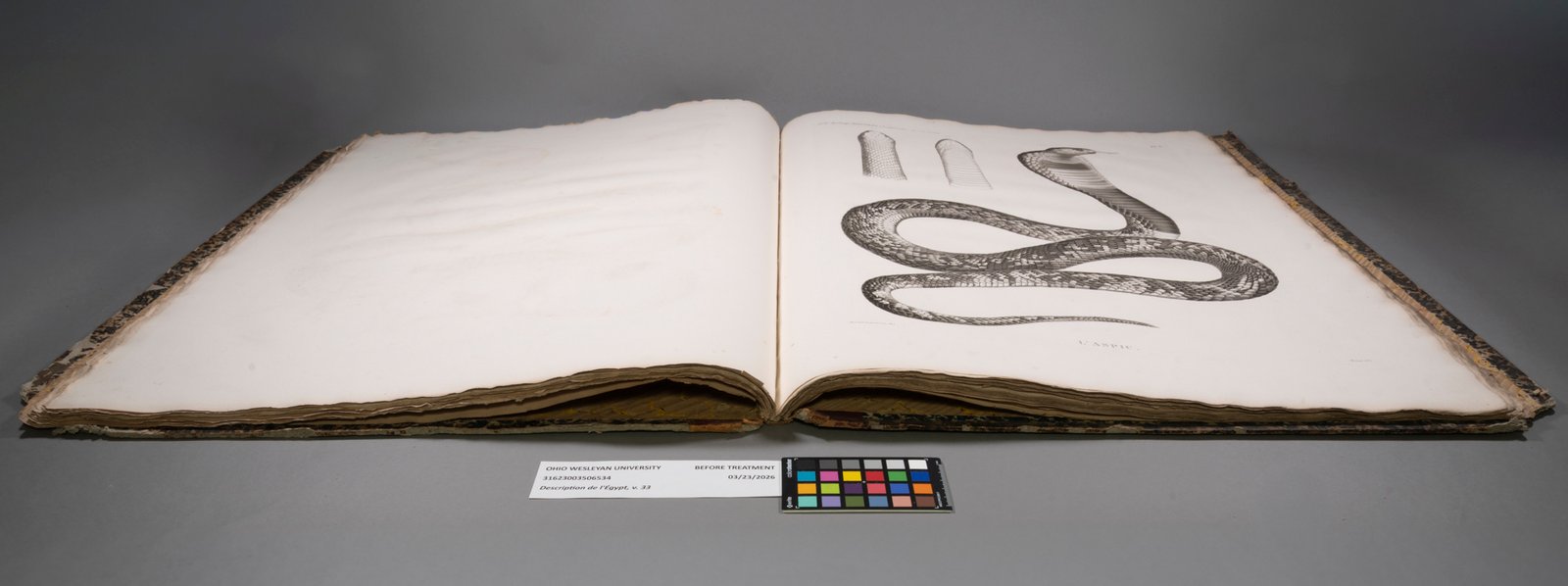
All covers were tenuously attached or completely detached, and the spine leather was fully or partially detached, exposing the paper lining beneath. The boards were too flimsy for the size and weight of the bindings, with losses and broken corners and edges, and the leather covers were heavily abraded and delaminating. The endleaves were detached, with many small tears. The textblocks and their sewing were in good condition overall, though they exhibited minor tears and significant surface grime caused by friable ink.
Treatment Note
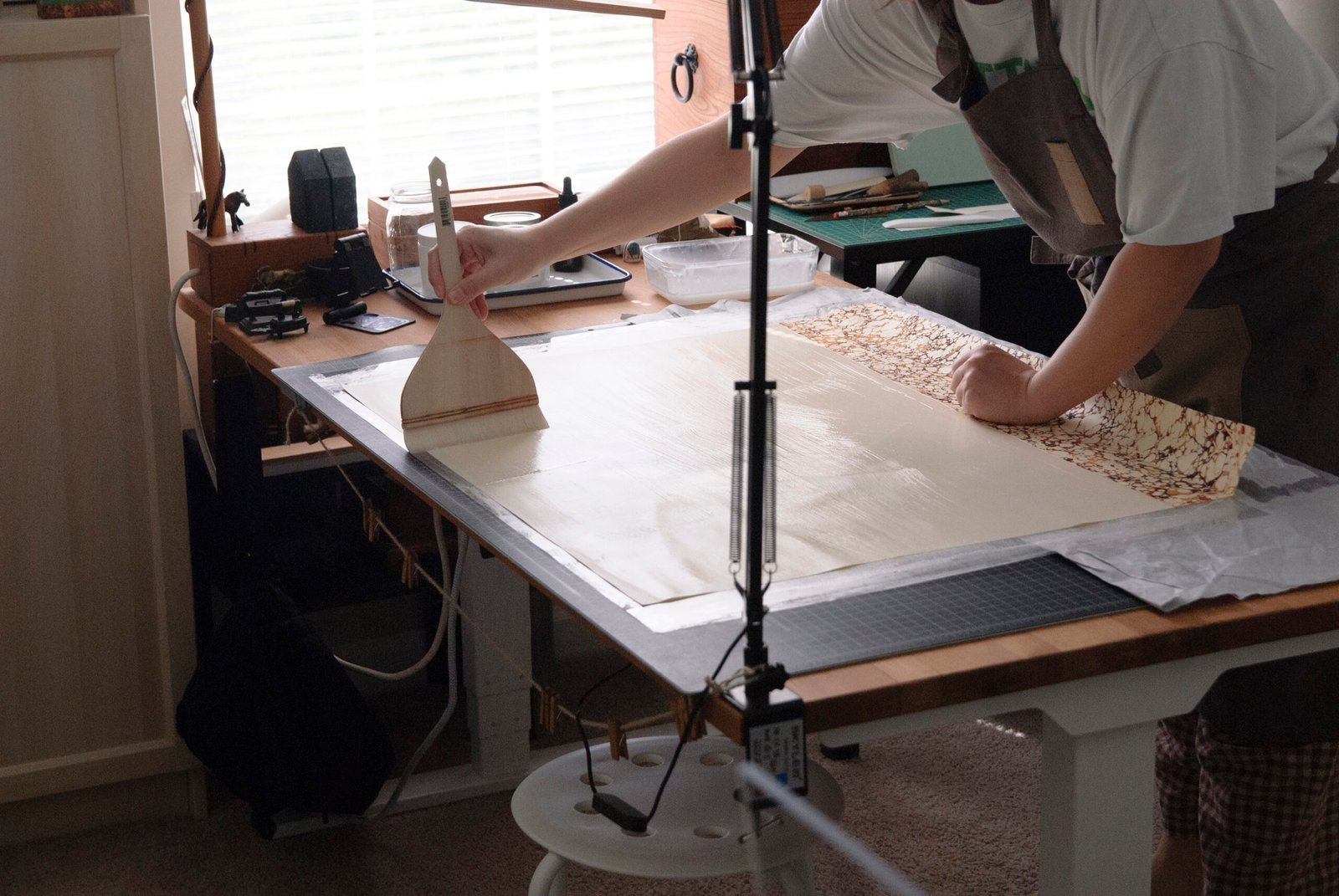
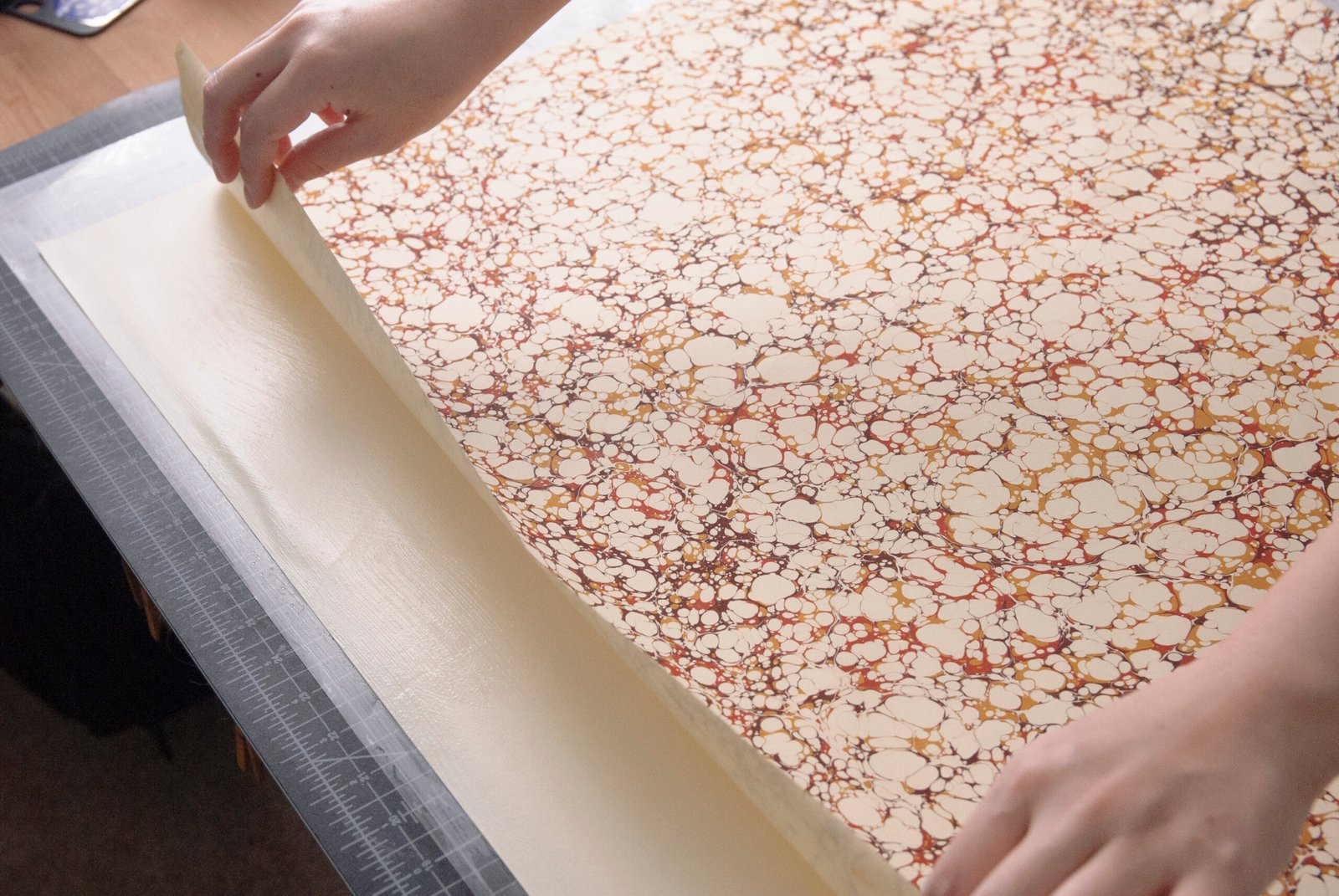
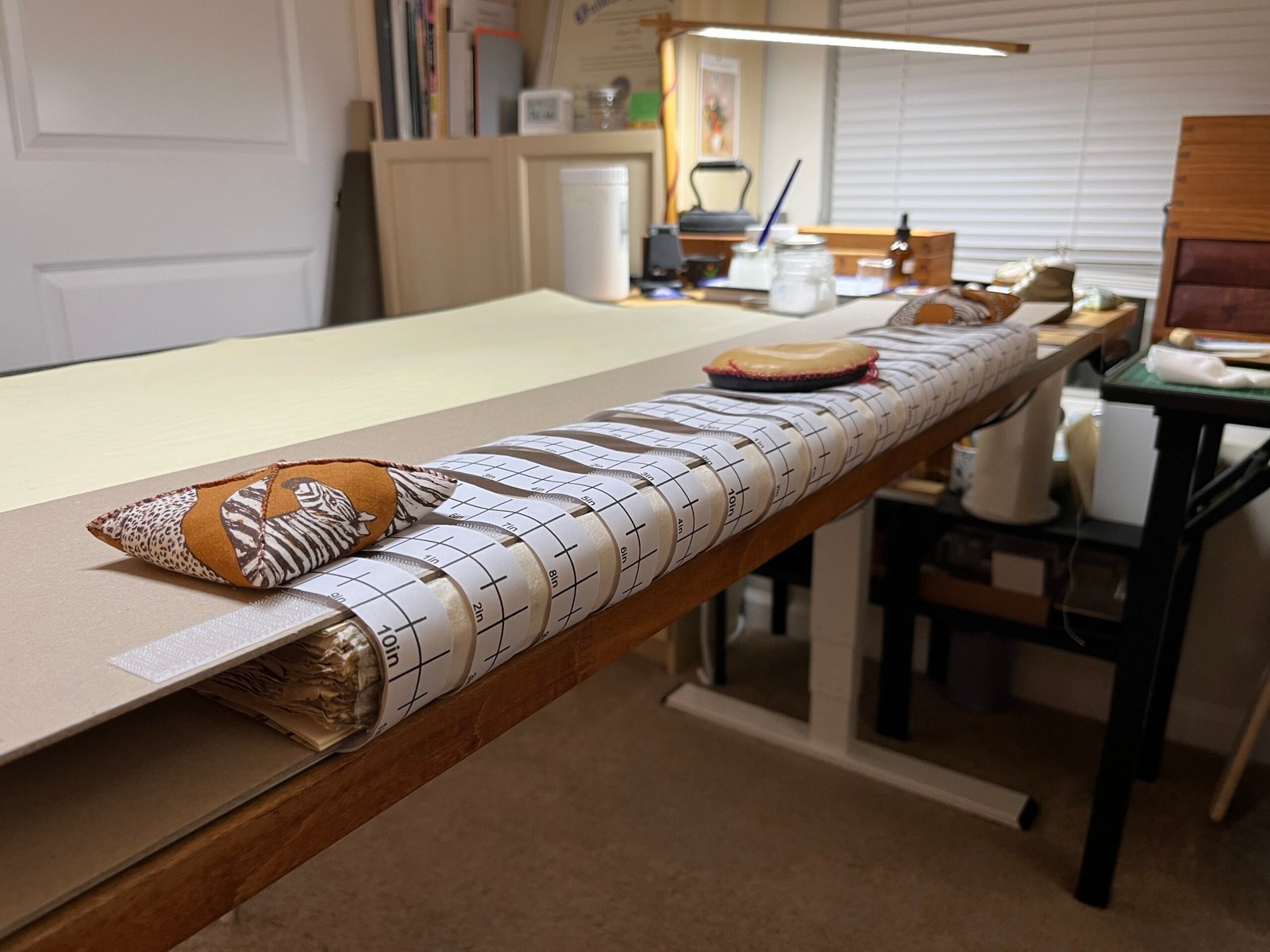
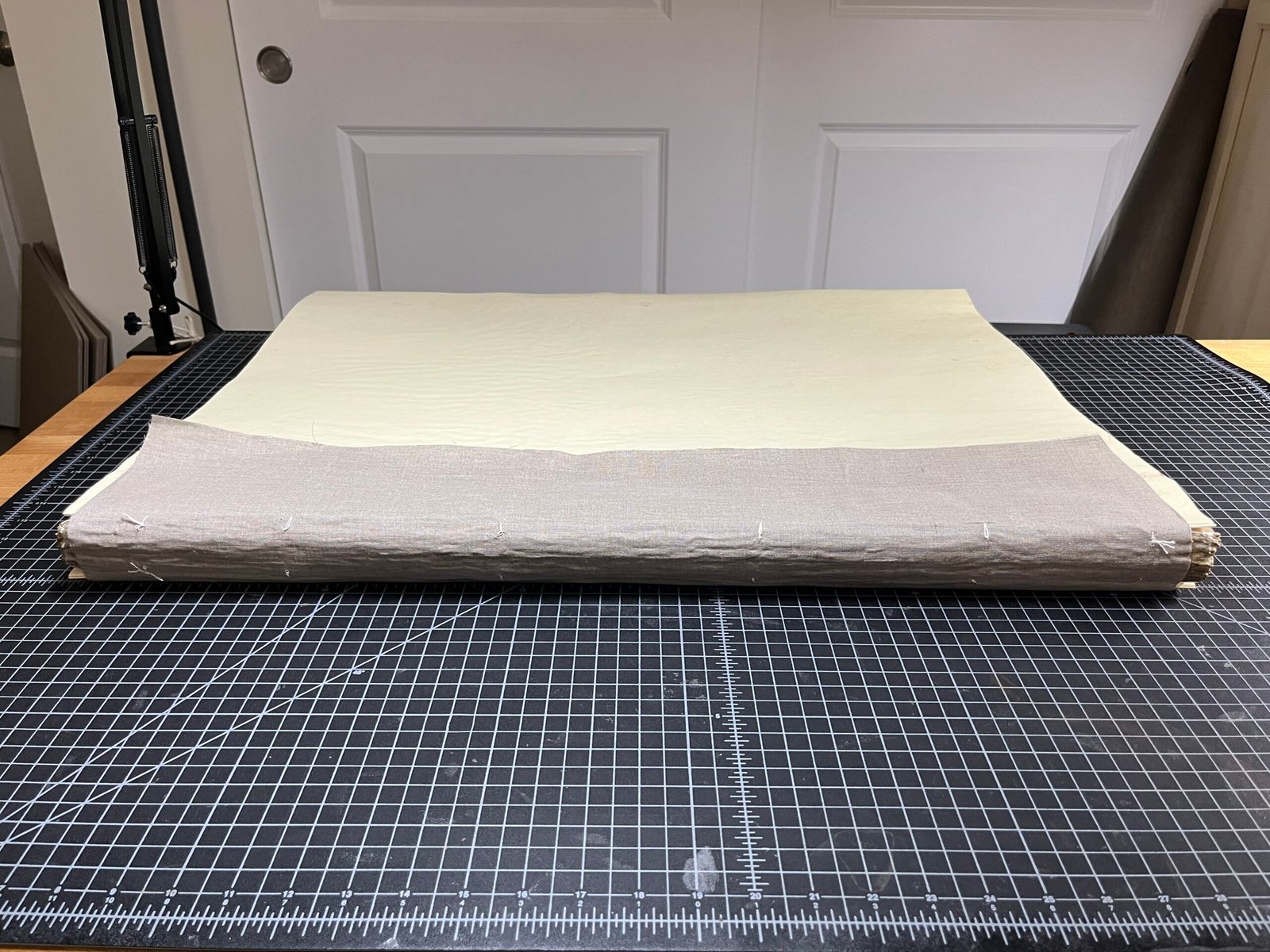
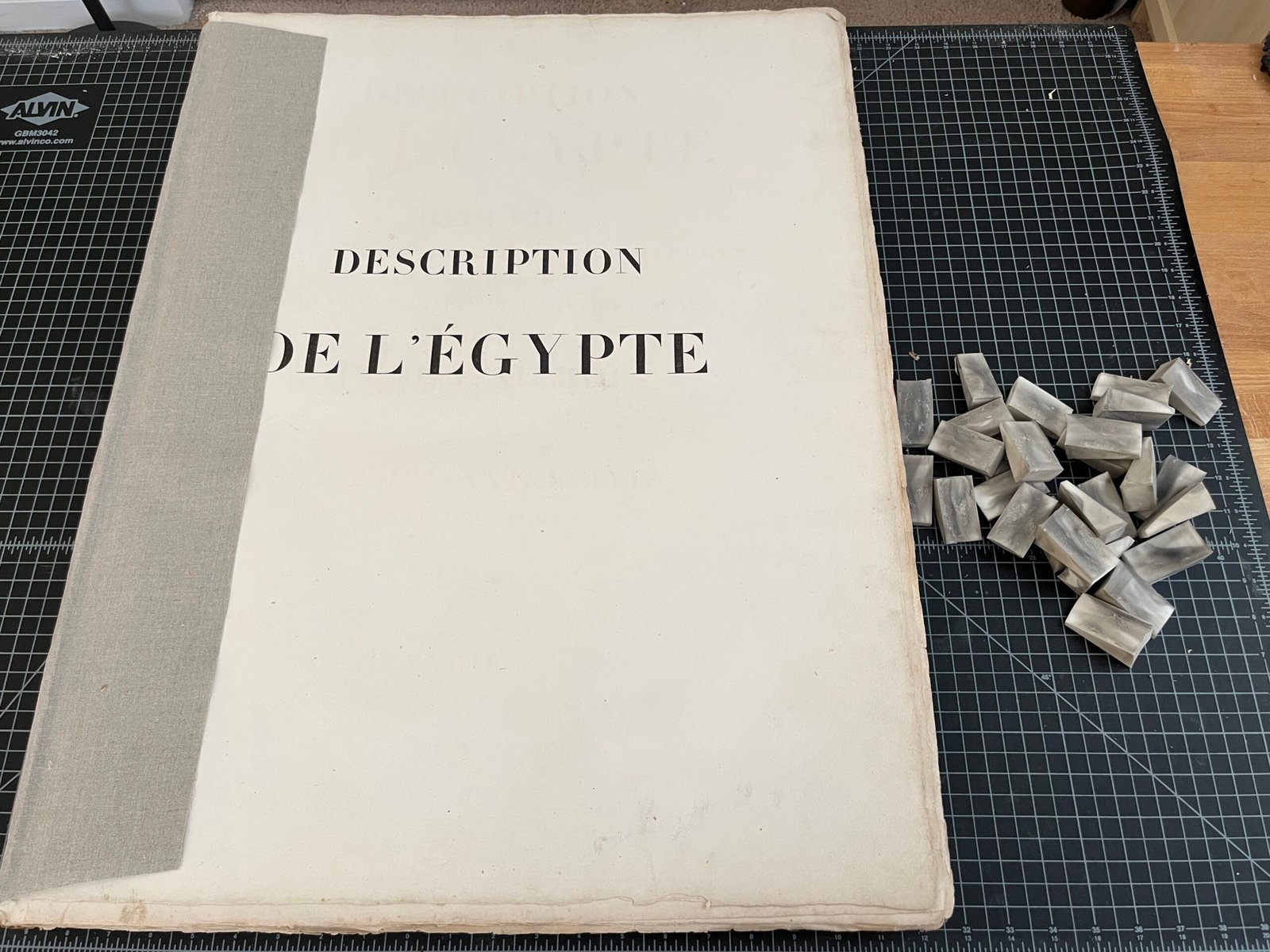
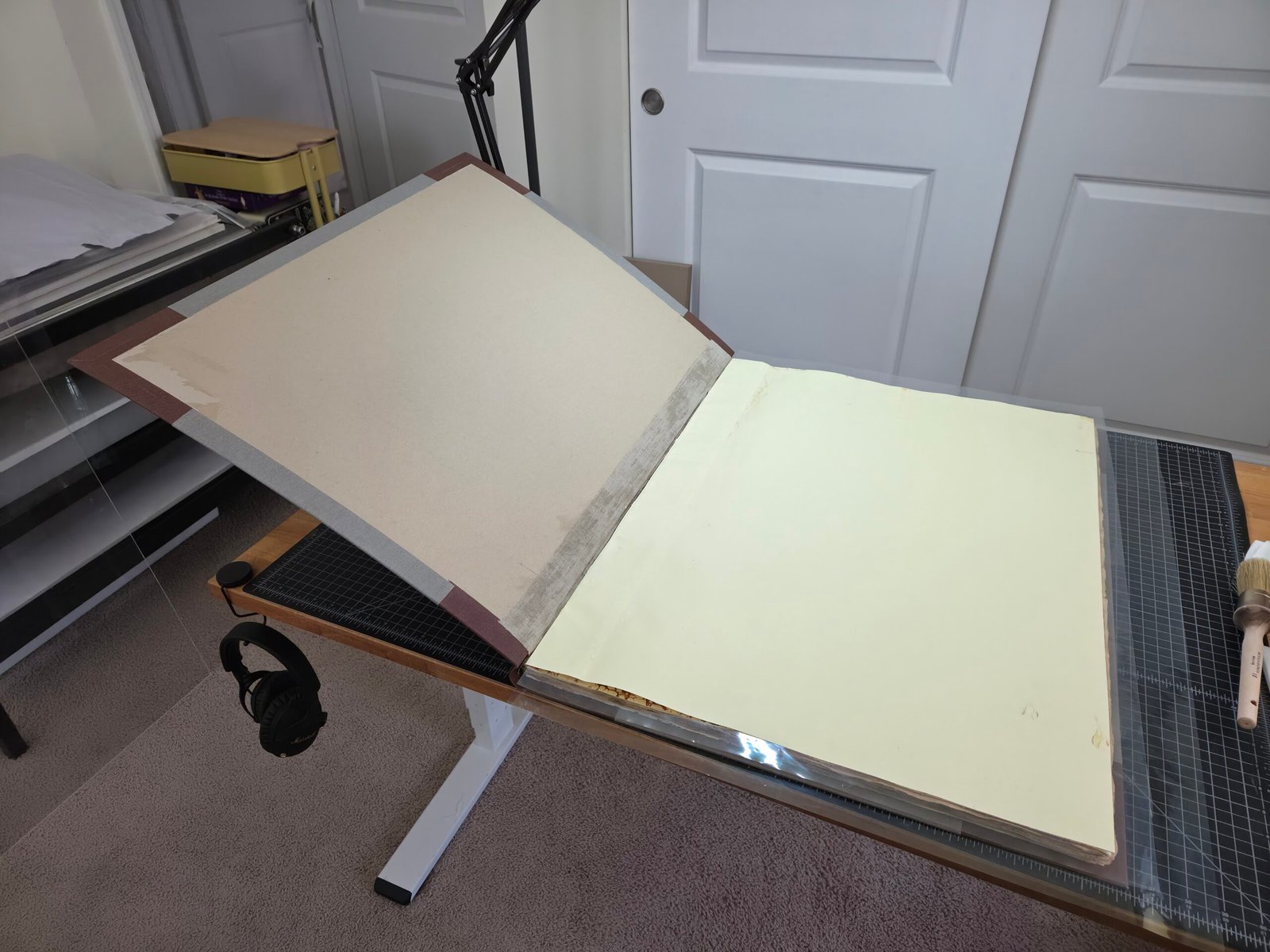
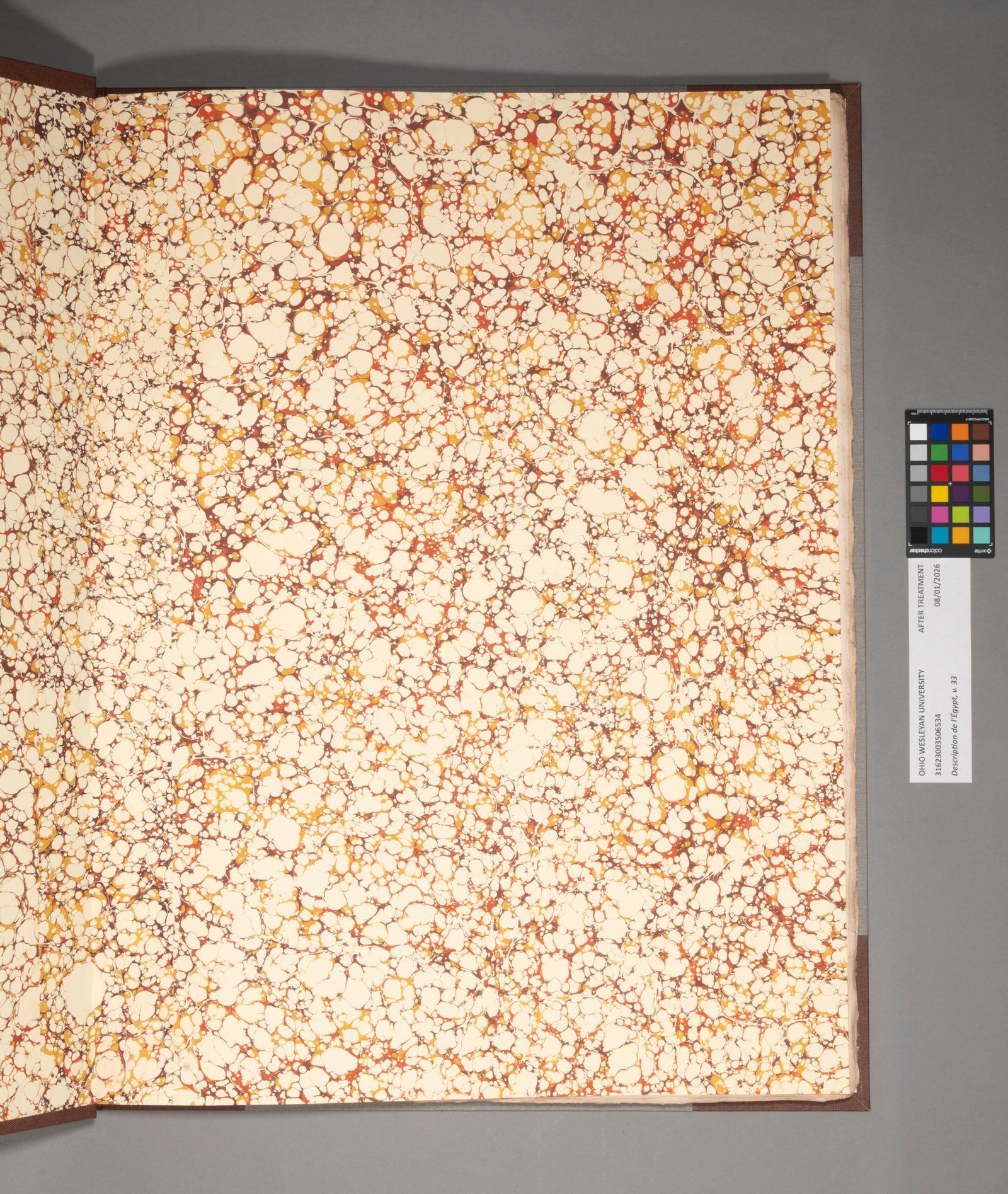
The covers, spine, and endleaves were removed from the textblock, and the textblock spine was cleaned with a 4% methylcellulose poultice. New made-endleaves were constructed by laminating marbled paper to Antique Endleaf paper with wheat starch paste (WSP). The spine was lined with Uso Mino Thin as a reversibility layer, and an airplane linen spine lining with extended flanges was adhered over it with WSP. Individual leaves were surface cleaned using cosmetic sponges, and the new made-endleaves were sewn through the textile spine lining with 18/3 linen thread. A hollow tube of Okawara paper was attached to the spine in a two-on, one-off configuration using Lascaux 498HV.
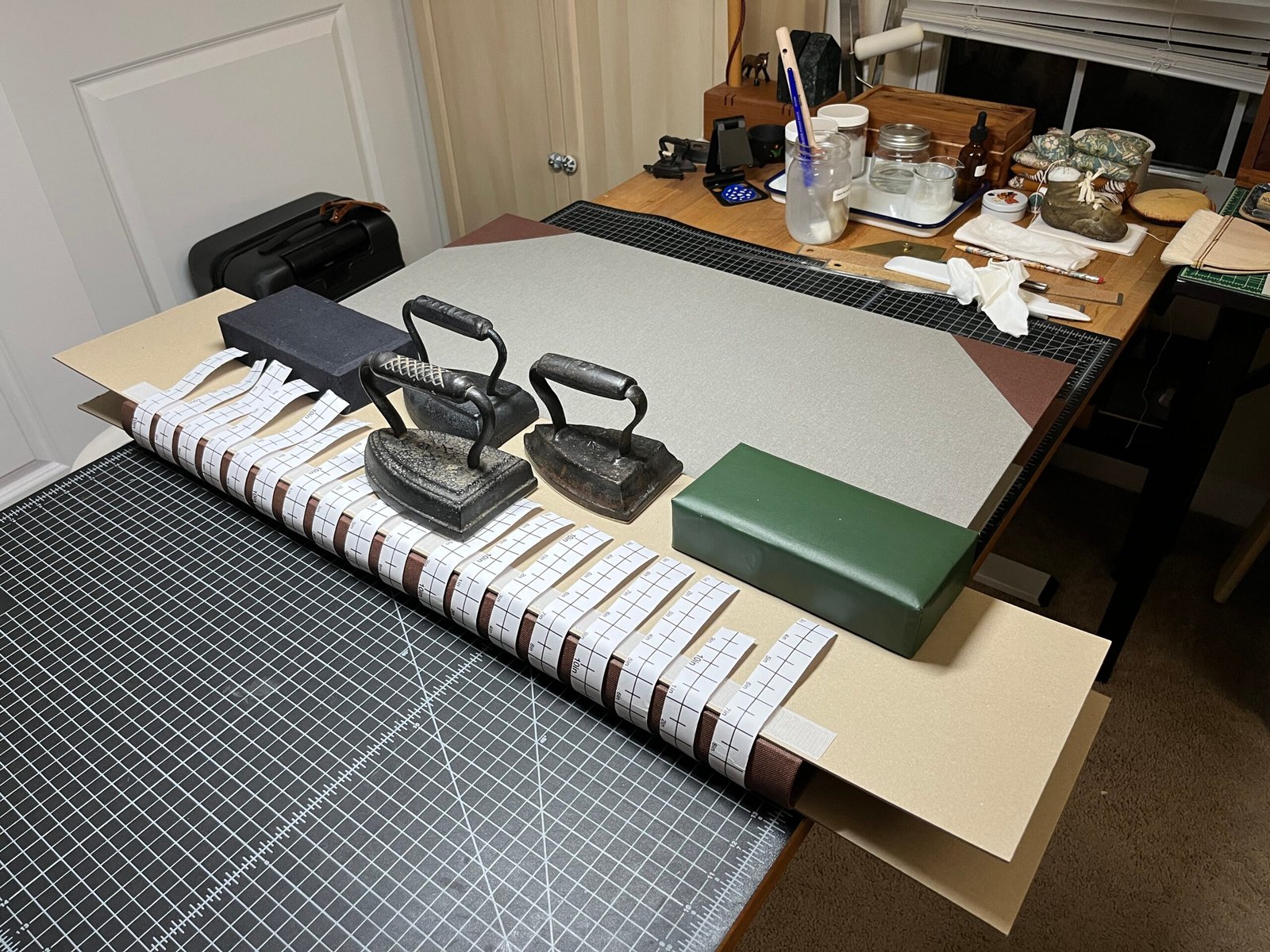
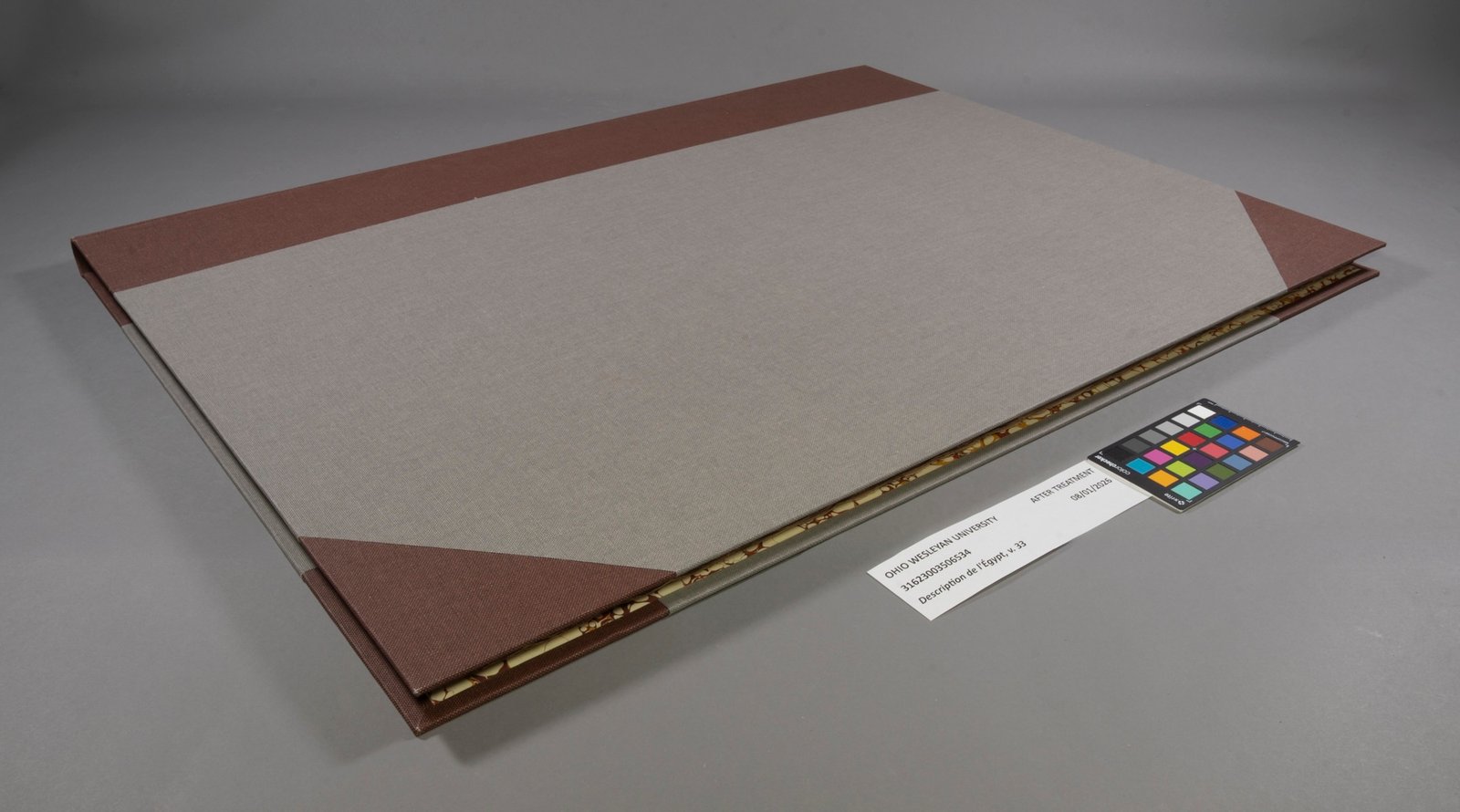
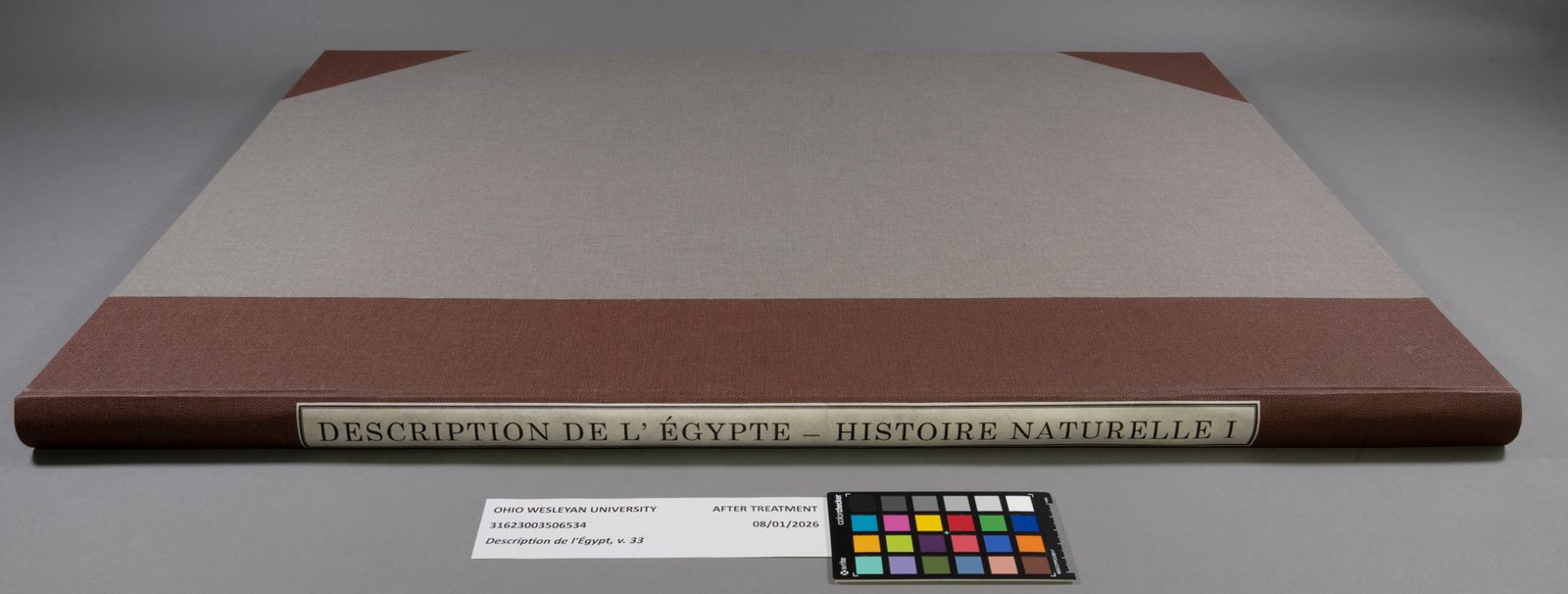
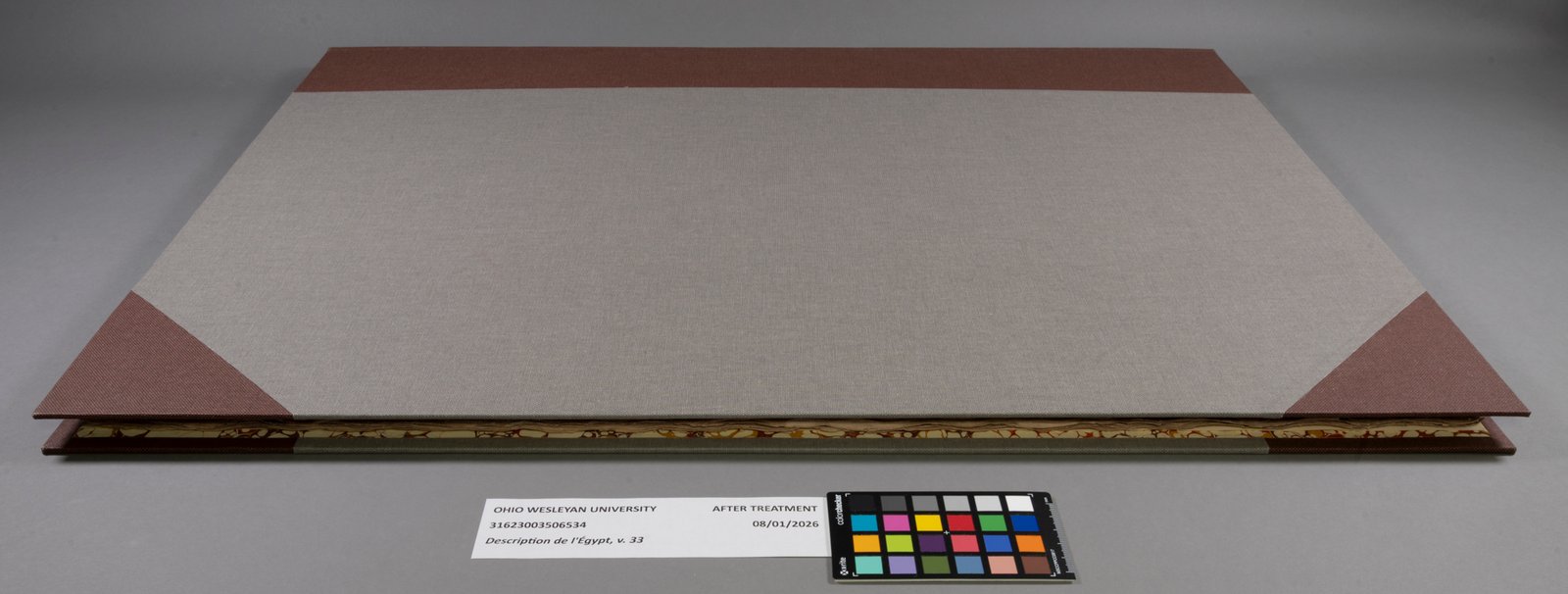
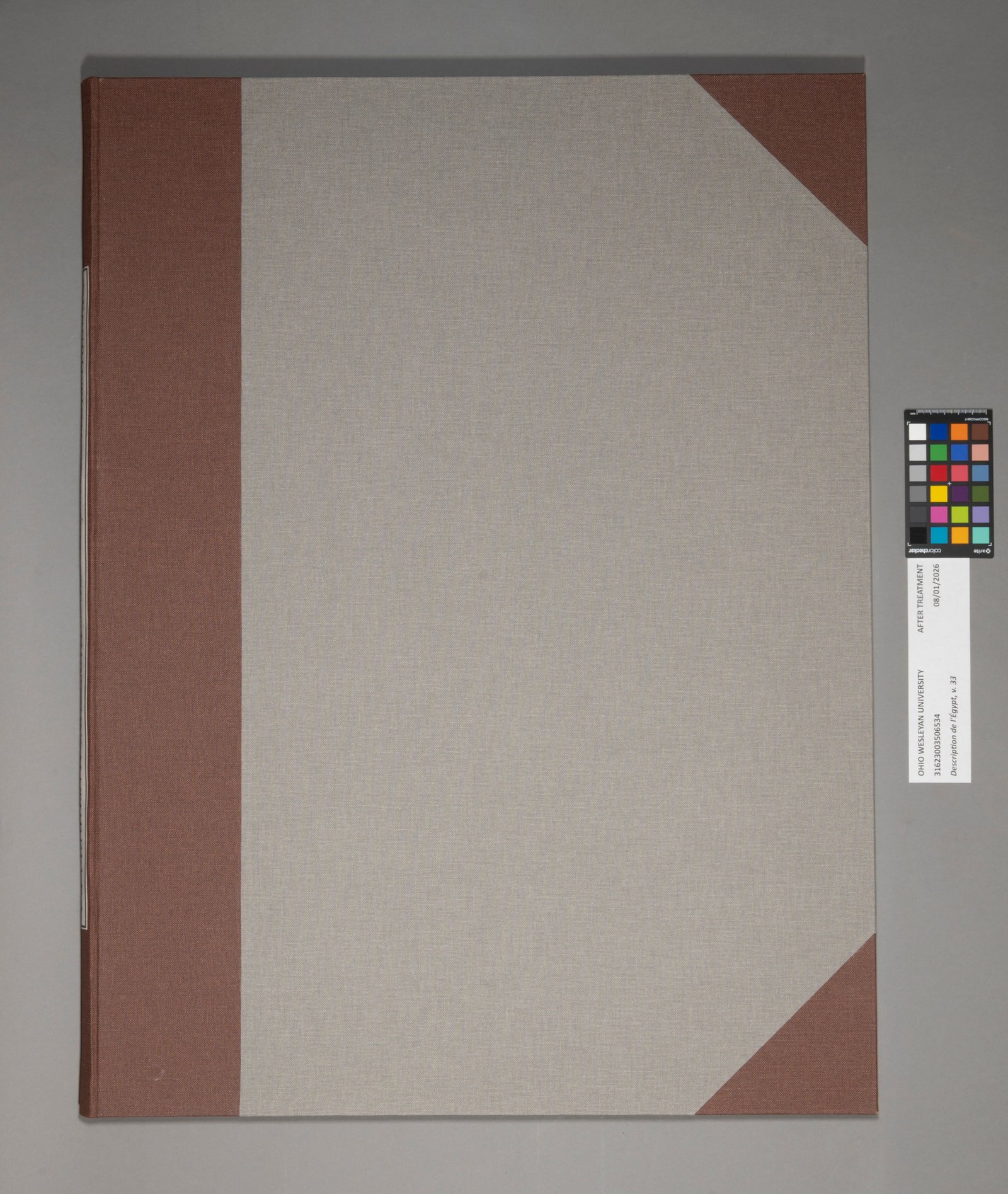
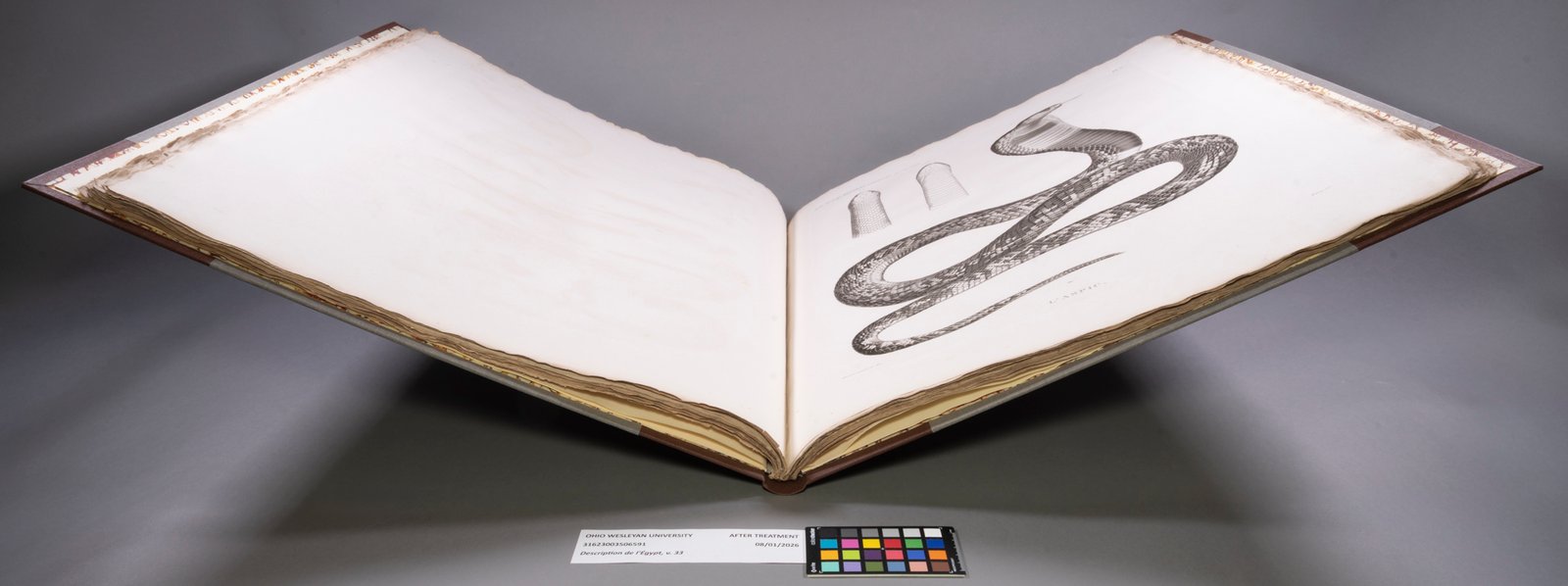
A new half-binding style case was made using binder’s boards, 10pt. cardstock, and bookcloth, assembled with PVA. The textblock was attached to the case by adhering the spine and pastedown sheets with a mix of Lascaux 498 and methylcellulose. The inner hinges between the new endleaves and the textblock were reinforced with a strip of Uso Mino Thin and WSP. Finally, paper spine labels were attached to the spine with PVA.