The librarian and archivist at Congregation Mishkan Or selected a single object to apply for the Library Services and Technology Act (LSTA) Conservation Grant, supported by the State Library of Ohio in partnership with the Ohio Preservation Council and the America250-Ohio Commission.
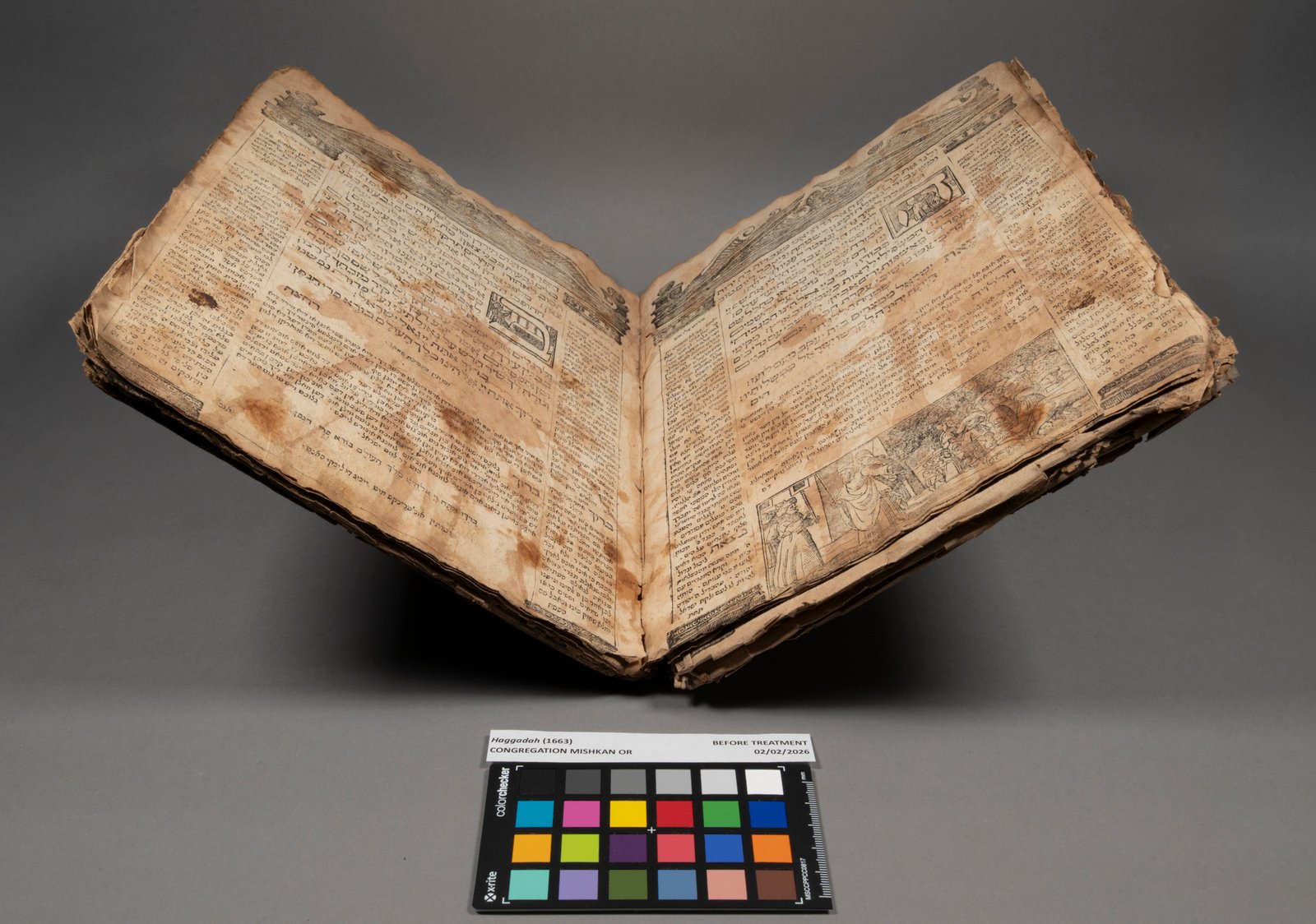
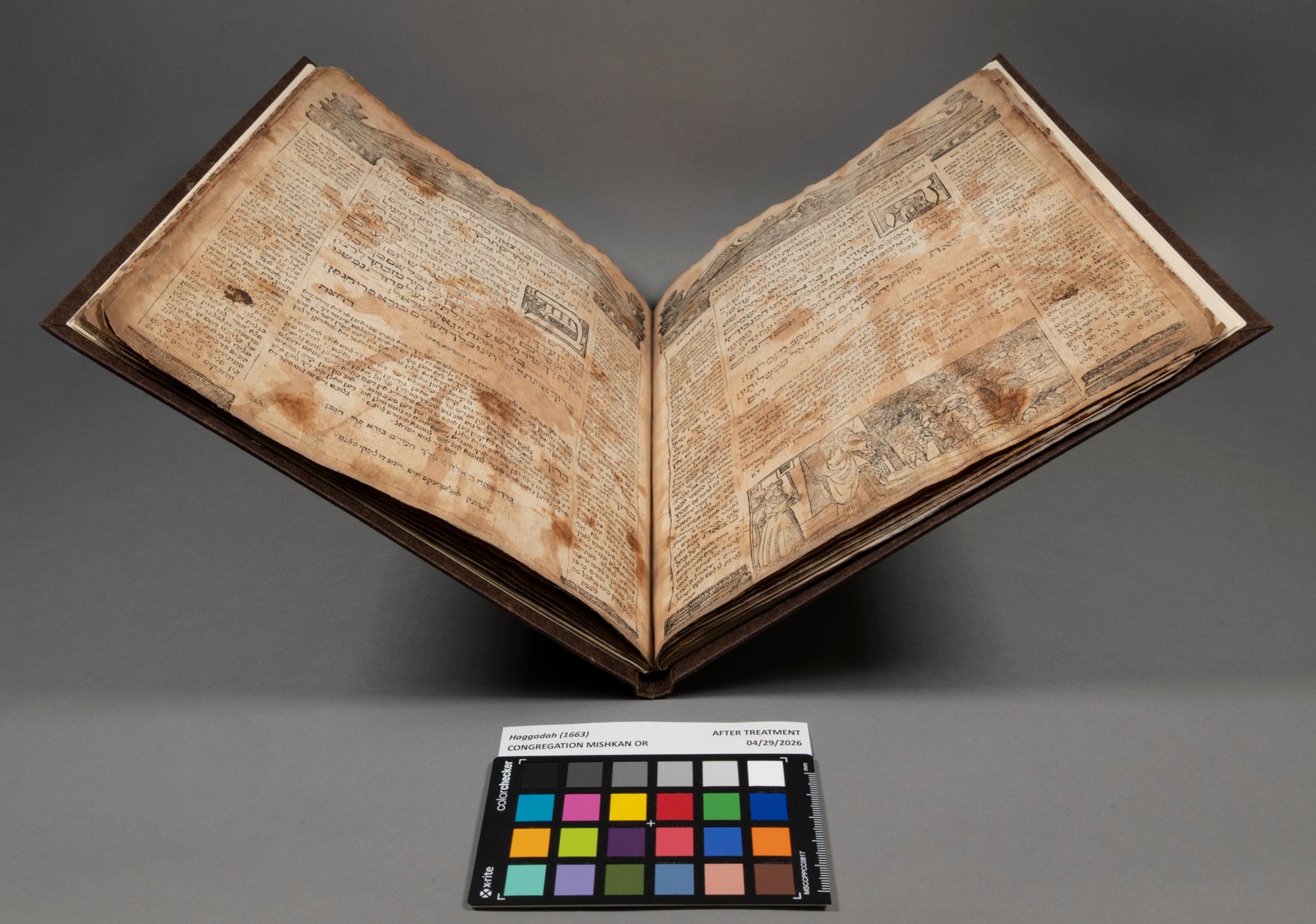
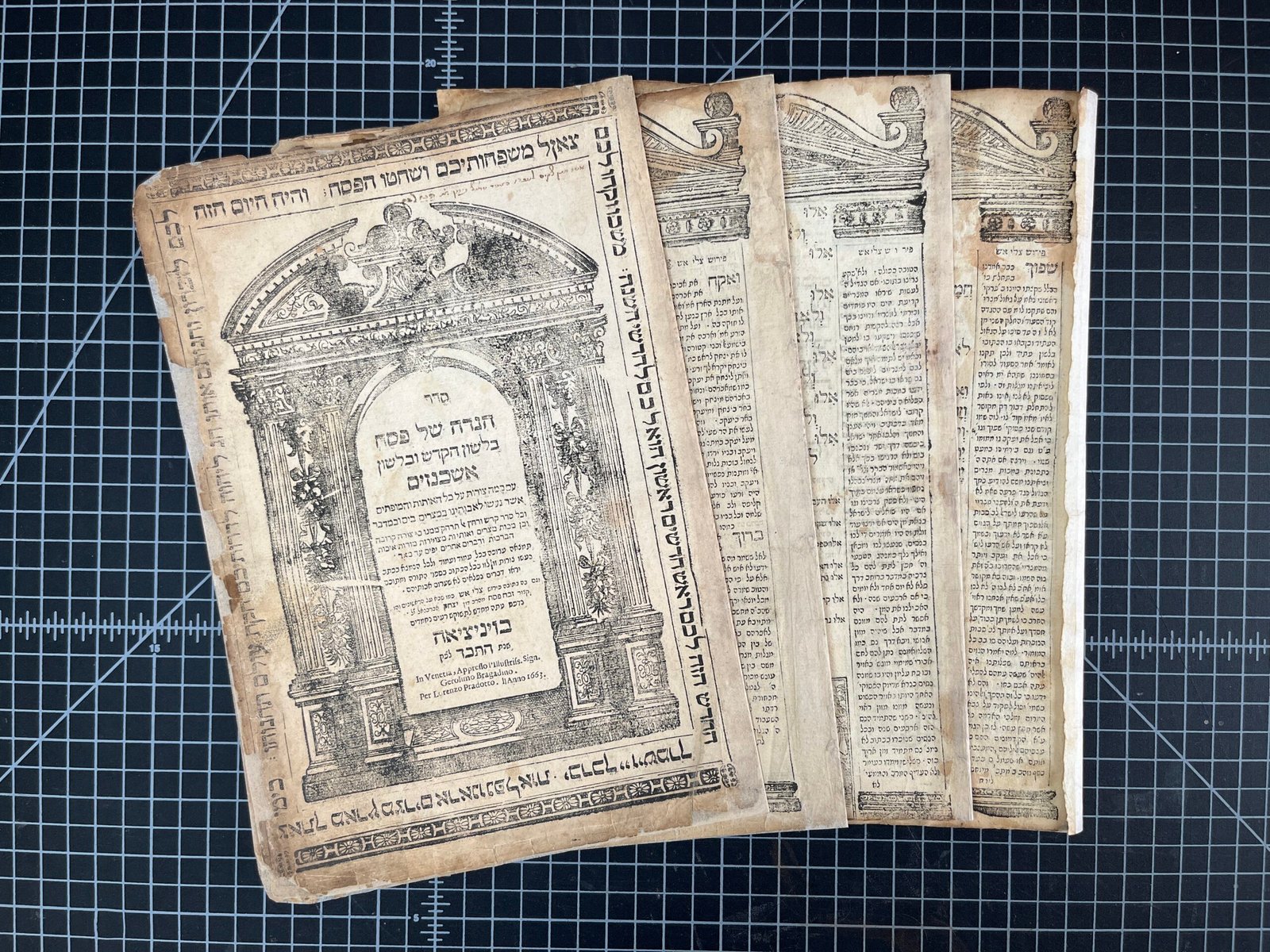
A Haggadah from 1663 was selected for this grant project, requiring a full rebinding along with extensive mending treatment on every leaf. The librarian wanted to make the Haggadah usable again at their institution, as its extremely fragile condition before treatment made it difficult to handle safely.
Description & Condition
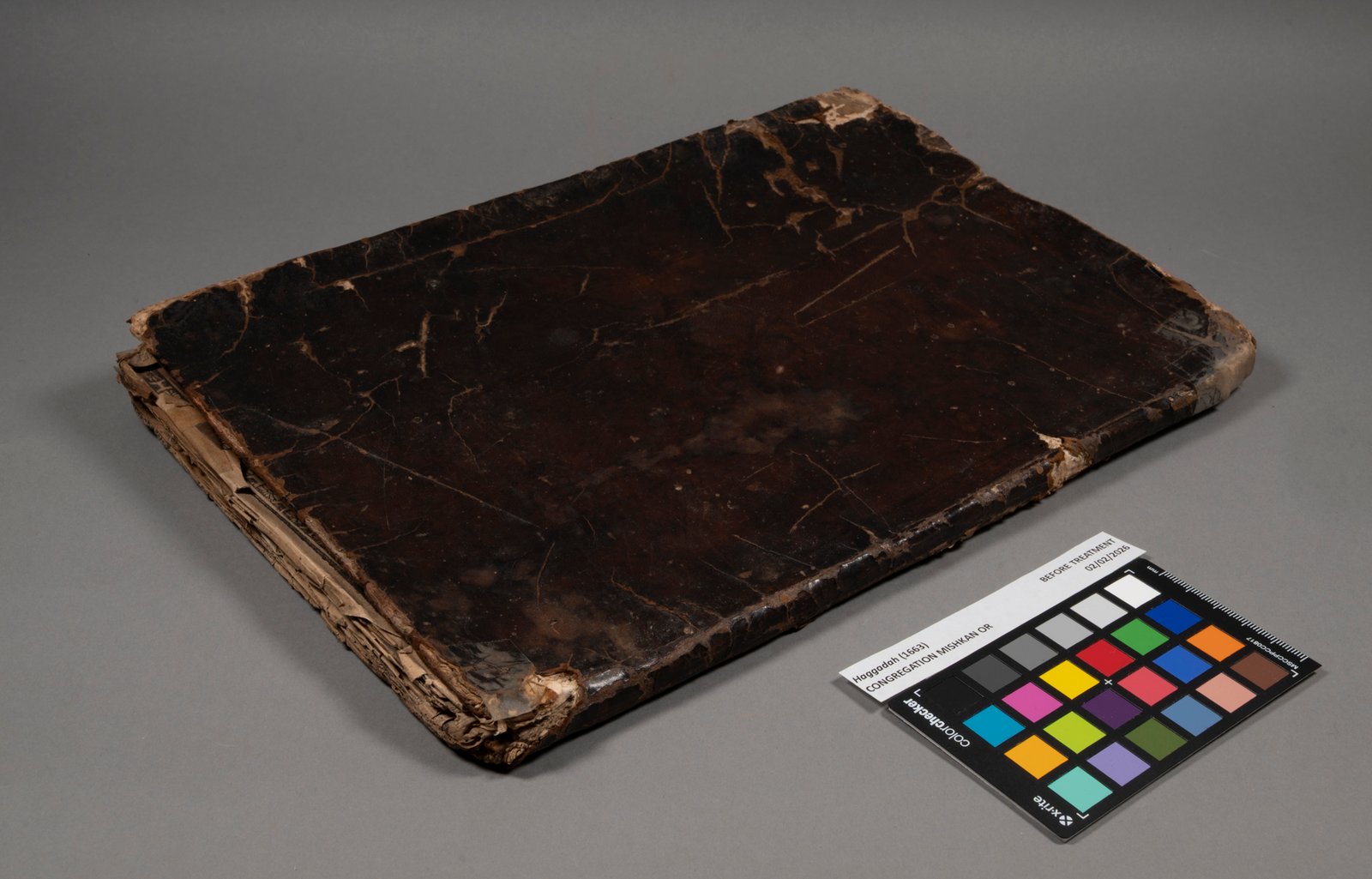
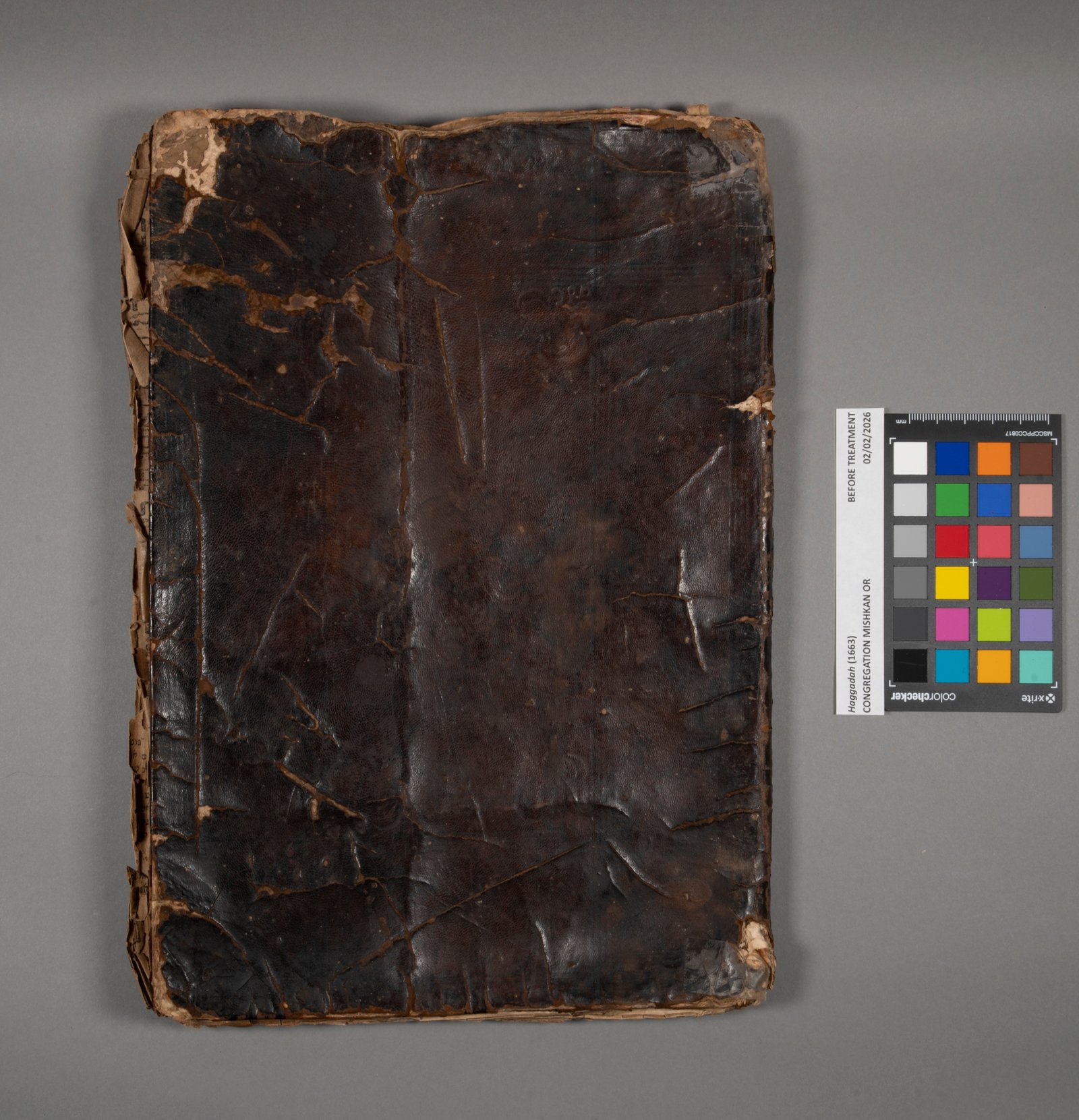
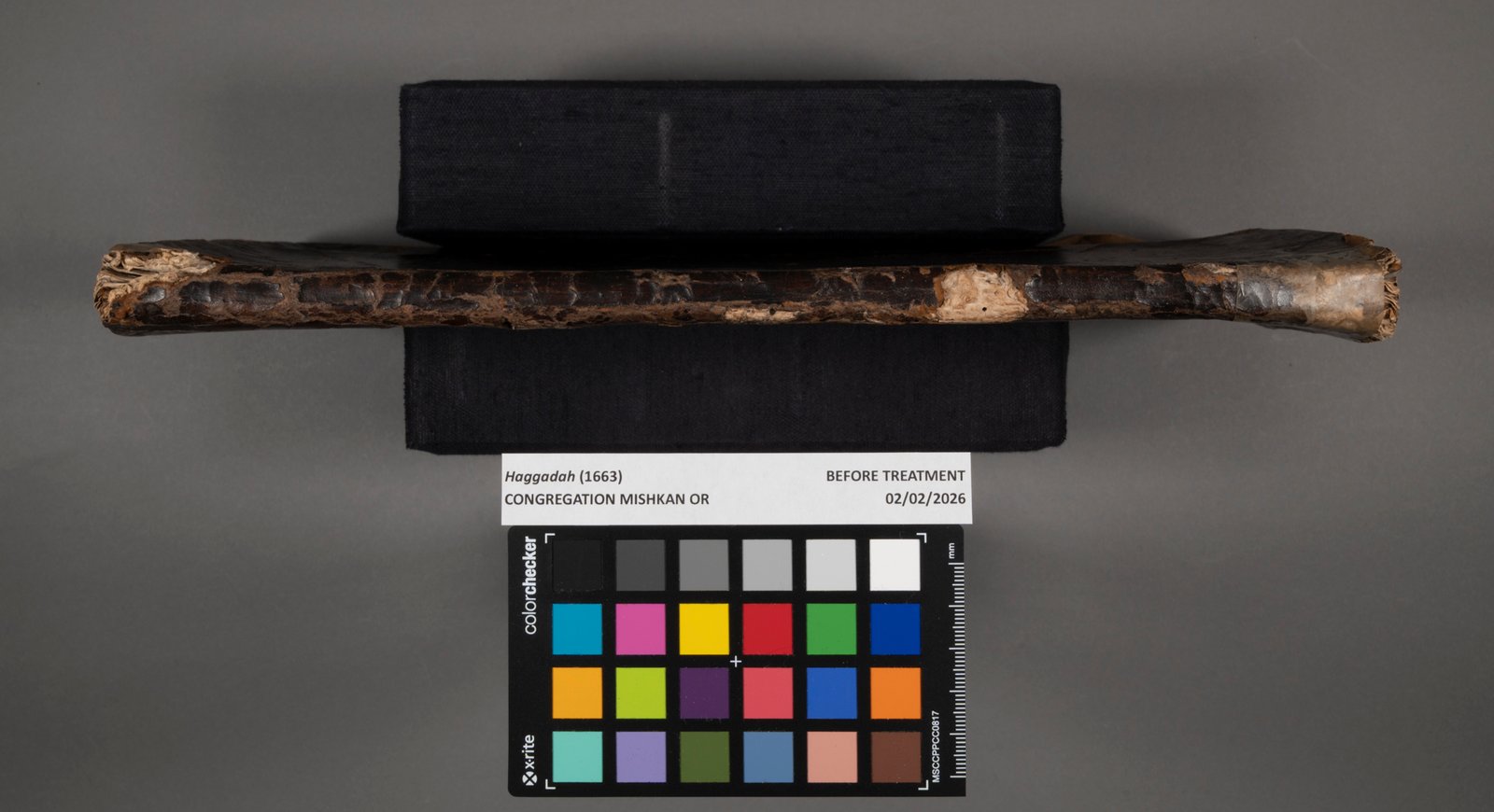
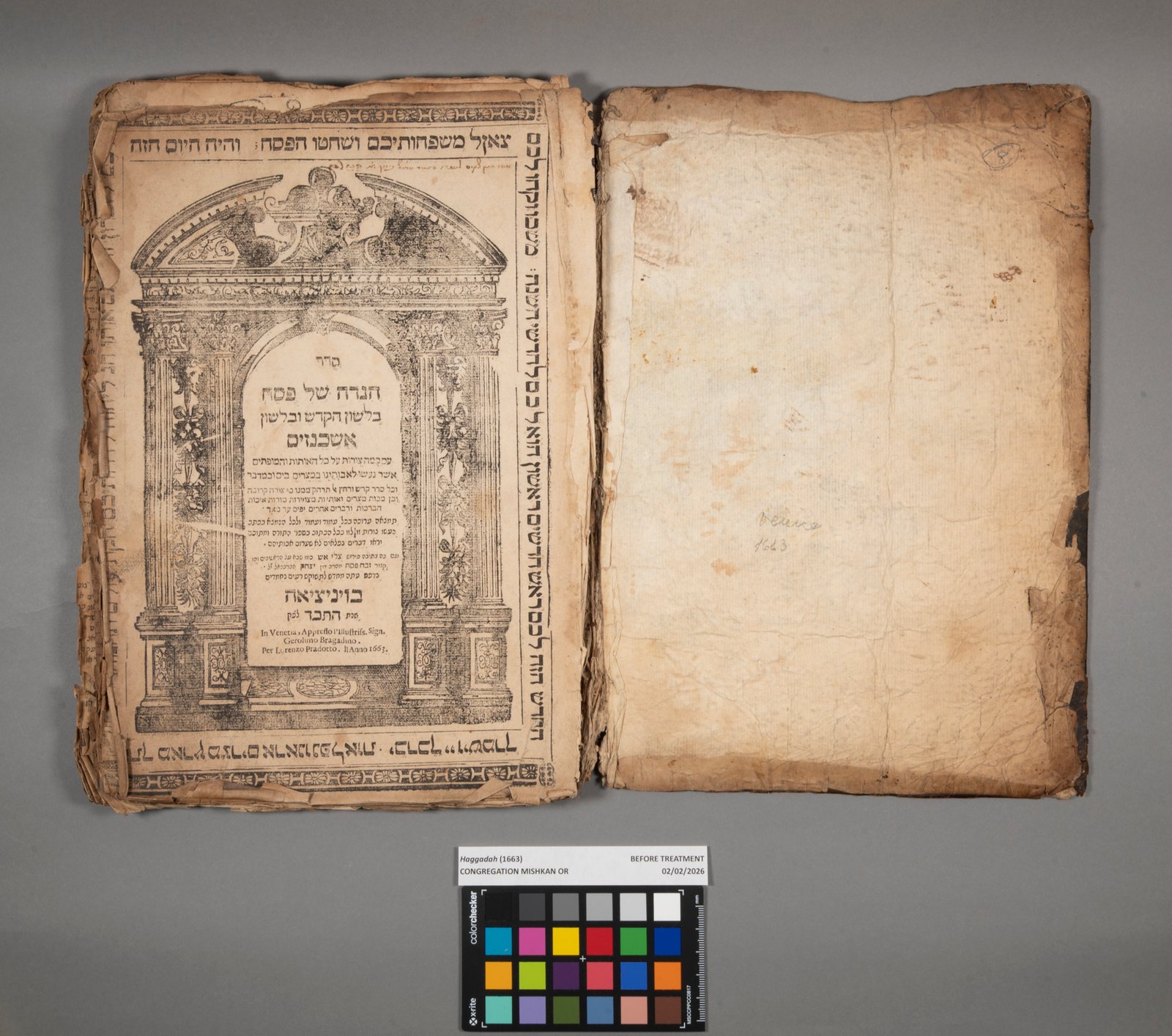
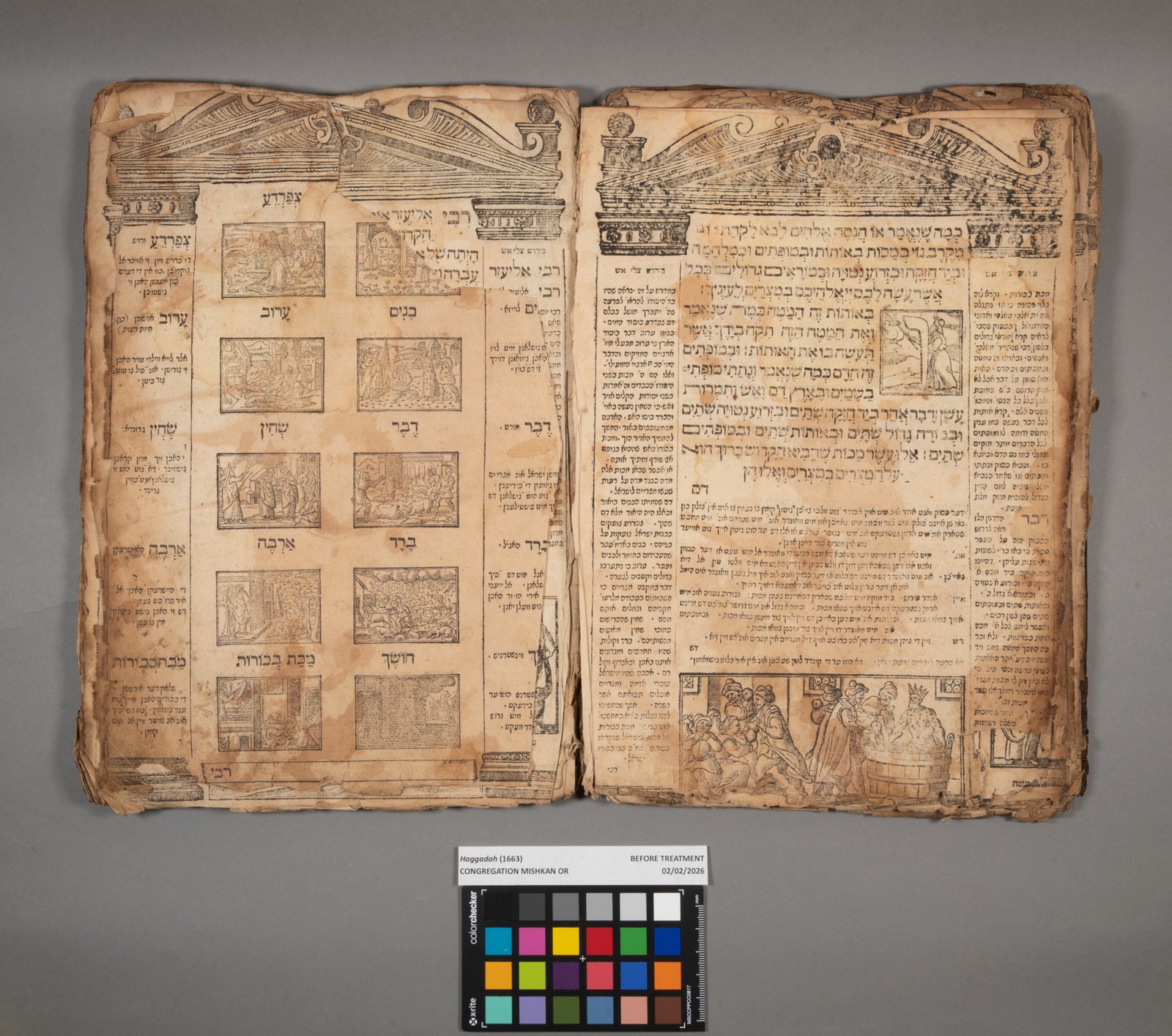
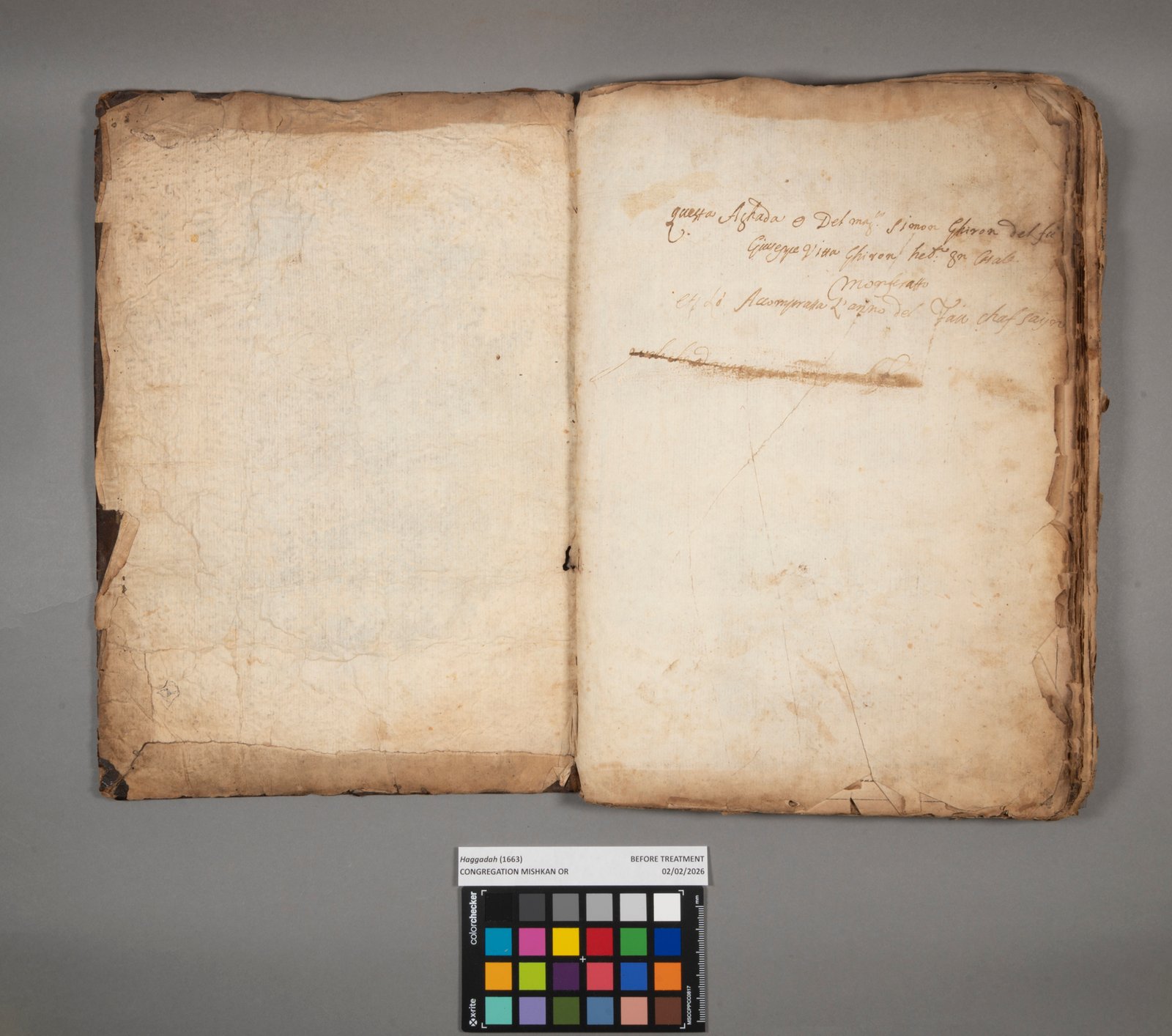
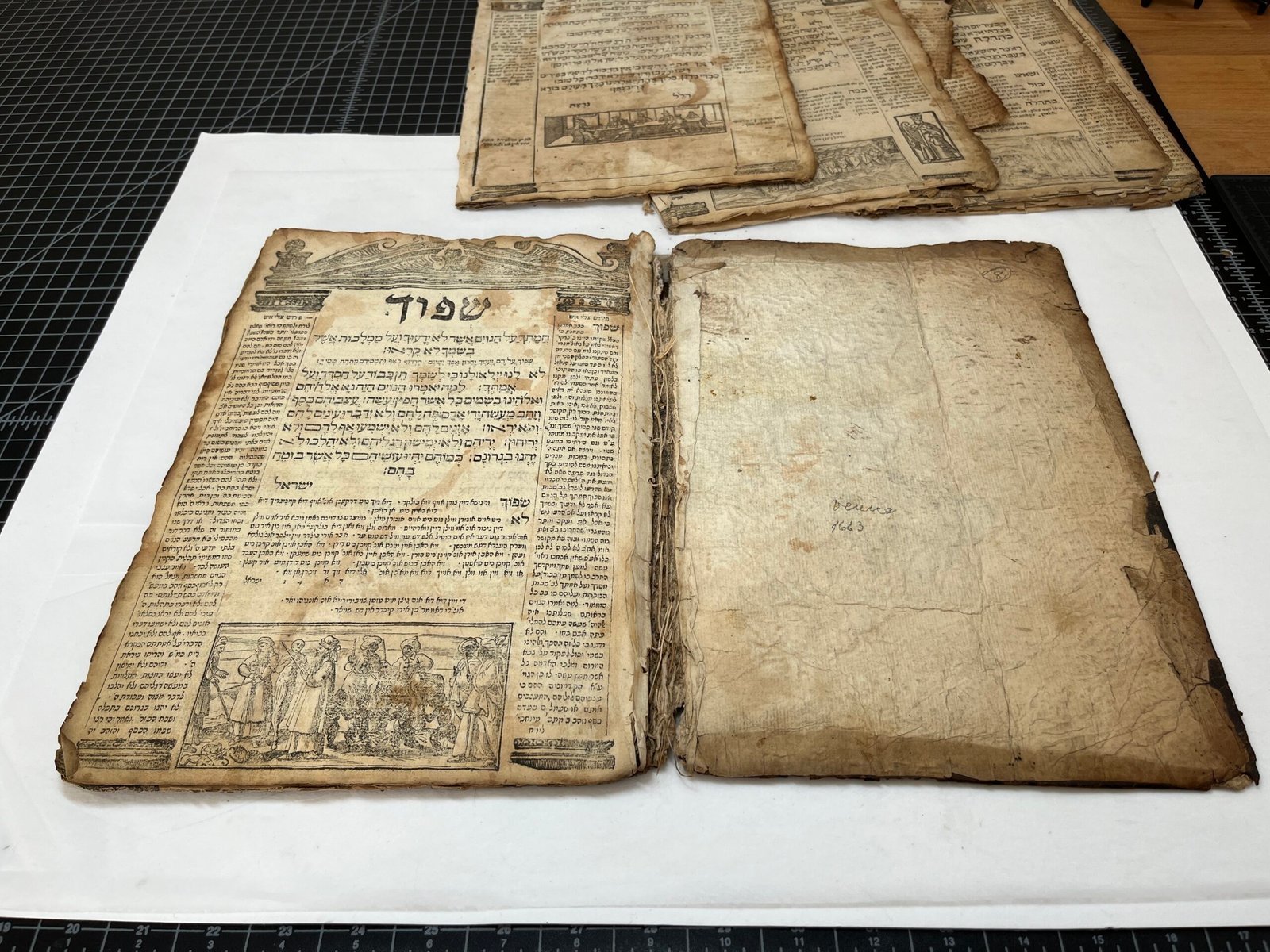
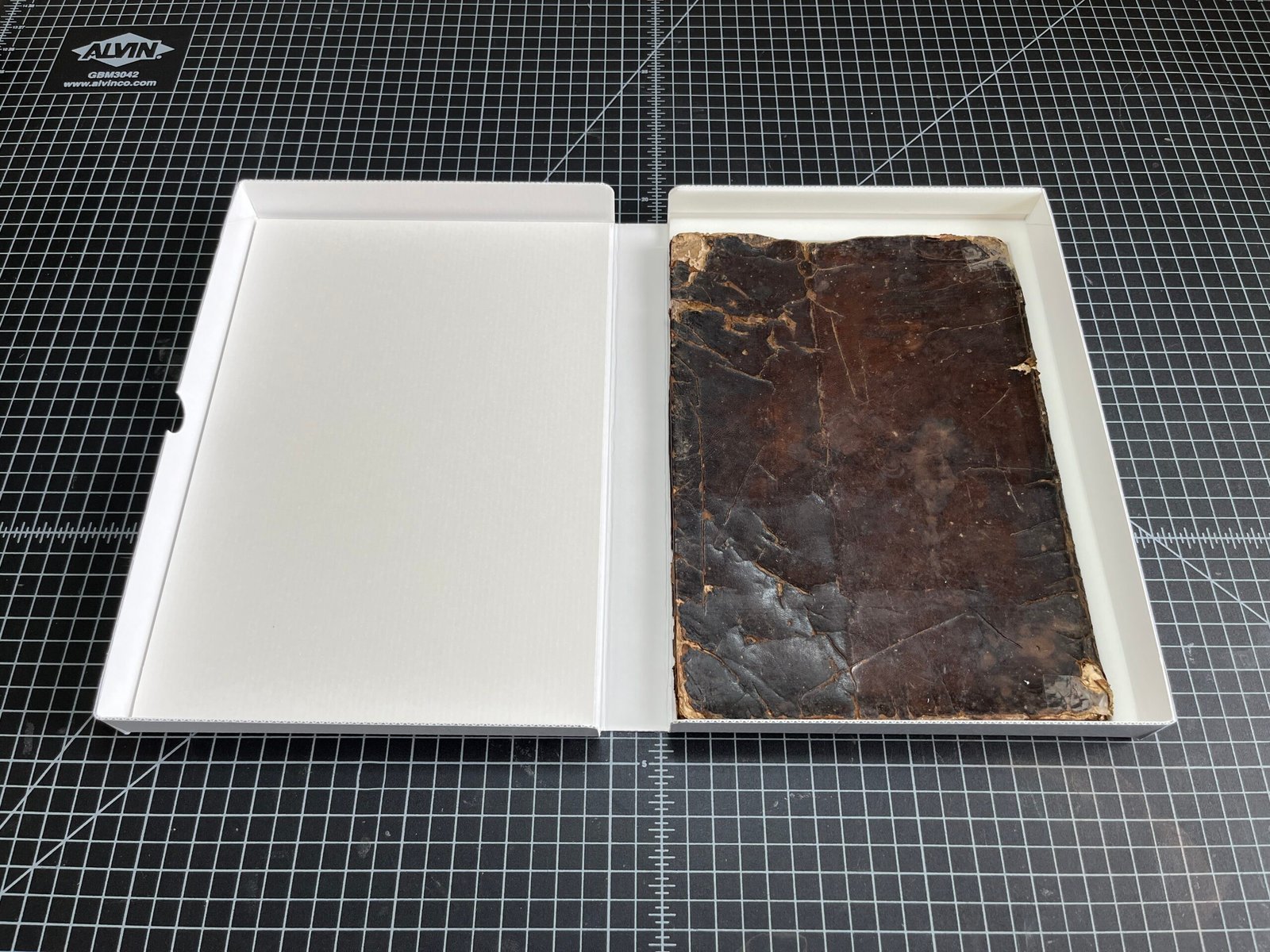
This volume was a dark brown full leather binding with subtle blind tooling on the covers, semi-limp with no squares. The textblock comprises four sections, with three to five folios in each section. The textblock leaves were sewn unsupported with linen thread, though significant deterioration and tearing at the centerfolds obscured the original sewing pattern. The plain endleaves include inscriptions in brown ink, and the text is printed in black ink. The binding does not appear to be original, as the textblock clearly does not fit within the case.
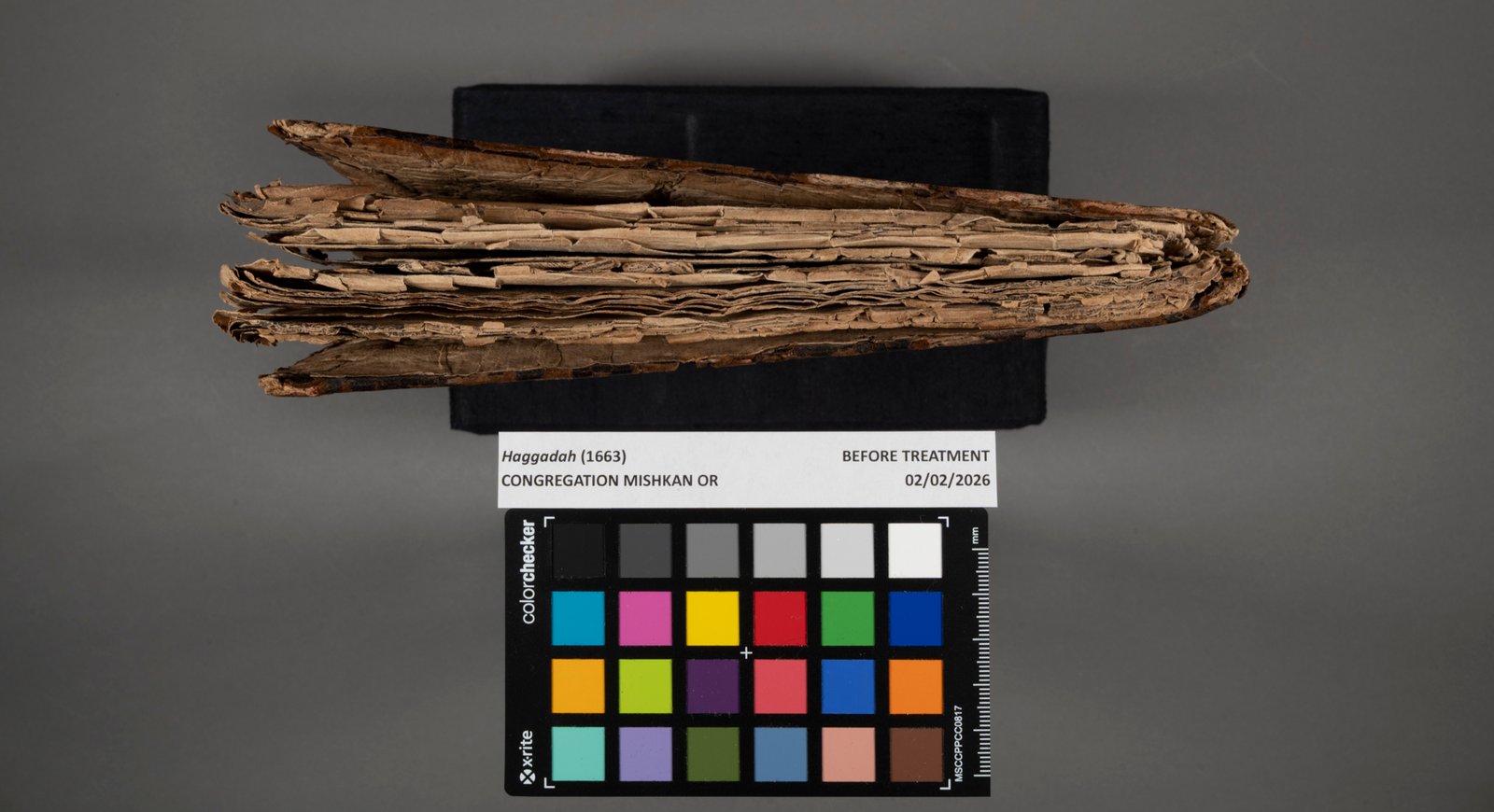
The binding was in poor condition overall: the covers were heavily abraded, with losses and tape on the corners, and tenuously connected to the textblock by loose threads. The textblock leaves were falling apart, with ragged edges, tears, losses, and creases, along with significant surface grime, staining, and small pieces of tape on a few leaves.
Treatment Note
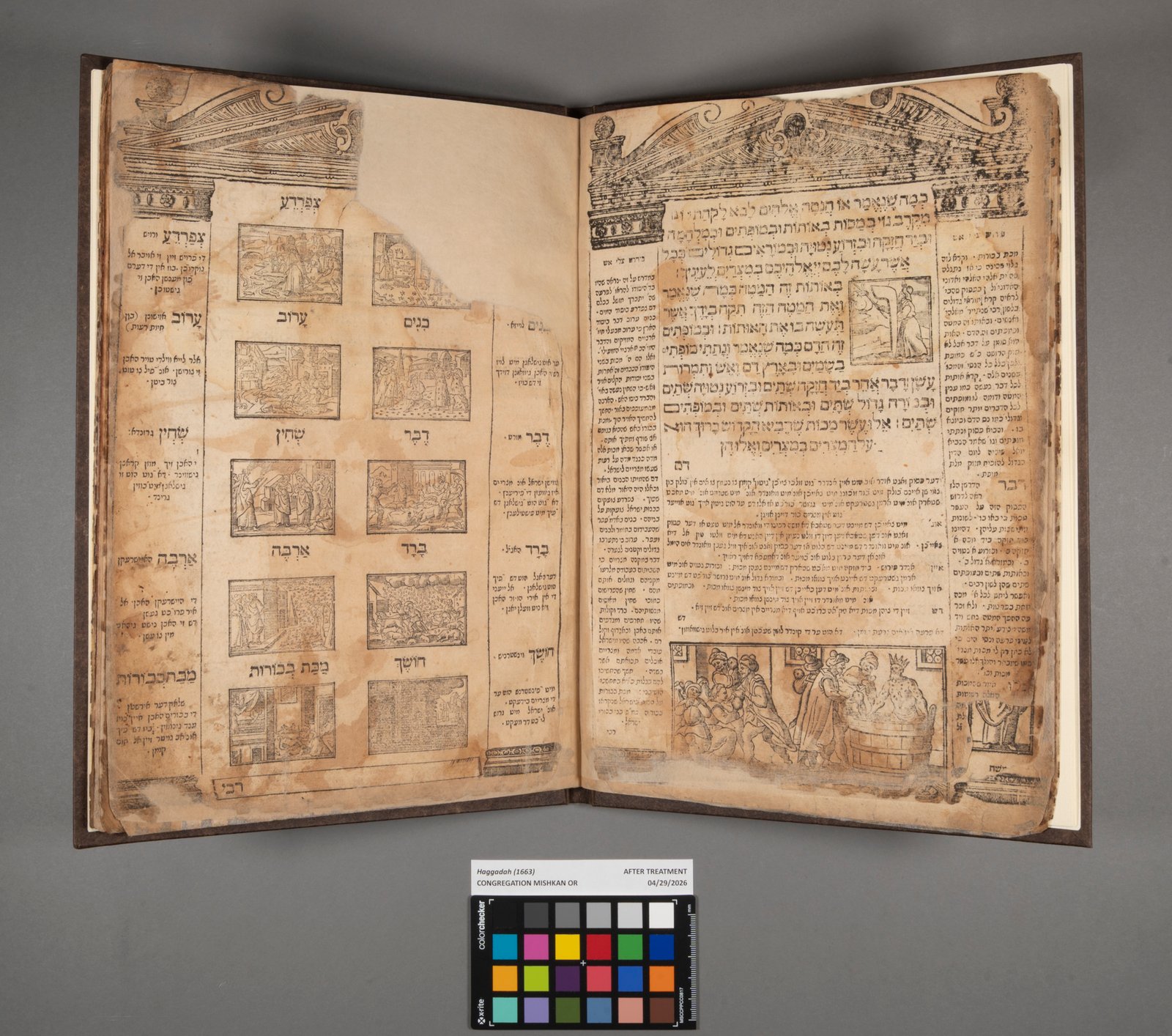
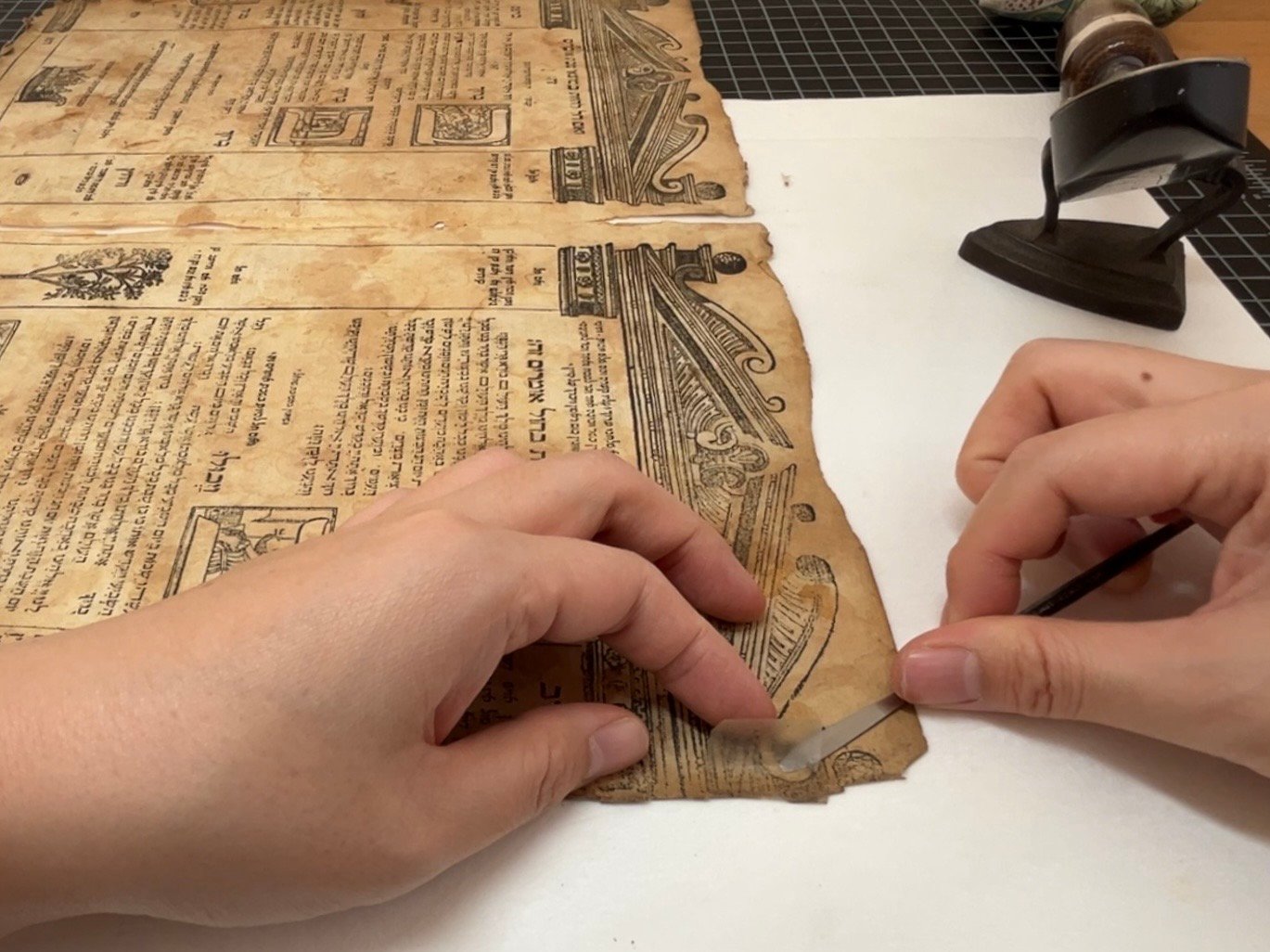
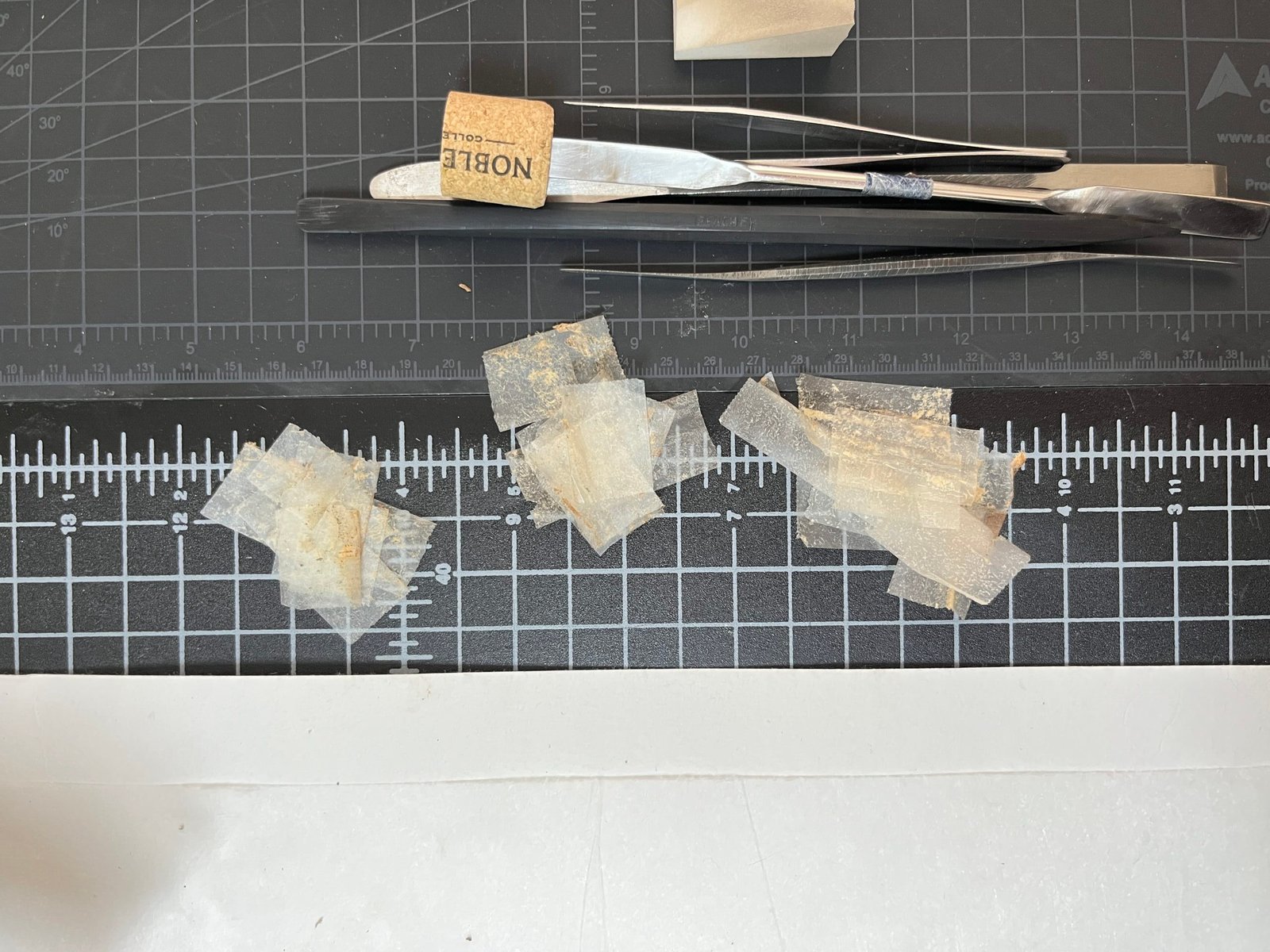
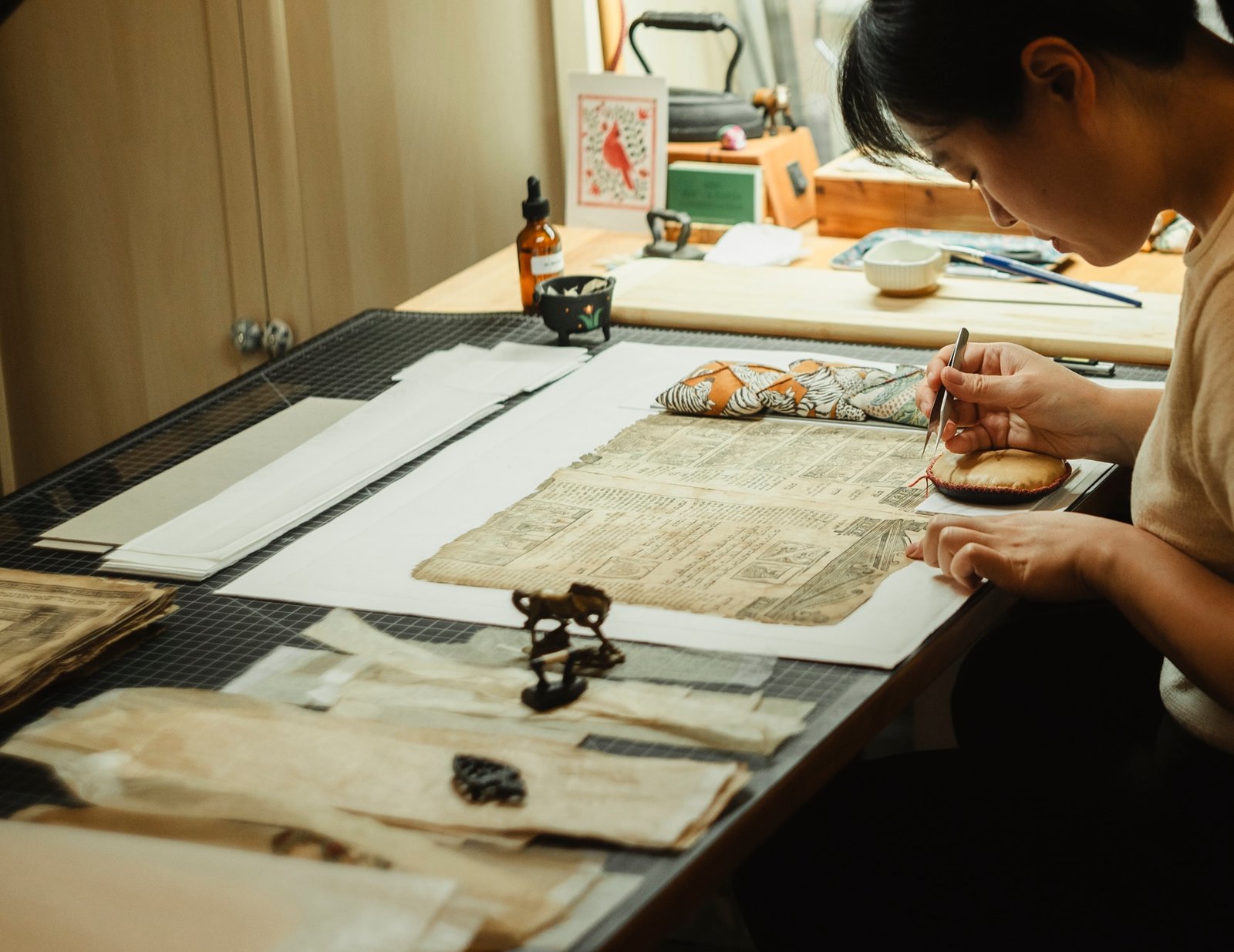
The textblock was disbound by cutting and removing the sewing threads. All leaves were surface cleaned, and pressure-sensitive tapes were removed with a heated microspatula; residual tack was reduced with a crepe eraser, and stubborn residues were isolated with Tengujo and wheat starch paste (WSP). Folded corners and edges were relaxed and flattened via local humidification and drying under weights.
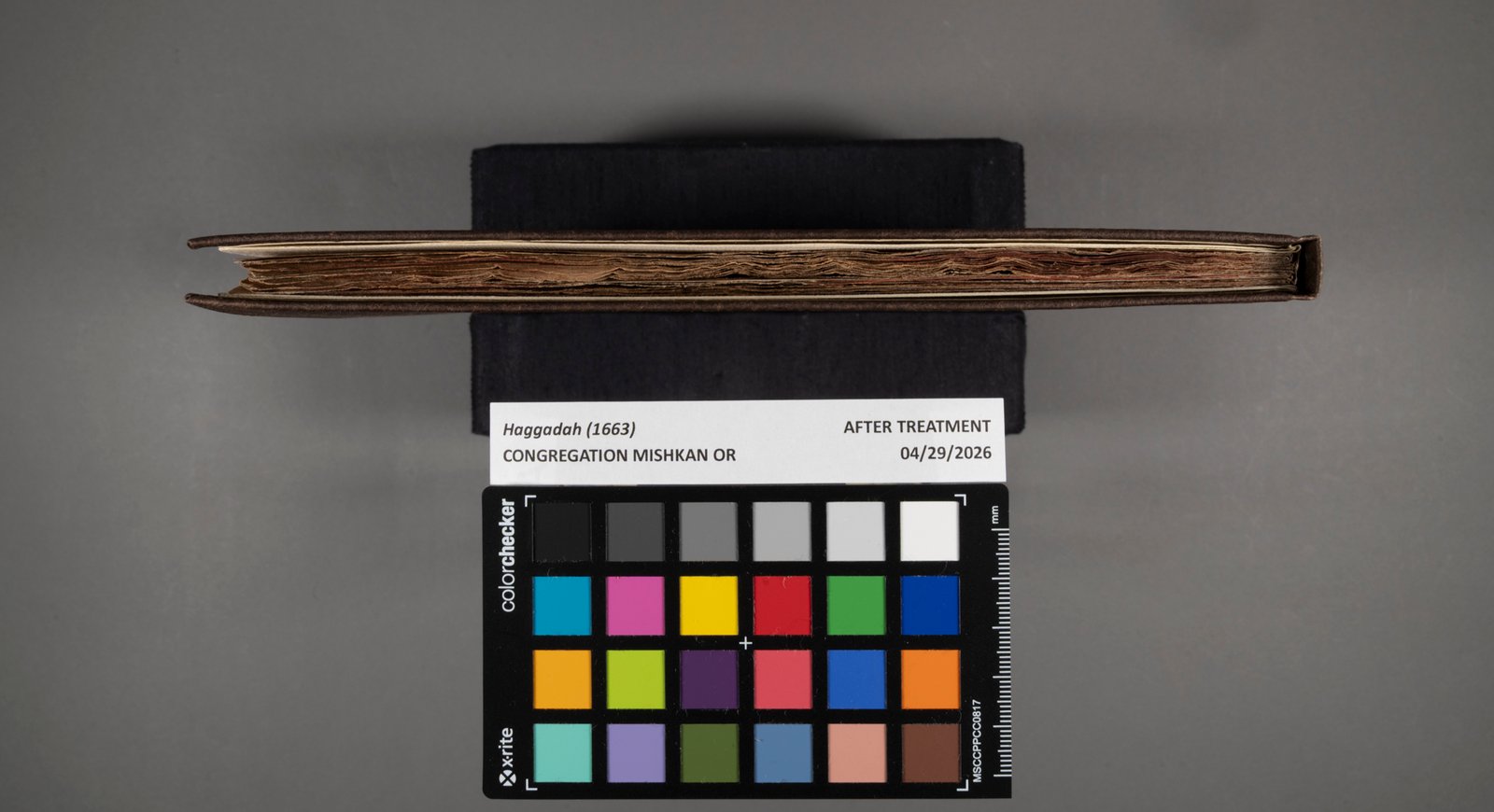
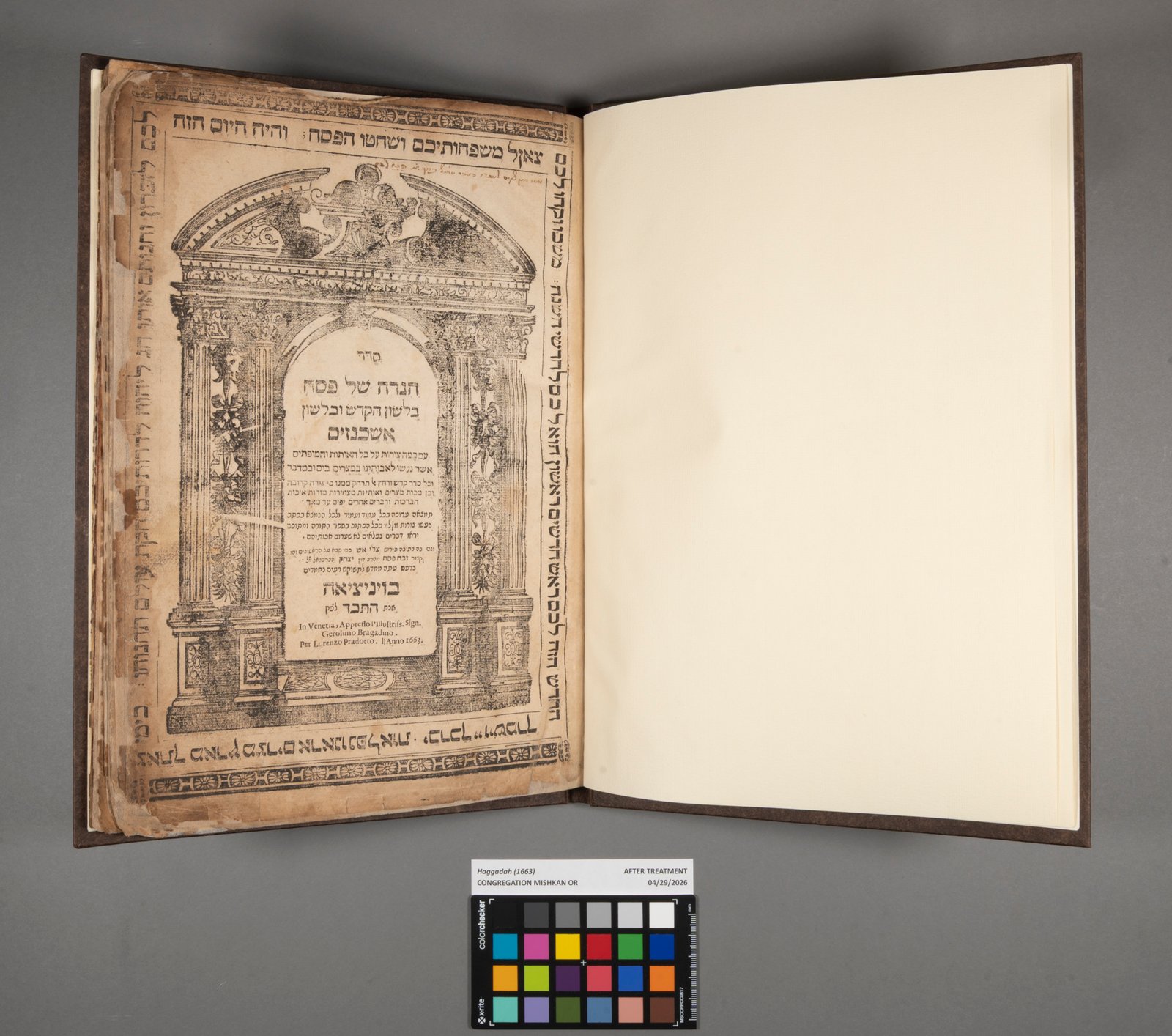
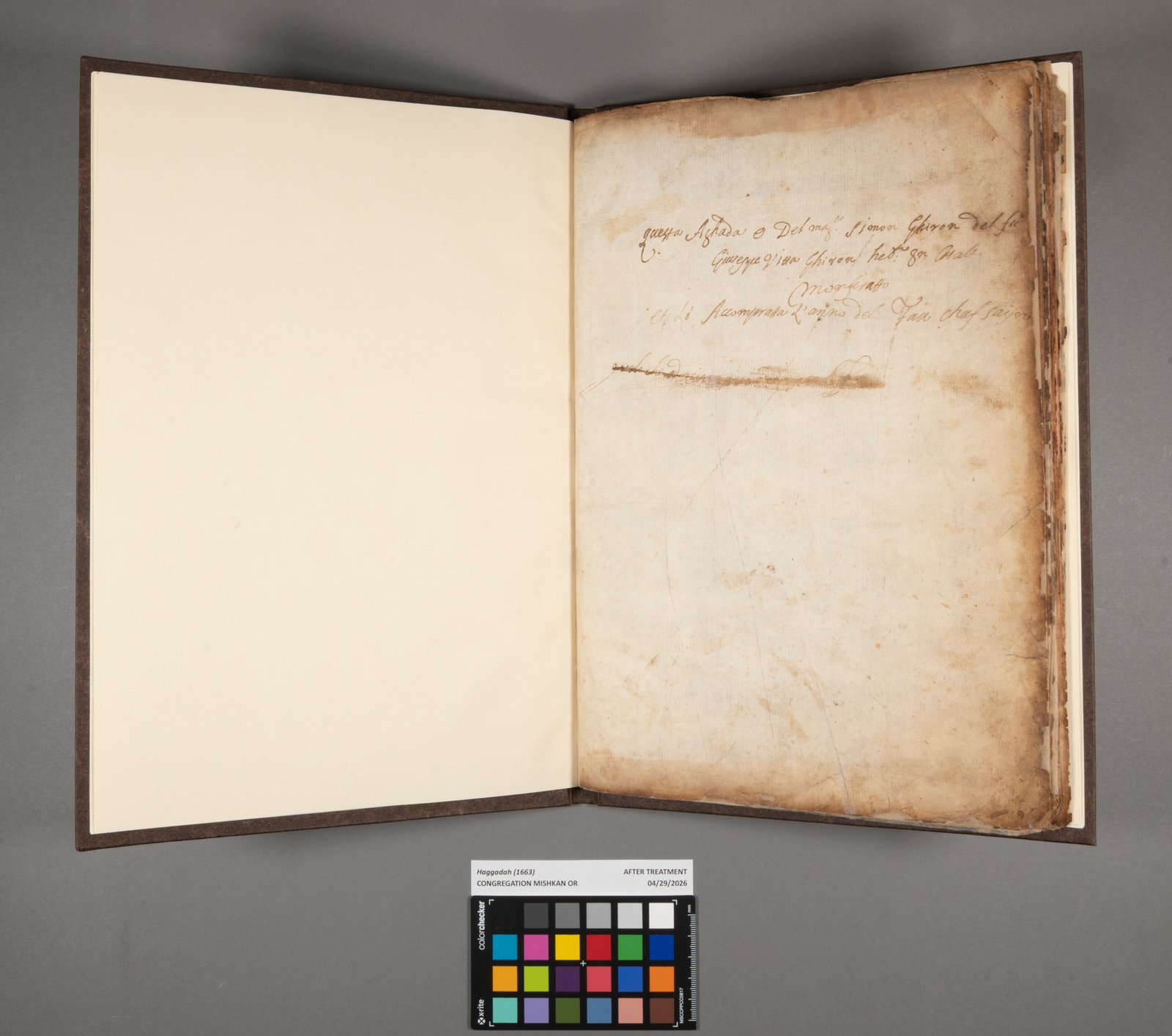
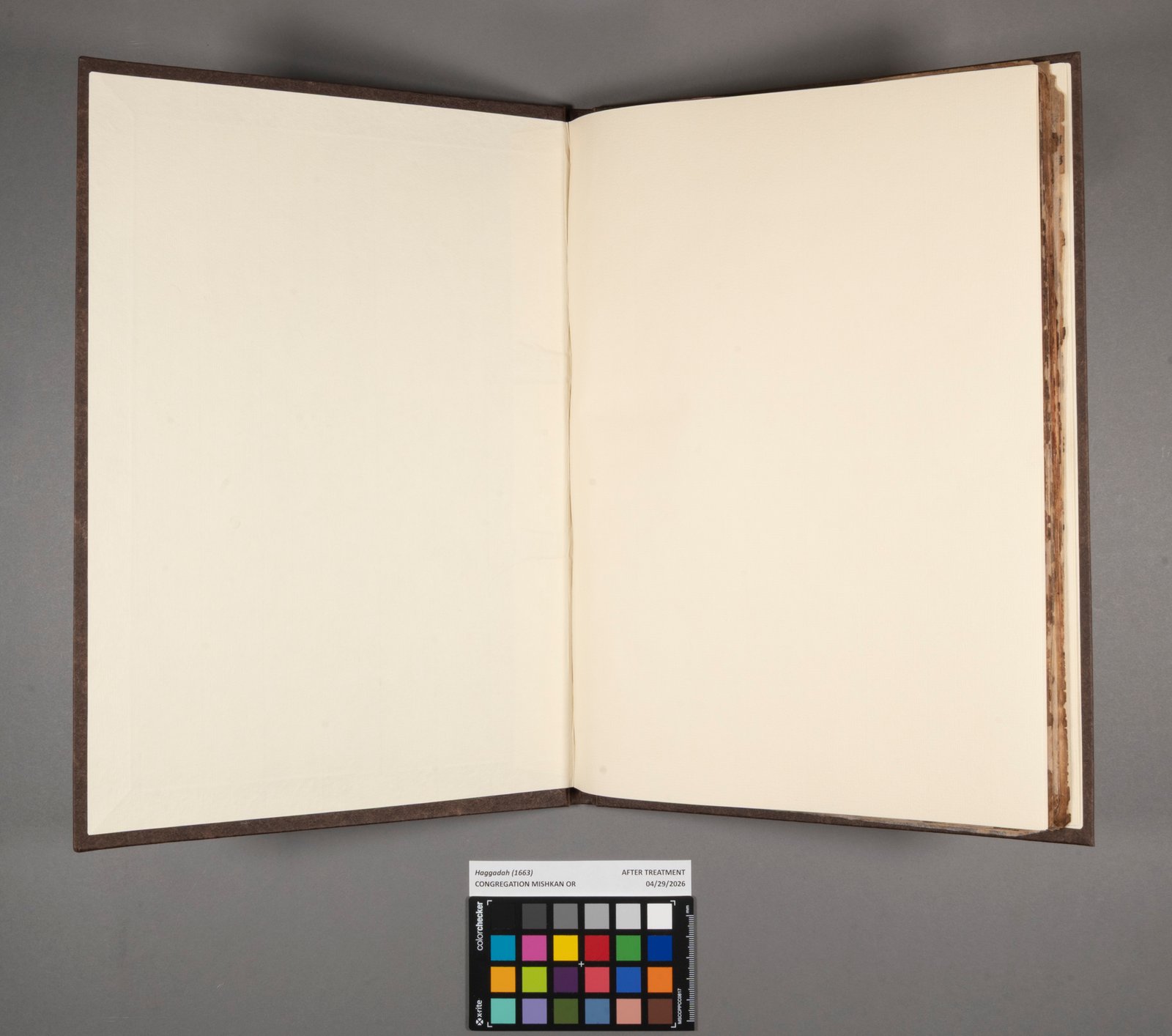
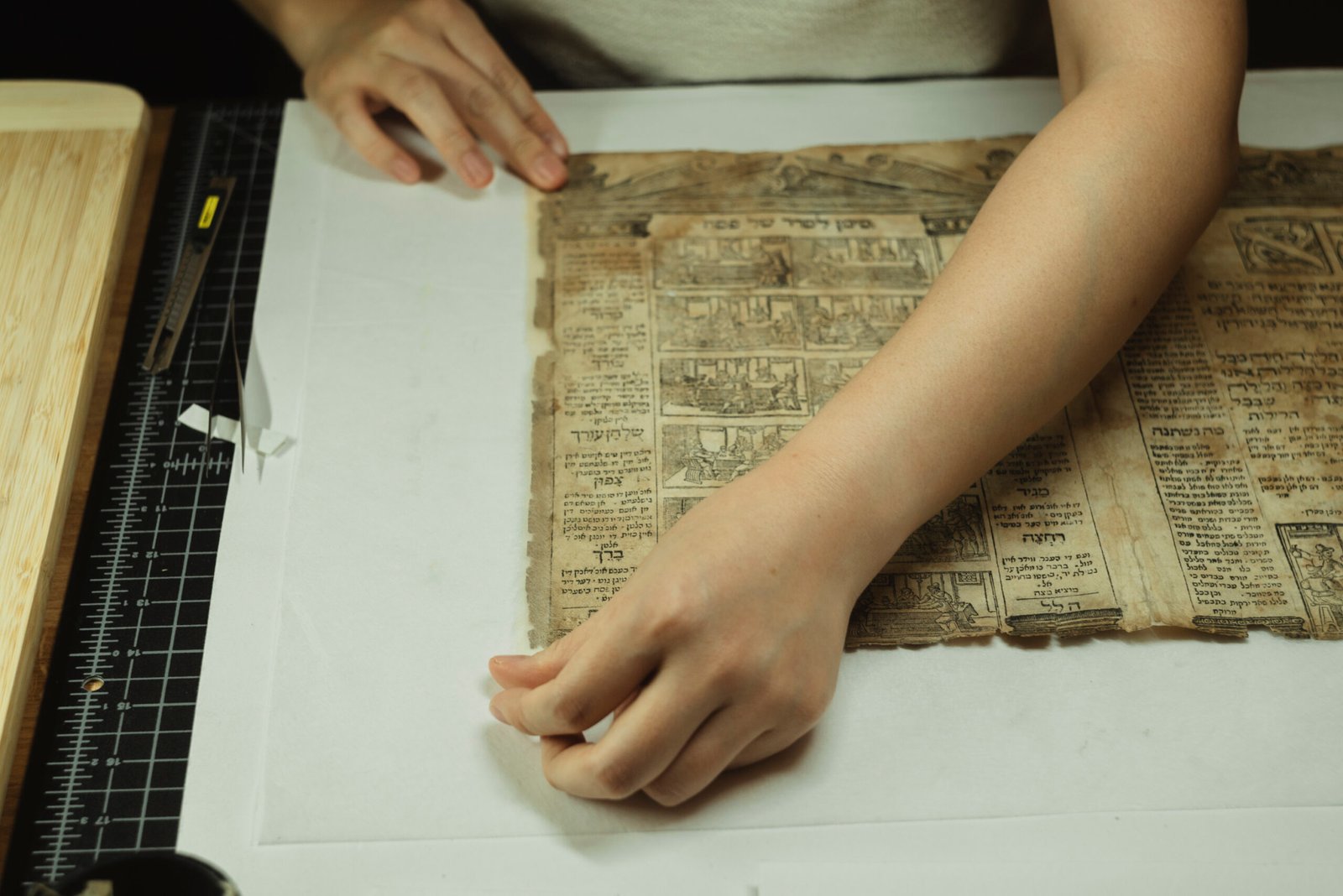
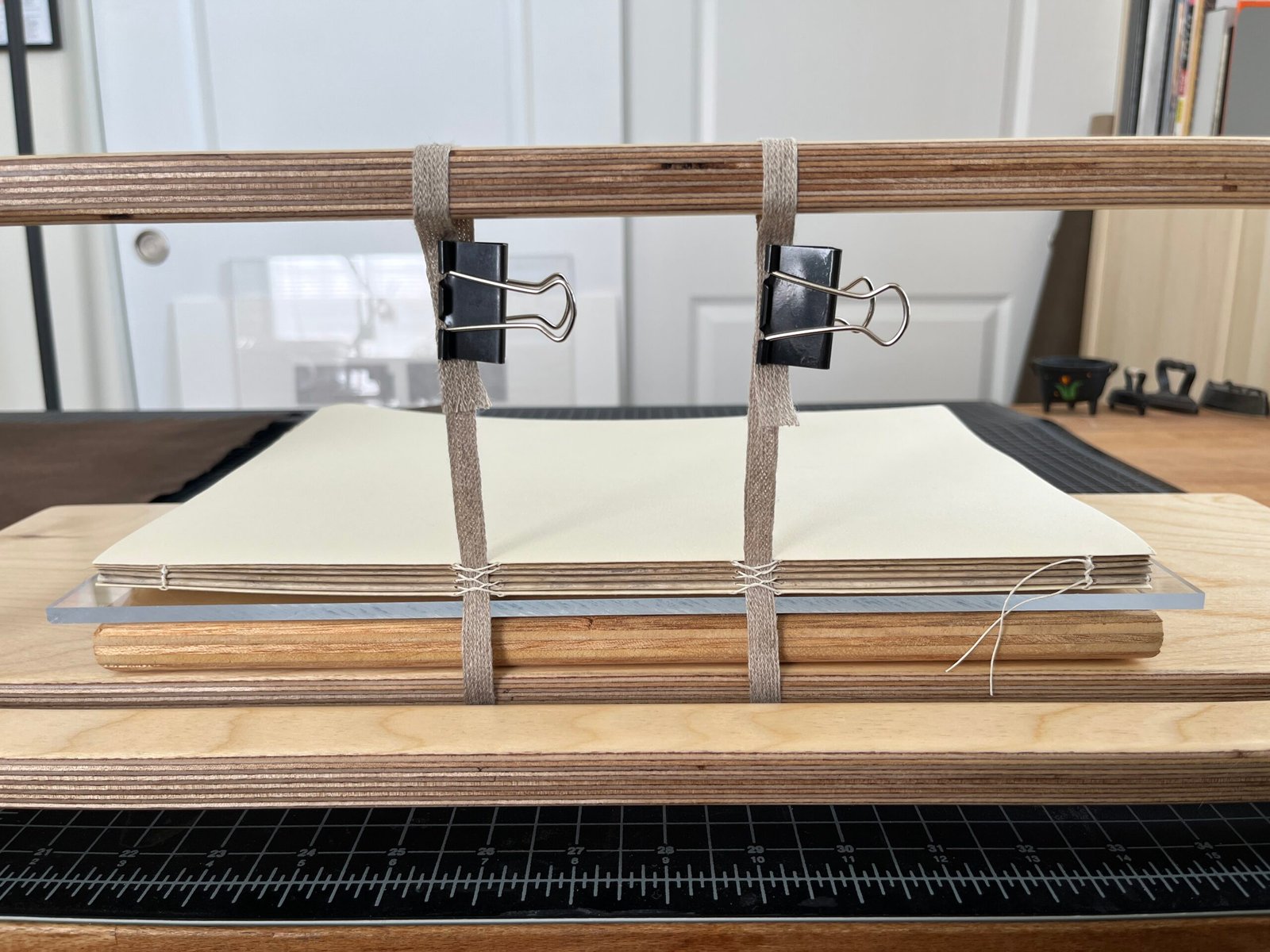
Various weights of Japanese tissues were toned with Golden acrylics to match the paper color. Tears along the edges were mended with toned Tengujo and WSP, and the centerfolds of each folio were reinforced with toned Uso Mino and Tengujo. A large loss on the 11th leaf was filled with a laminate of two layers of Uso Mino sandwiched between two layers of Tengujo, adhered with WSP. The textblock was resewn, including new double-folio endleaves, all-along on two linen tape supports with 18/3 linen thread. The spine was lined with Uso Mino Thin, a muslin with flanges, and a Western paper, all adhered with WSP.
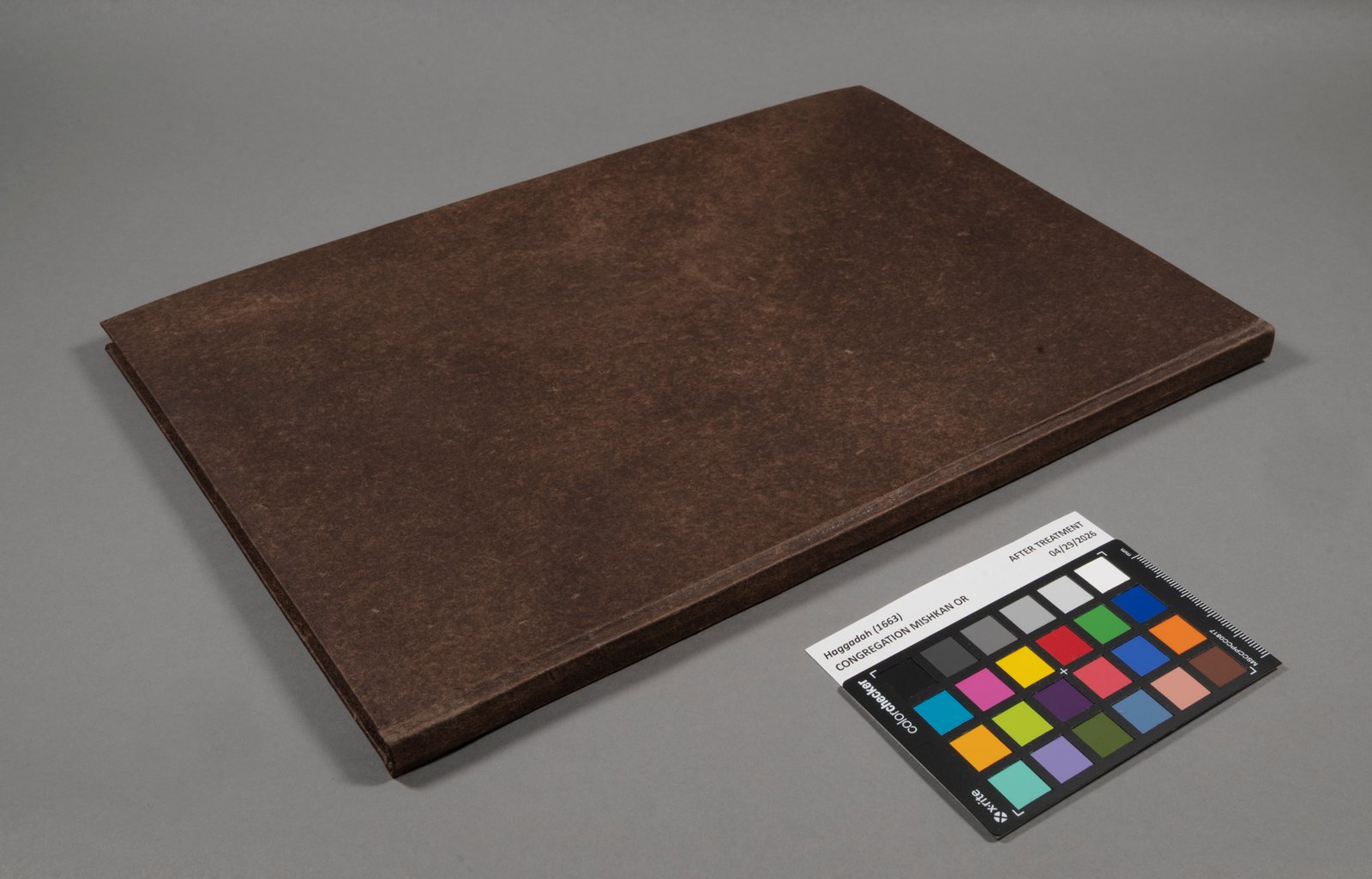
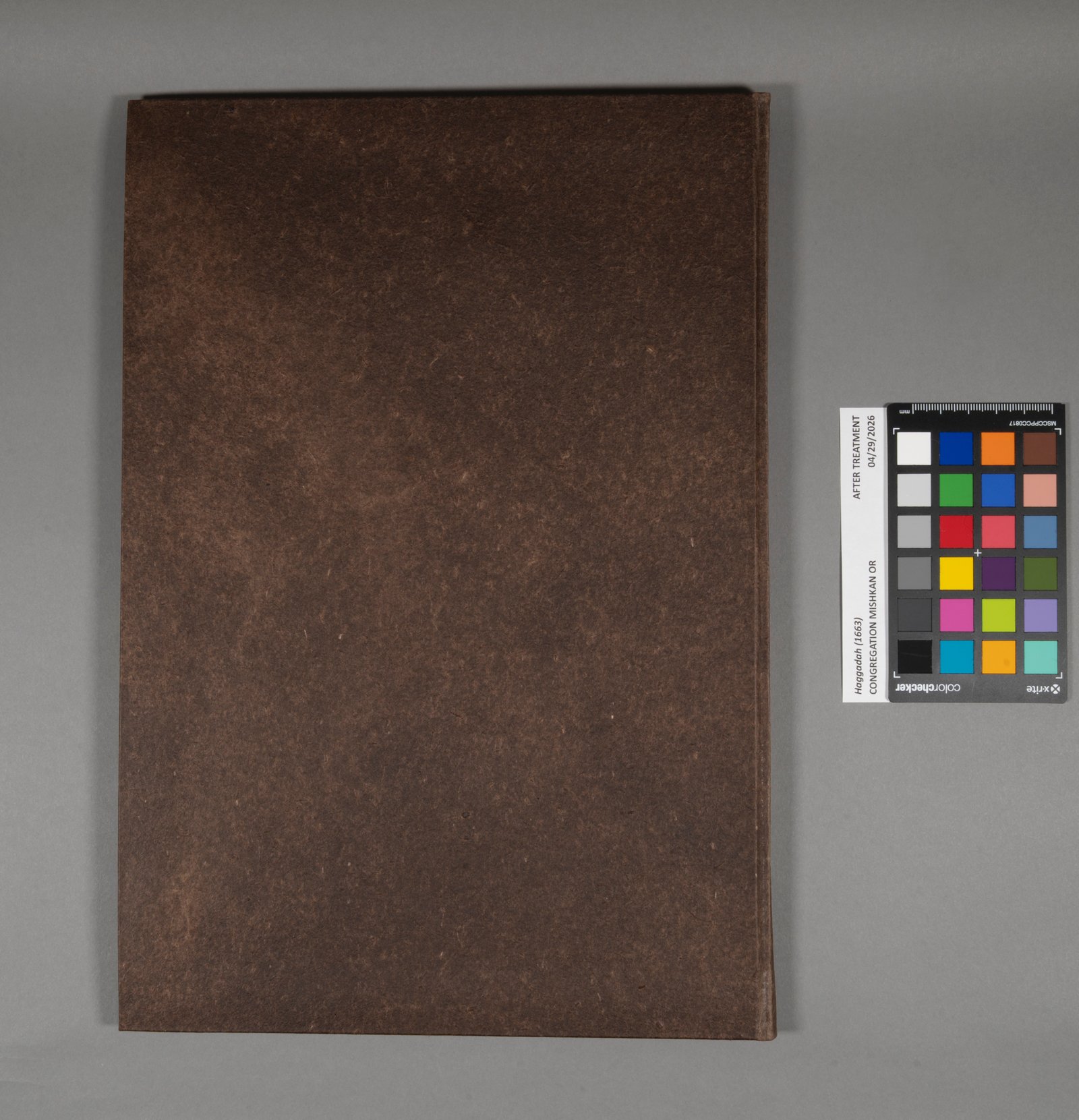
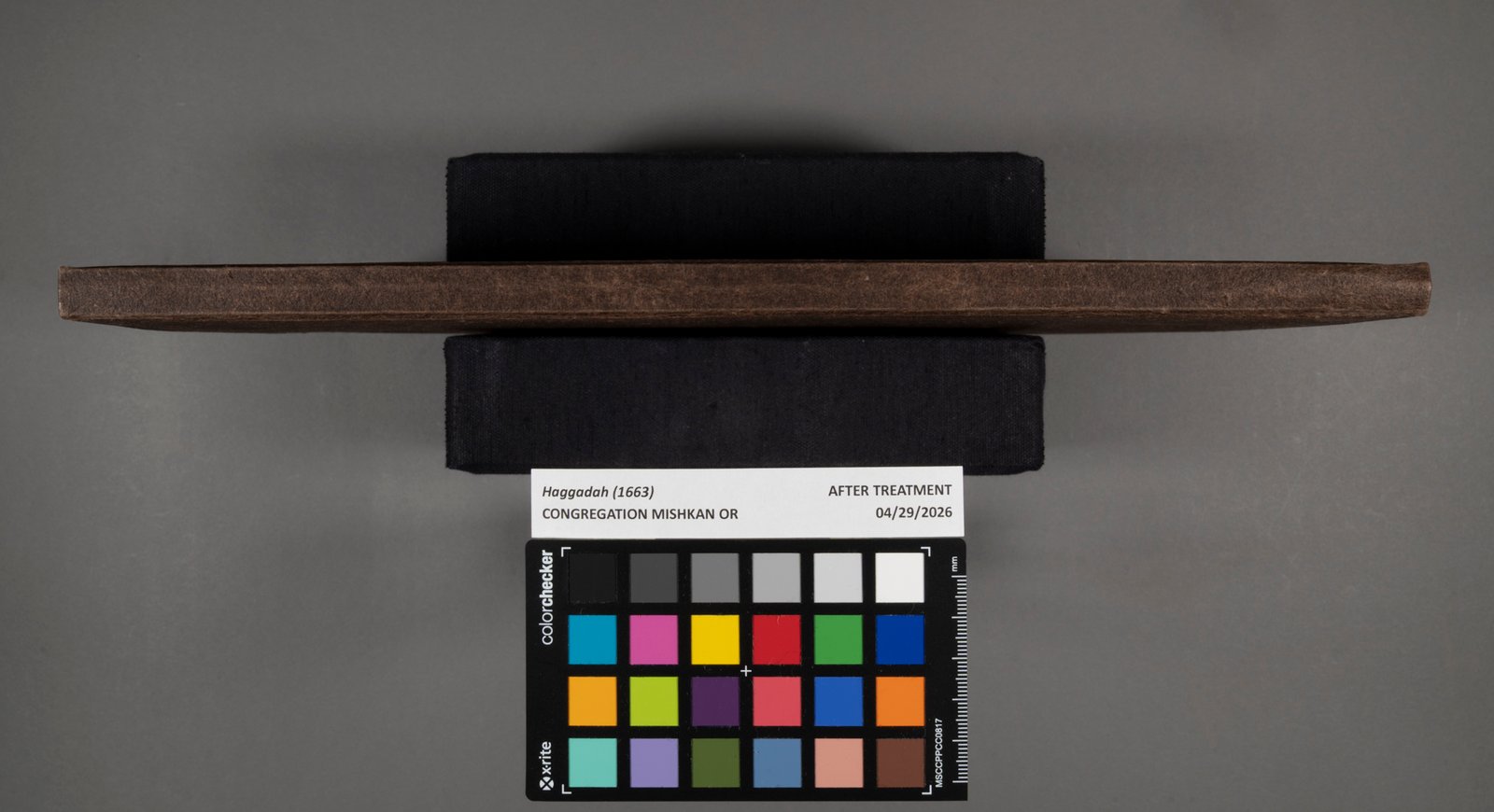
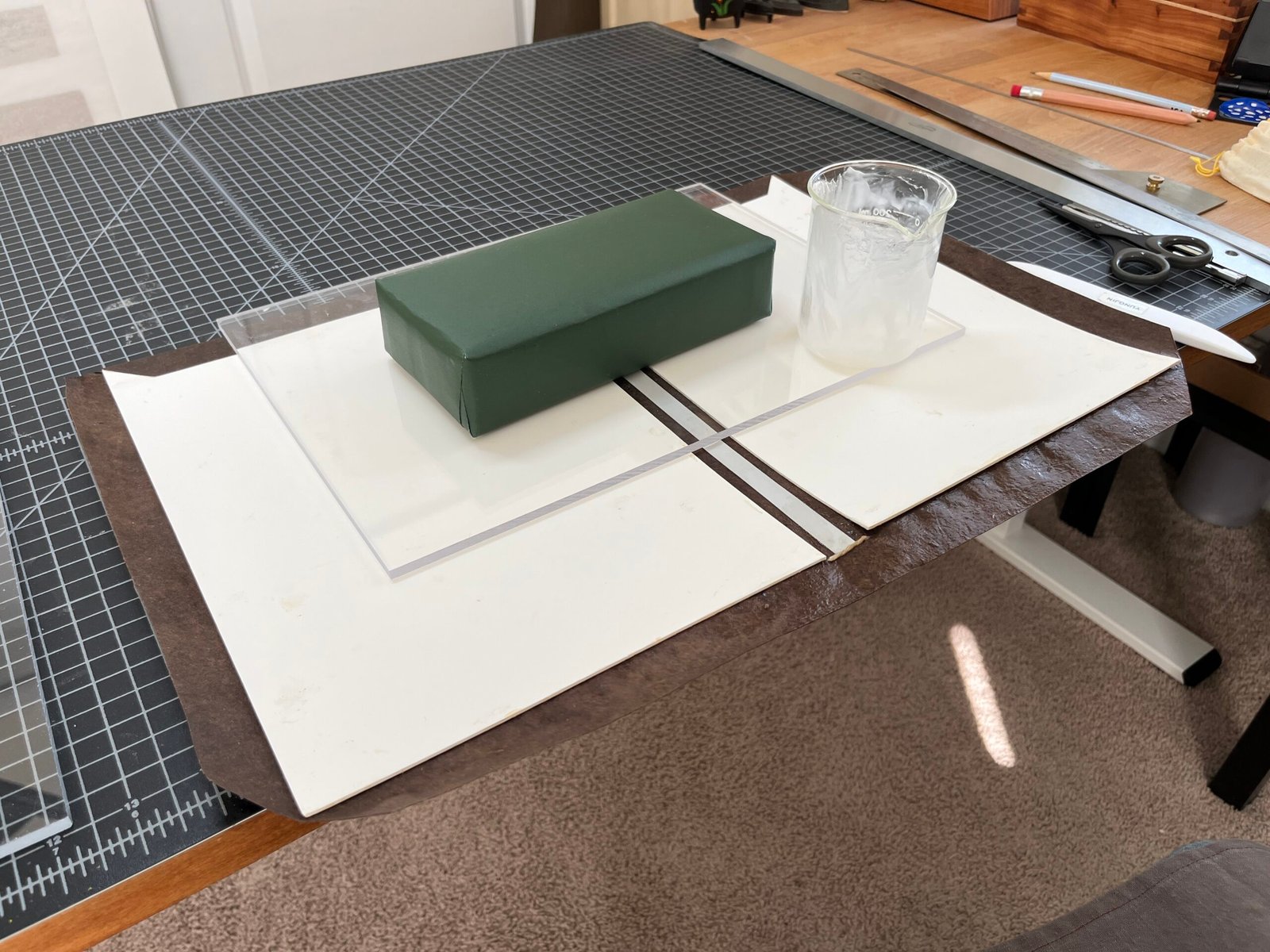
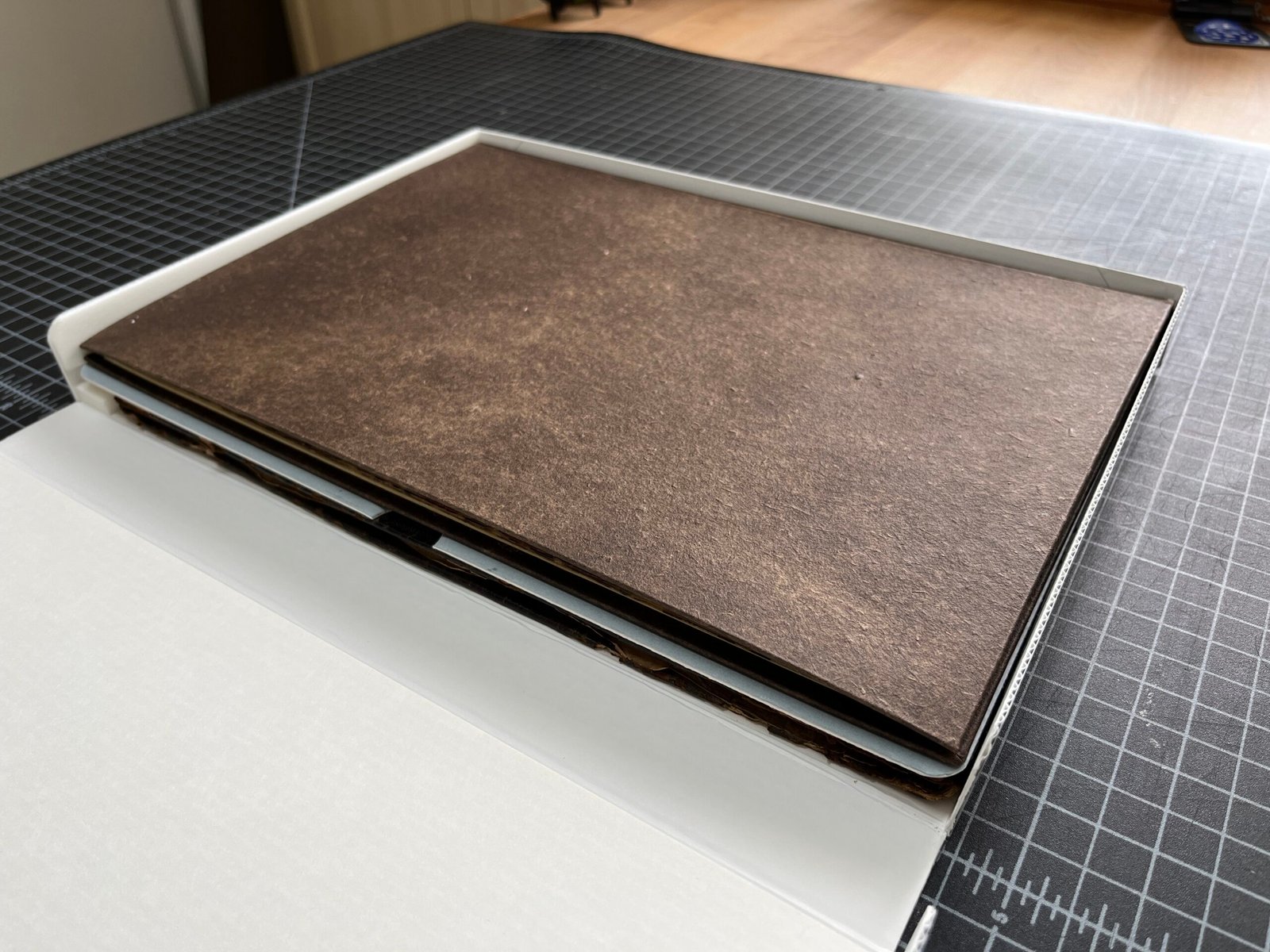
A new case was constructed using 4-ply mat boards and brown Cave paper with WSP. The textblock was attached to the new case by adhering the pastedown sheets to the boards with WSP. Finally, a clamshell box of E-flute corrugated board was made to house both the rebound volume and the original covers.